
Tanzania
Mount Meru Climb
Short Description Summit Mount Meru (4,566 m), Tanzania's second-highest peak, inside Arusha National Park. Walk past giraffes and buffalo with an armed ranger, sleep in mountain huts, and reach a dramatic crater rim at sunrise. A superb climb on its own and the perfect warm-up for Kilimanjaro.
From $500
Tour overview
4 Days Mount Meru Climb
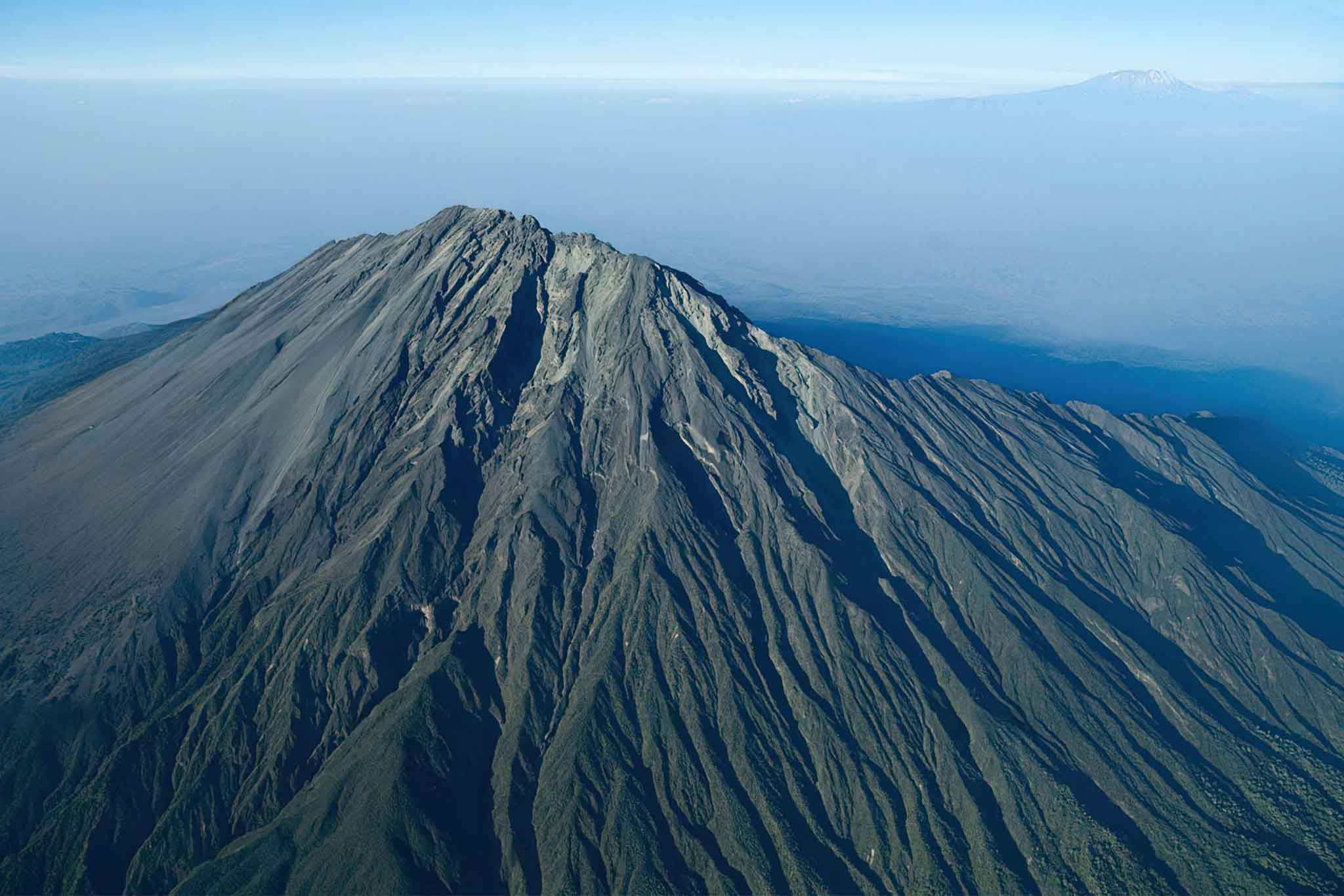
Mount Meru is one of Africa's most underrated mountains. It rises from Arusha National Park, so the first day's walk is also a walking safari: you cross grasslands where giraffe, buffalo, warthog, and zebra graze, accompanied by an armed park ranger, and pass under a giant fig tree arch before entering the forest.
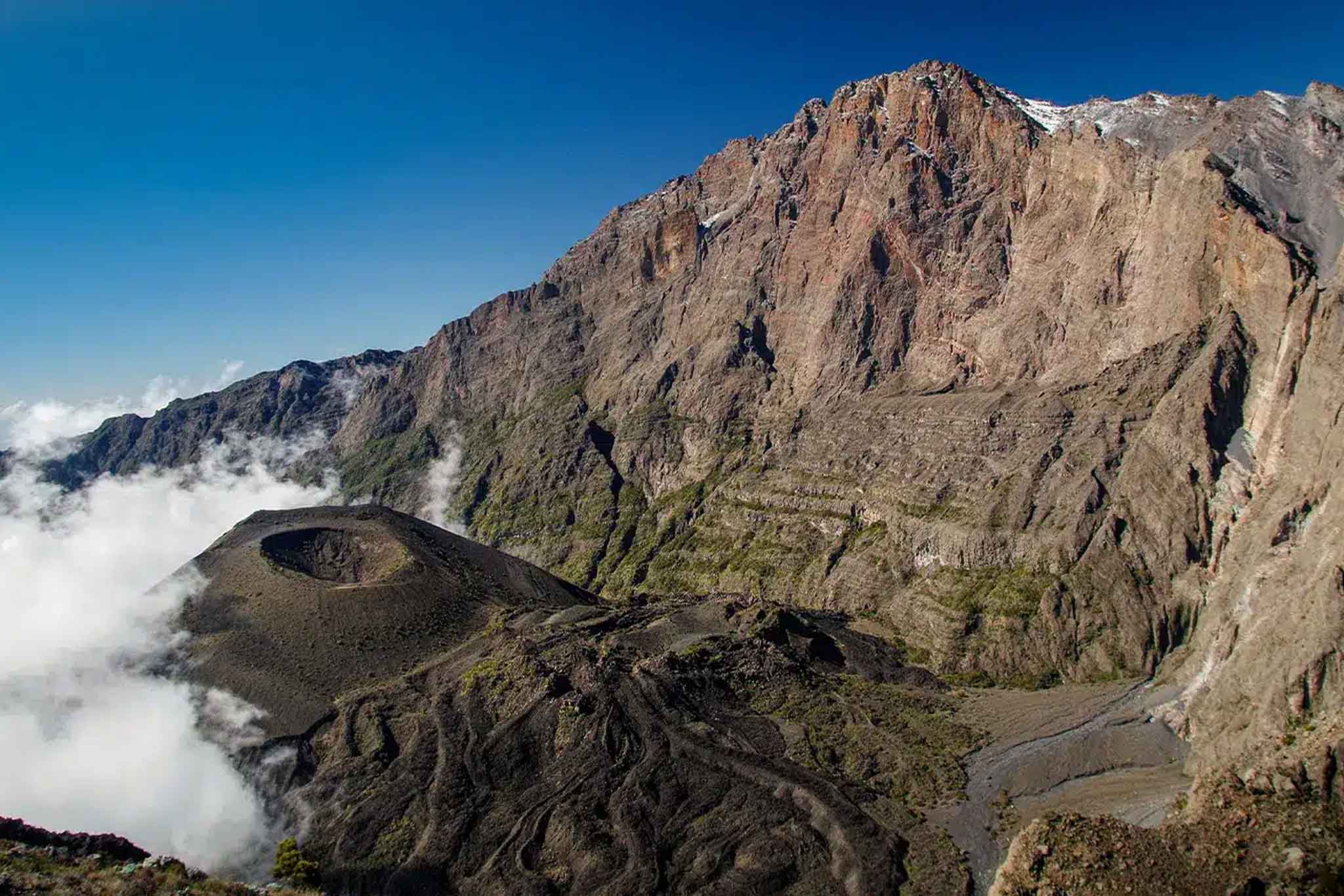
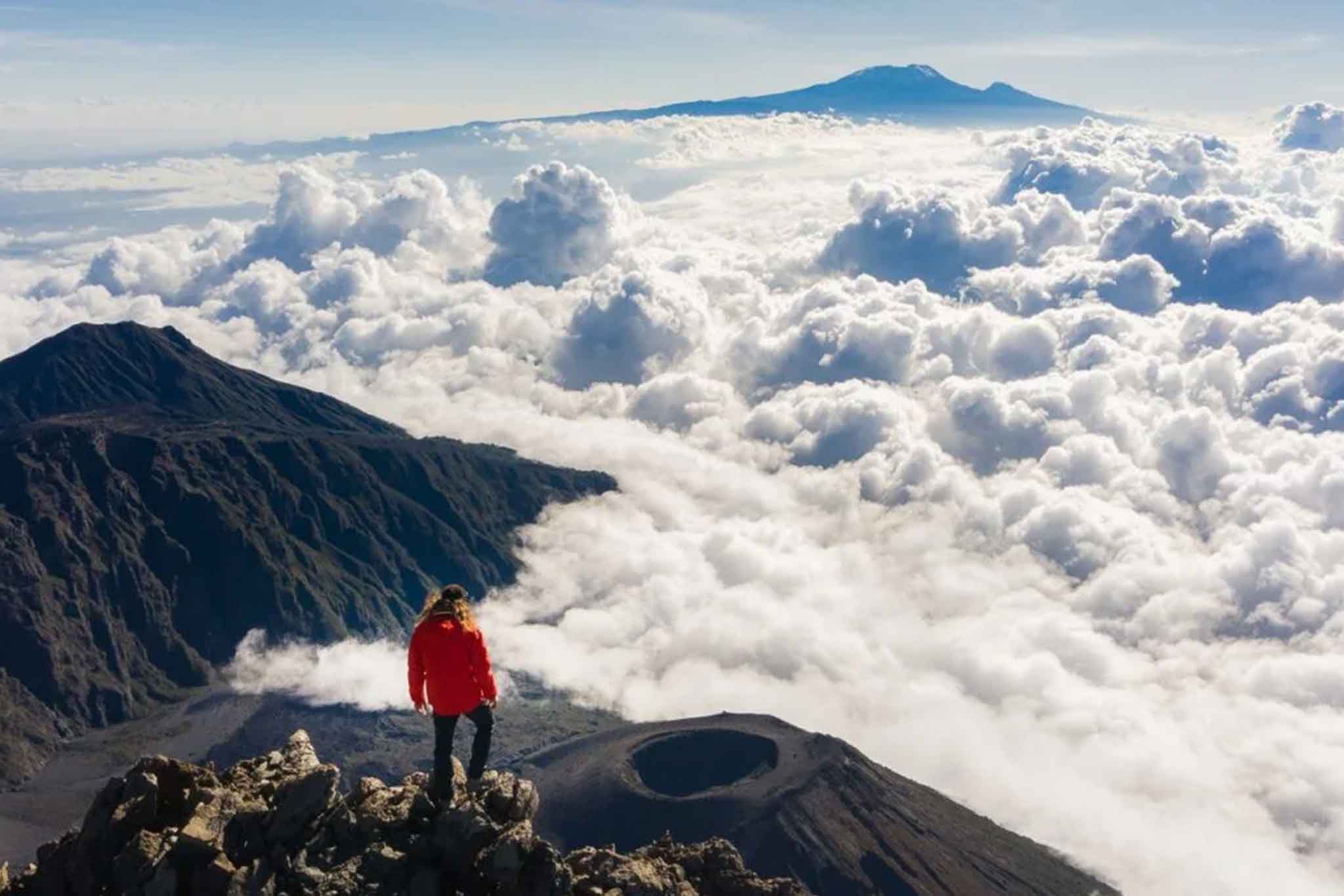
The route climbs through montane forest full of black-and-white colobus monkeys to Miriakamba Hut and then on to Saddle Hut, from where you can hike up Little Meru in the afternoon. On summit night you follow a narrow ridge around the rim of a collapsed crater, with the ash cone below you, to reach Socialist Peak at sunrise. On a clear morning, Kilimanjaro floats on the horizon.
Meru is shorter than Kilimanjaro but has some steep, exposed sections, so it is best for fit walkers. Many of our climbers do Meru first to acclimatise, then go on to Kilimanjaro with a much better chance of summiting.
Highlights
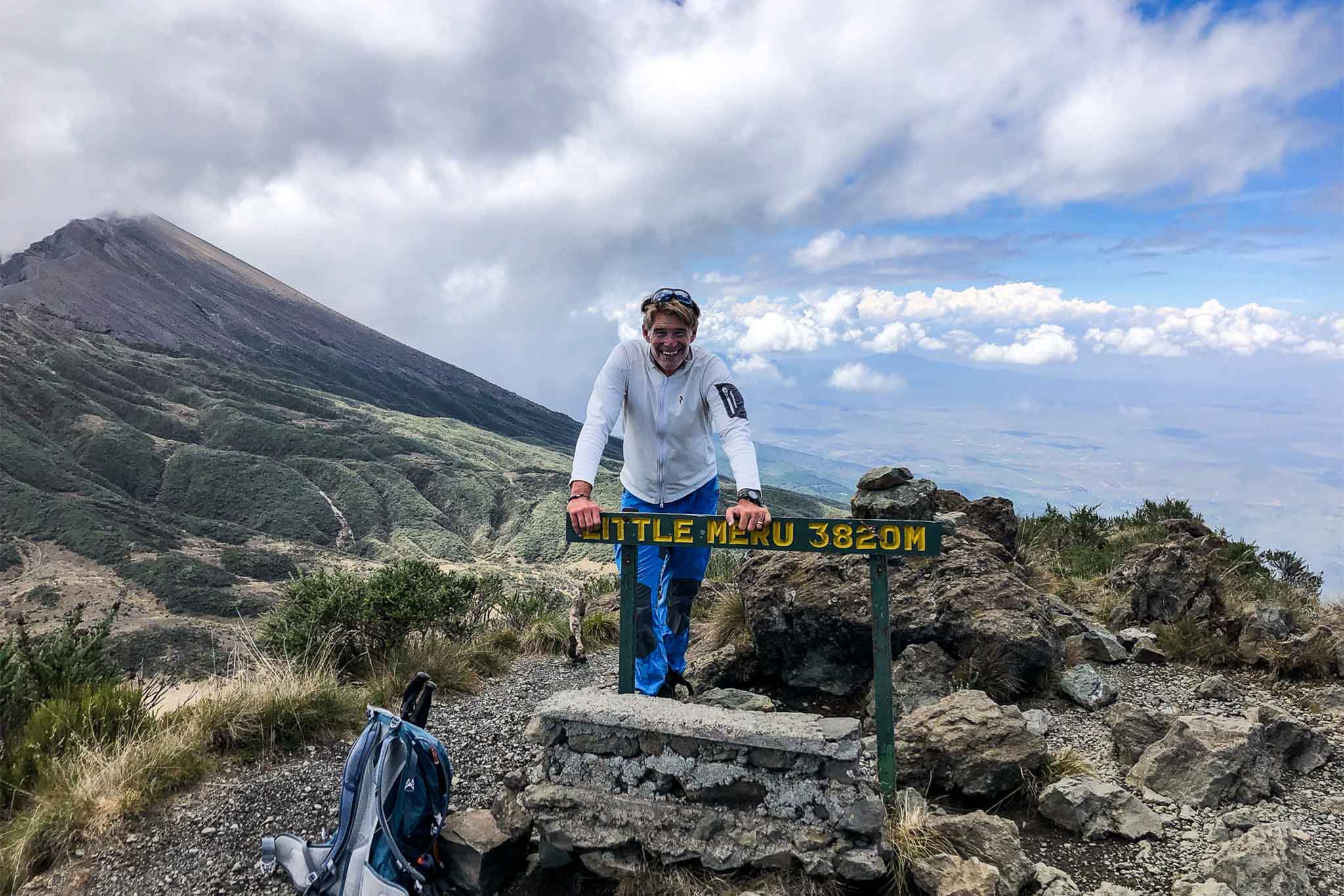
Mount Meru combines a real mountain challenge with wildlife. On the first day you walk with an armed ranger through Arusha National Park, past giraffe, buffalo and warthog, before climbing through forest full of colobus monkeys. From Saddle Hut, an optional hike to Little Meru, 3,820 m, gives you your first view of the summit and crater.
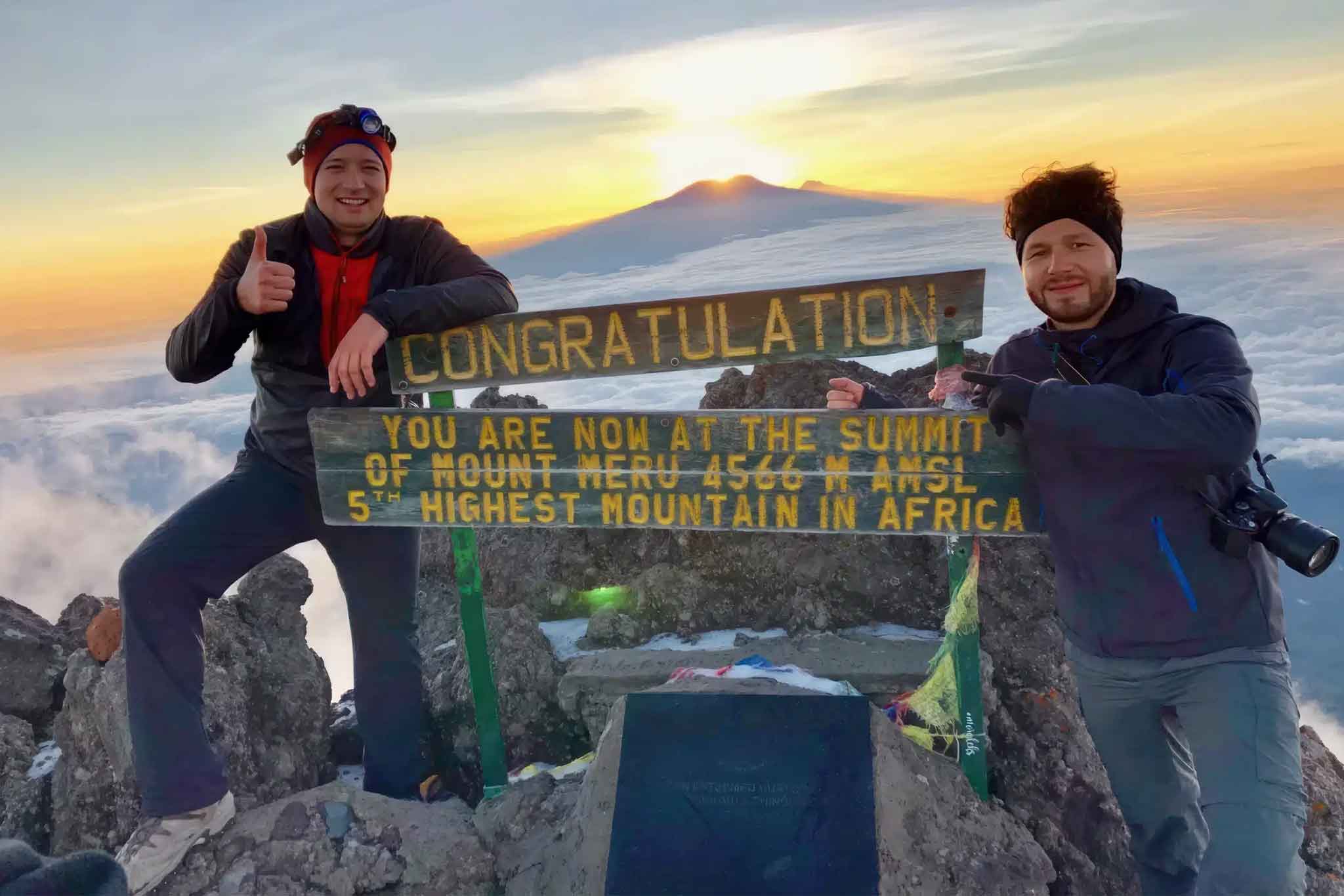
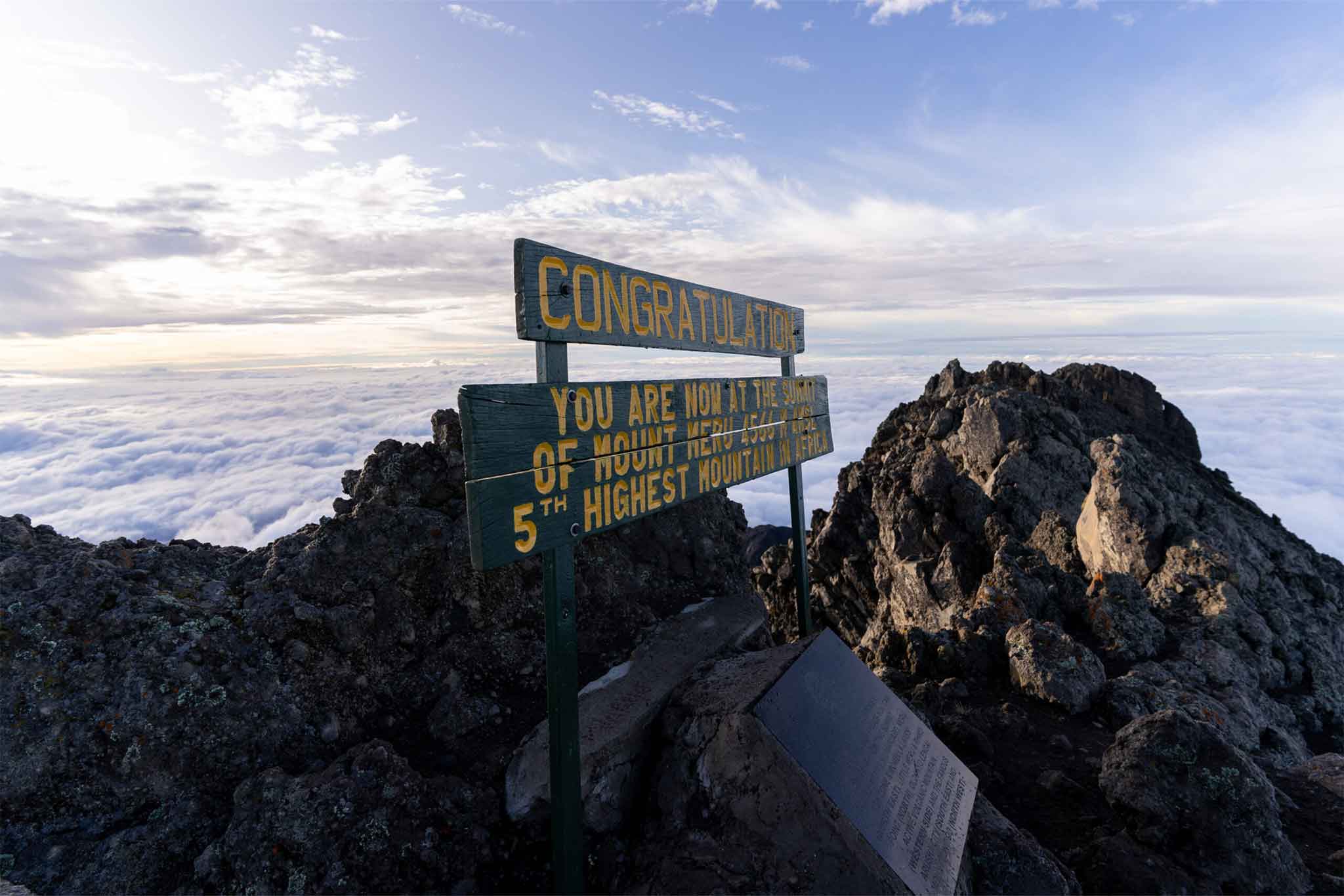
Summit night follows a narrow crater rim to Socialist Peak, 4,566 m, where you watch the sunrise with Kilimanjaro floating on the horizon. It is a quieter mountain than Kilimanjaro and the perfect preparation for it.
Discover Tanzania
Crafted for you
Tailor make your trip with iTour Tanzania
Every journey can be shaped around your pace, lodges, and must-do moments. Tell us what matters most and we will build it with you.
Build your tripYour adventure begins
A taste of what to expect on this journey
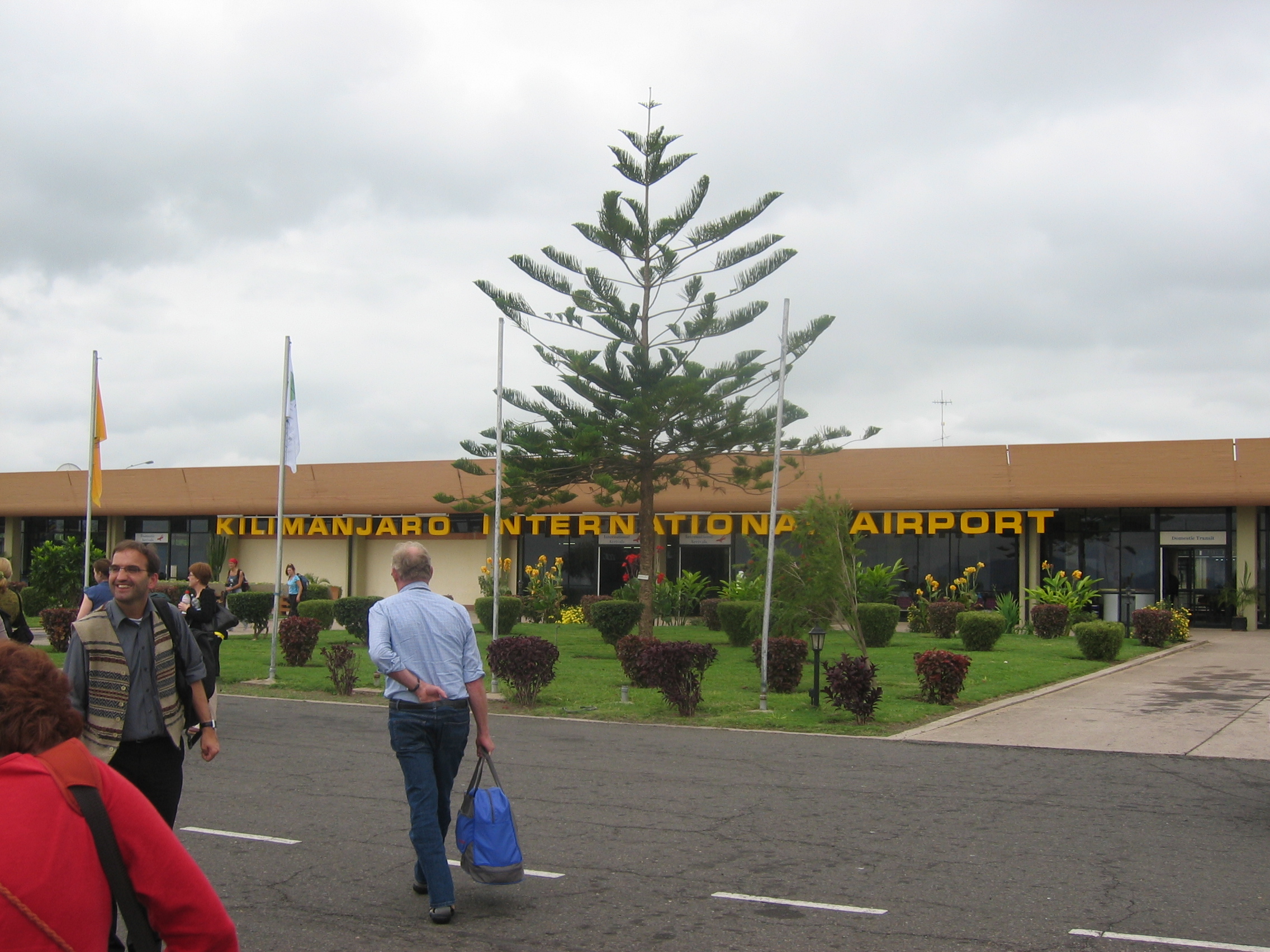
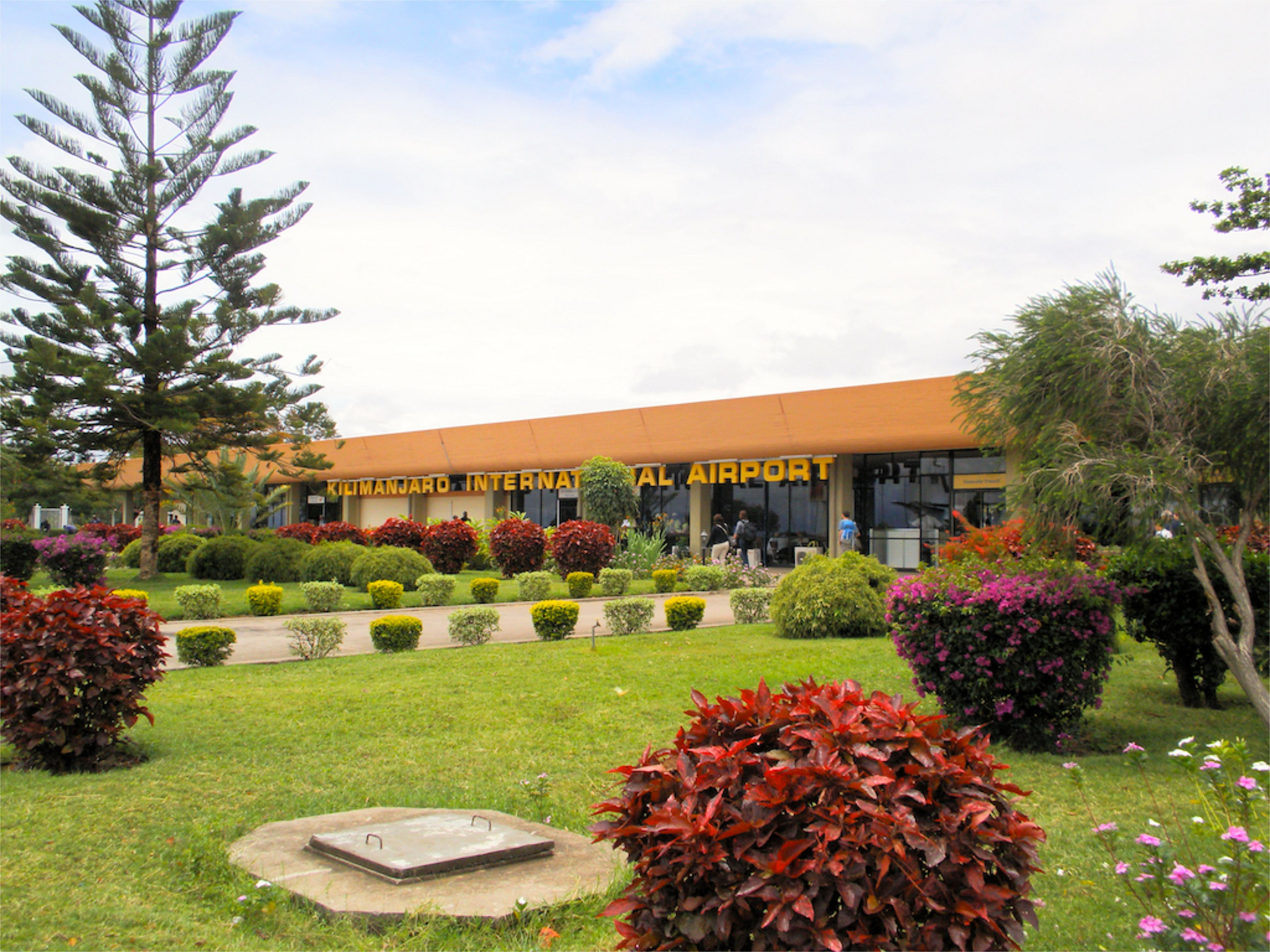
Arrival at Kilimanjaro International Airport
Transfer ~1 hr
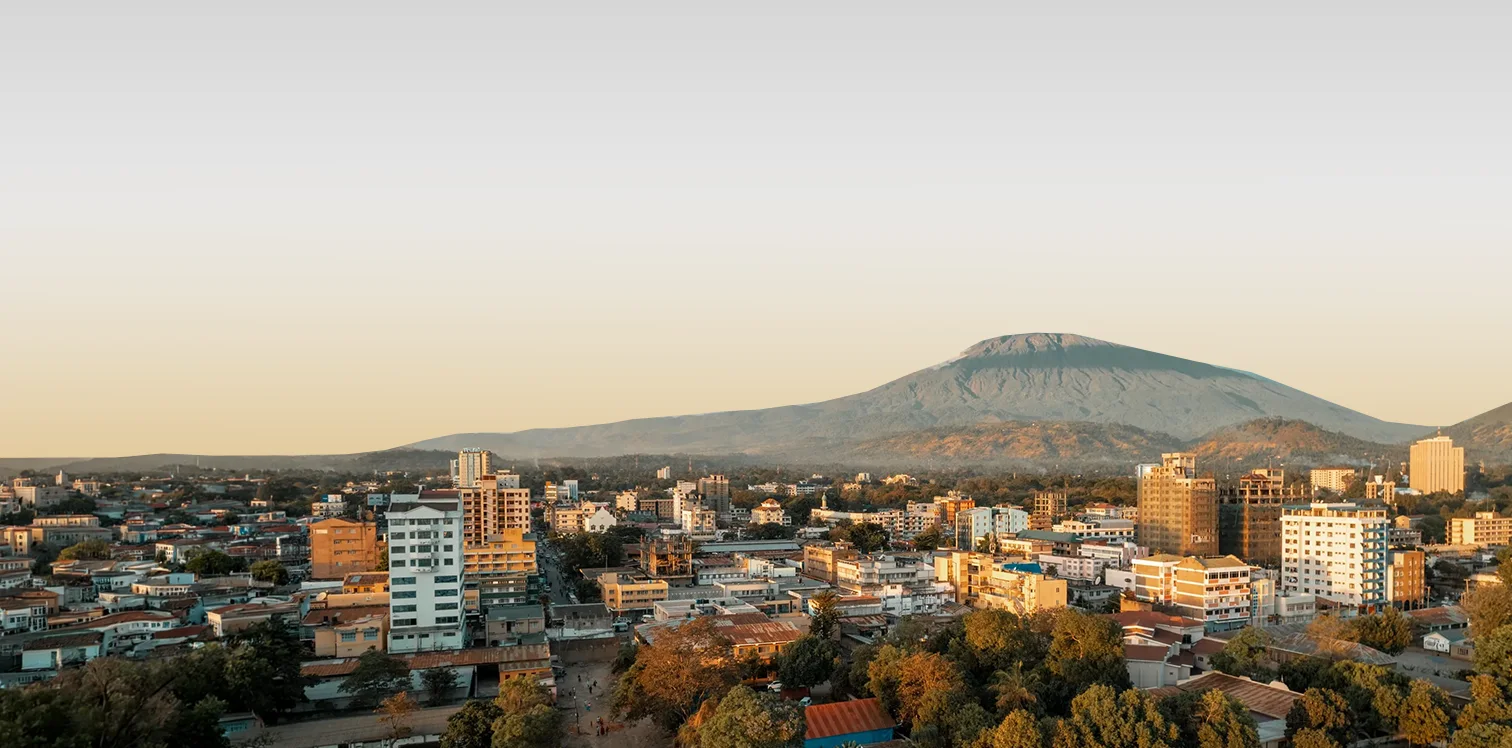
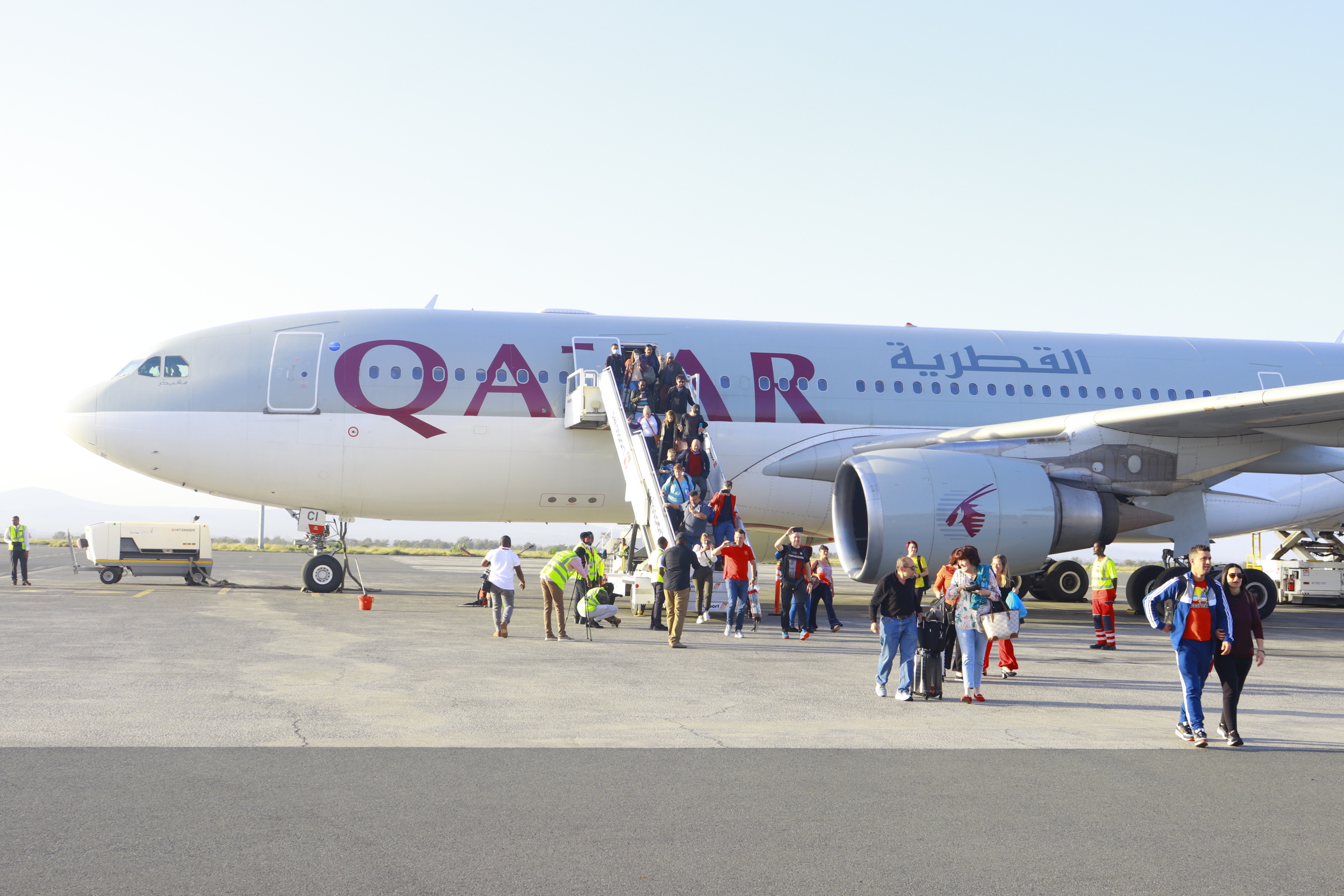
Karibu Tanzania! Your iTour Tanzania representative meets you at Kilimanjaro International Airport and drives you about an hour to Arusha, a lively city at the foot of Mount Meru, where you check in to your hotel.
Spend the afternoon resting after your flight. In the early evening, your mountain guide visits for a full briefing on the route, the hut system, the daily routine, and safety on the mountain. They check your equipment, and any missing items can be rented. Pack a daypack for the trail and a duffel bag for the porters, and store extra luggage at the hotel.
Meals: Dinner
Momella Gate (1,500 m) to Miriakamba Hut (2,514 m)
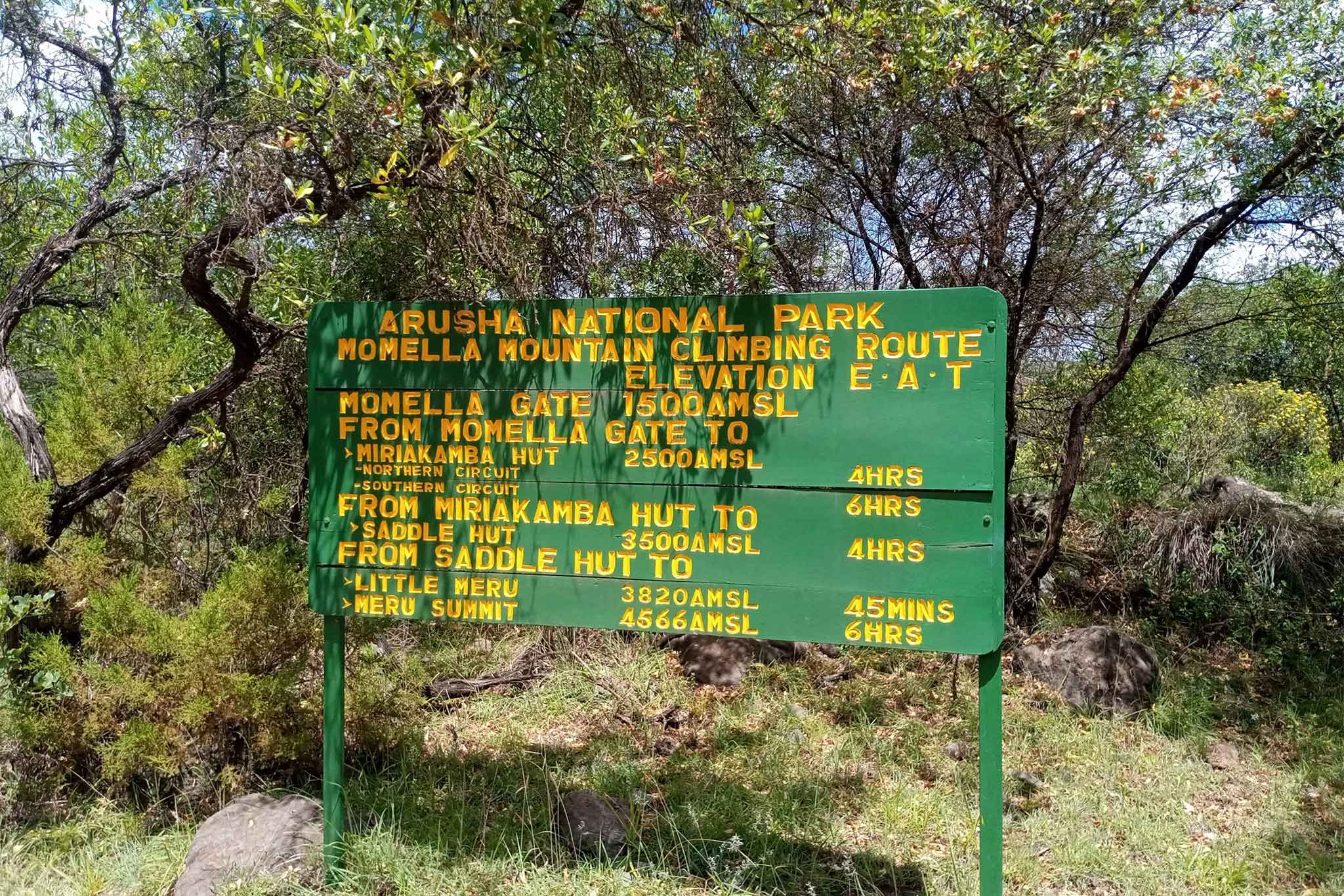
Hike 4–6 hrs · 10 km
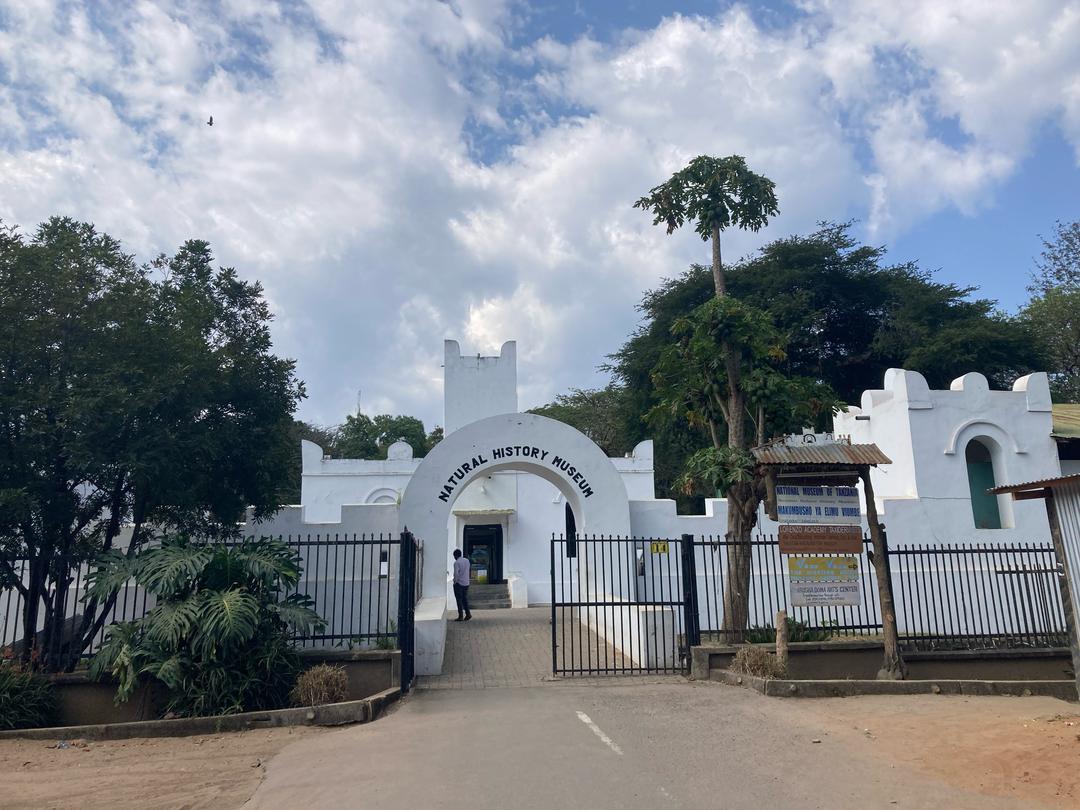
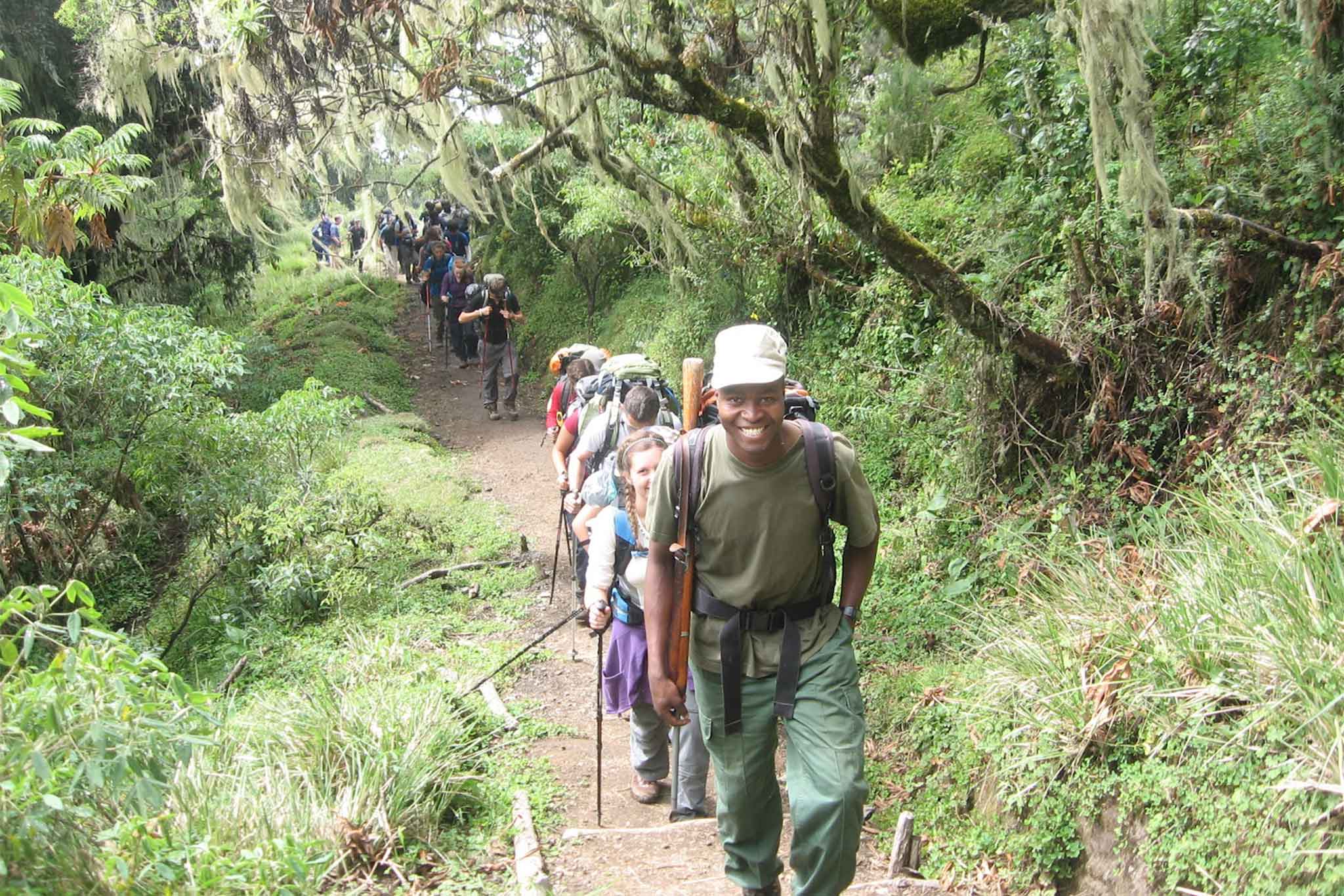
After breakfast, drive about an hour to Momella Gate (1,500 m) in Arusha National Park, where you complete the registration and meet your armed ranger, who accompanies you on the trail for safety.
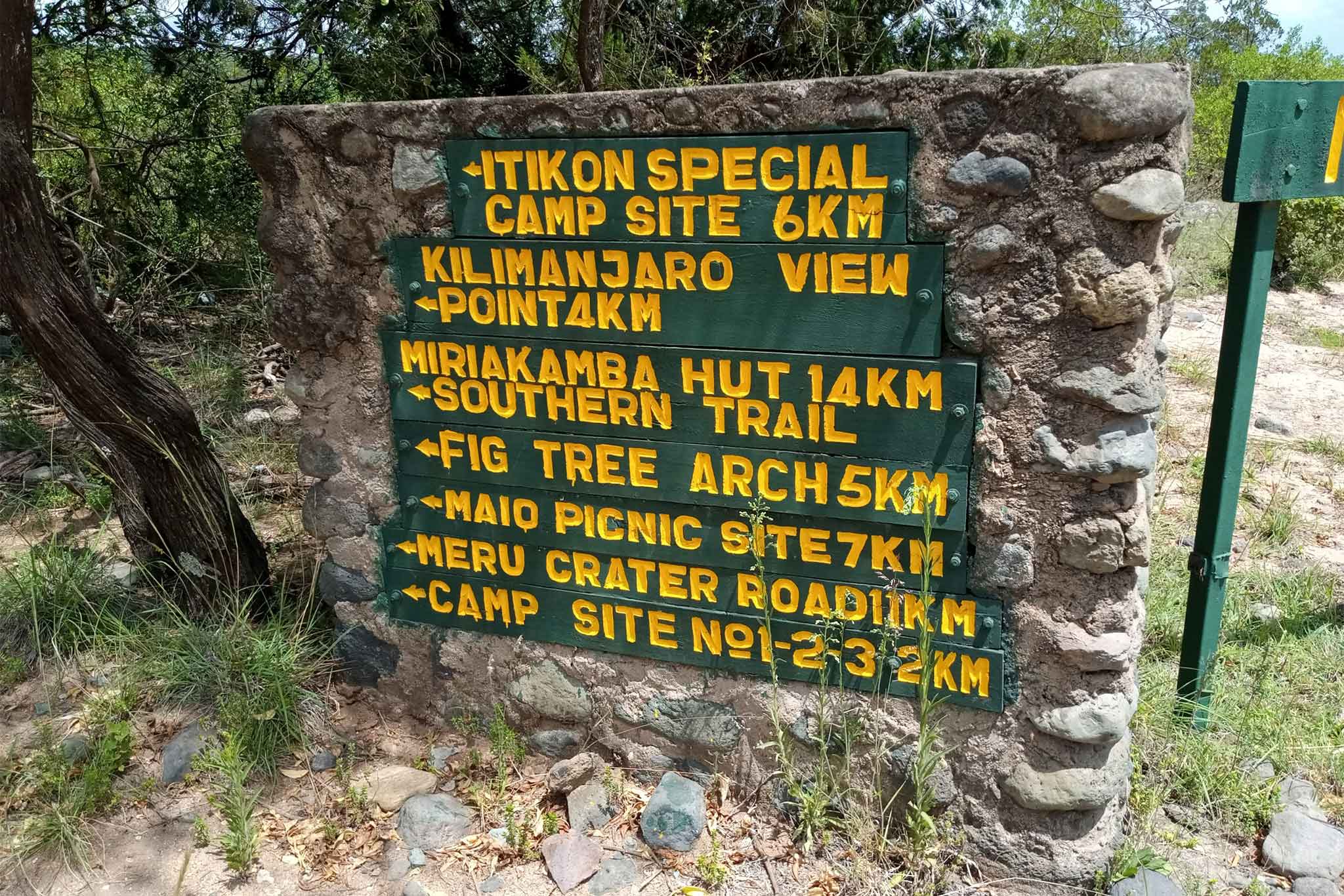
The walk begins across open grassland and glades where giraffe, buffalo, warthog and zebra graze, often surprisingly close. You pass the famous fig tree arch, large enough for a vehicle to drive through, and a waterfall, then climb through montane forest full of black-and-white colobus monkeys.
After 4–6 hours, arrive at Miriakamba Hut (2,514 m), with views of Meru's crater and the ash cone. Dinner is served in the hut's dining room, and you sleep in bunk beds in shared rooms.
Meals: Breakfast, Lunch, Dinner
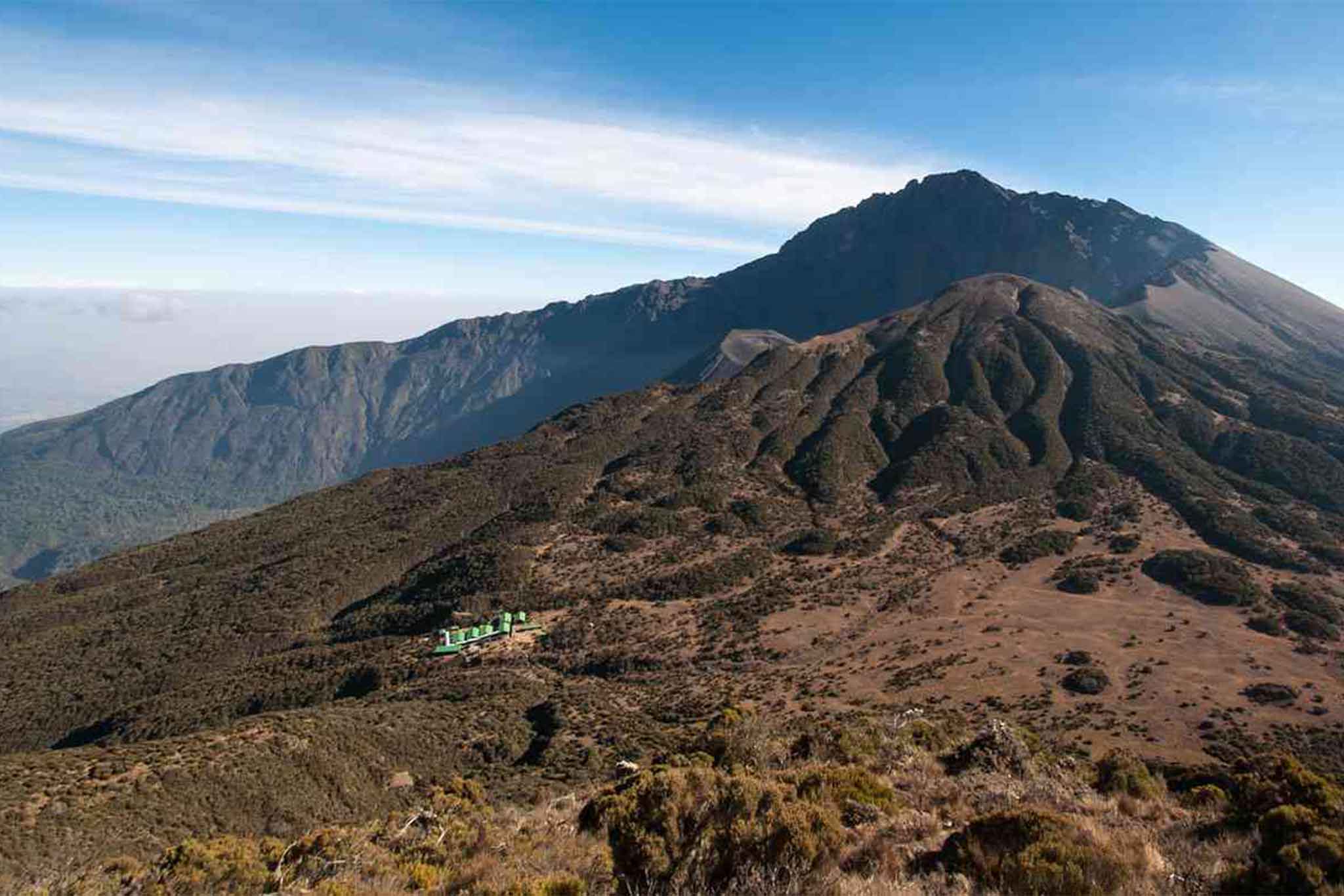
Miriakamba Hut to Saddle Hut (3,570 m) and Little Meru
Hike 3–5 hrs · 5 km
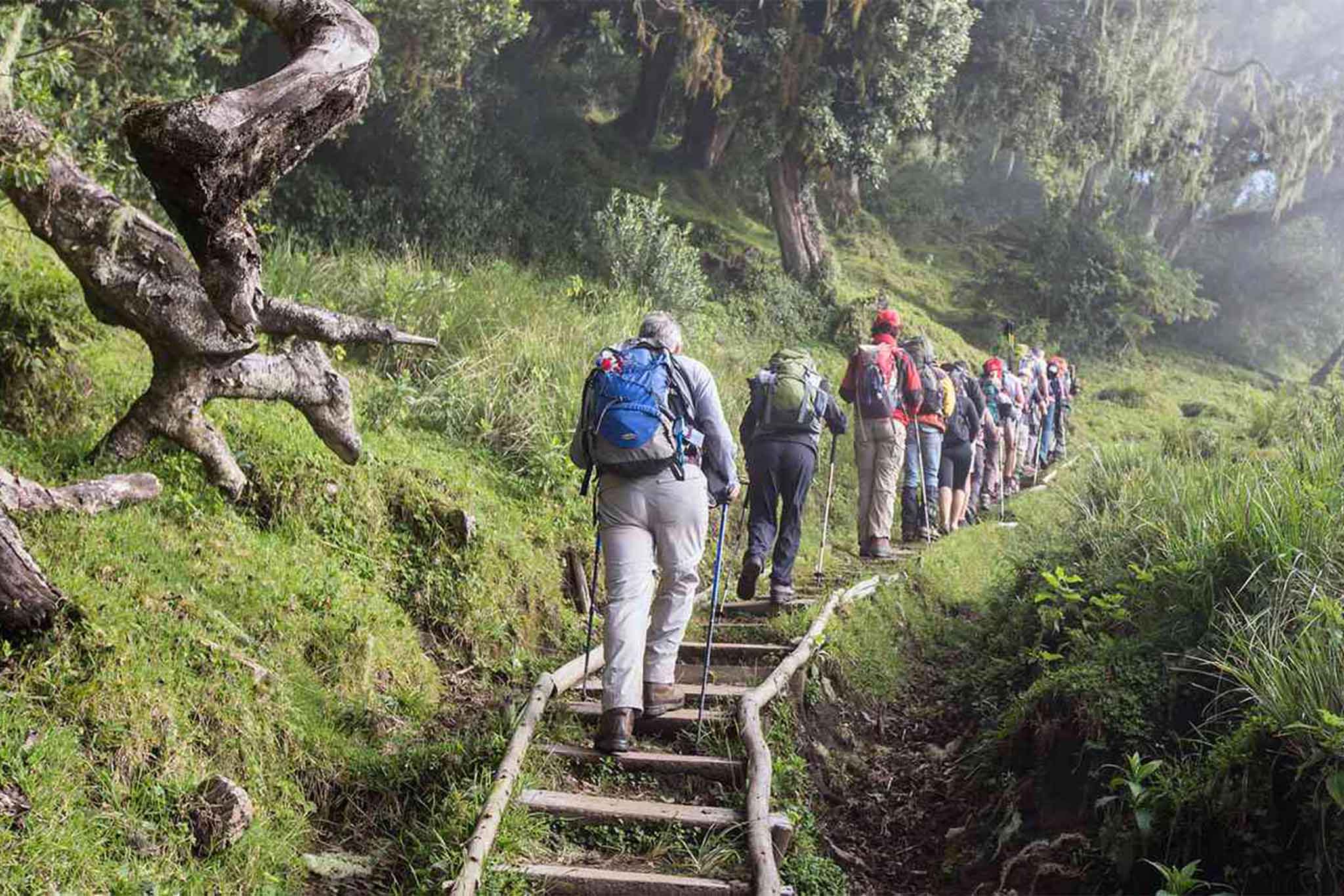
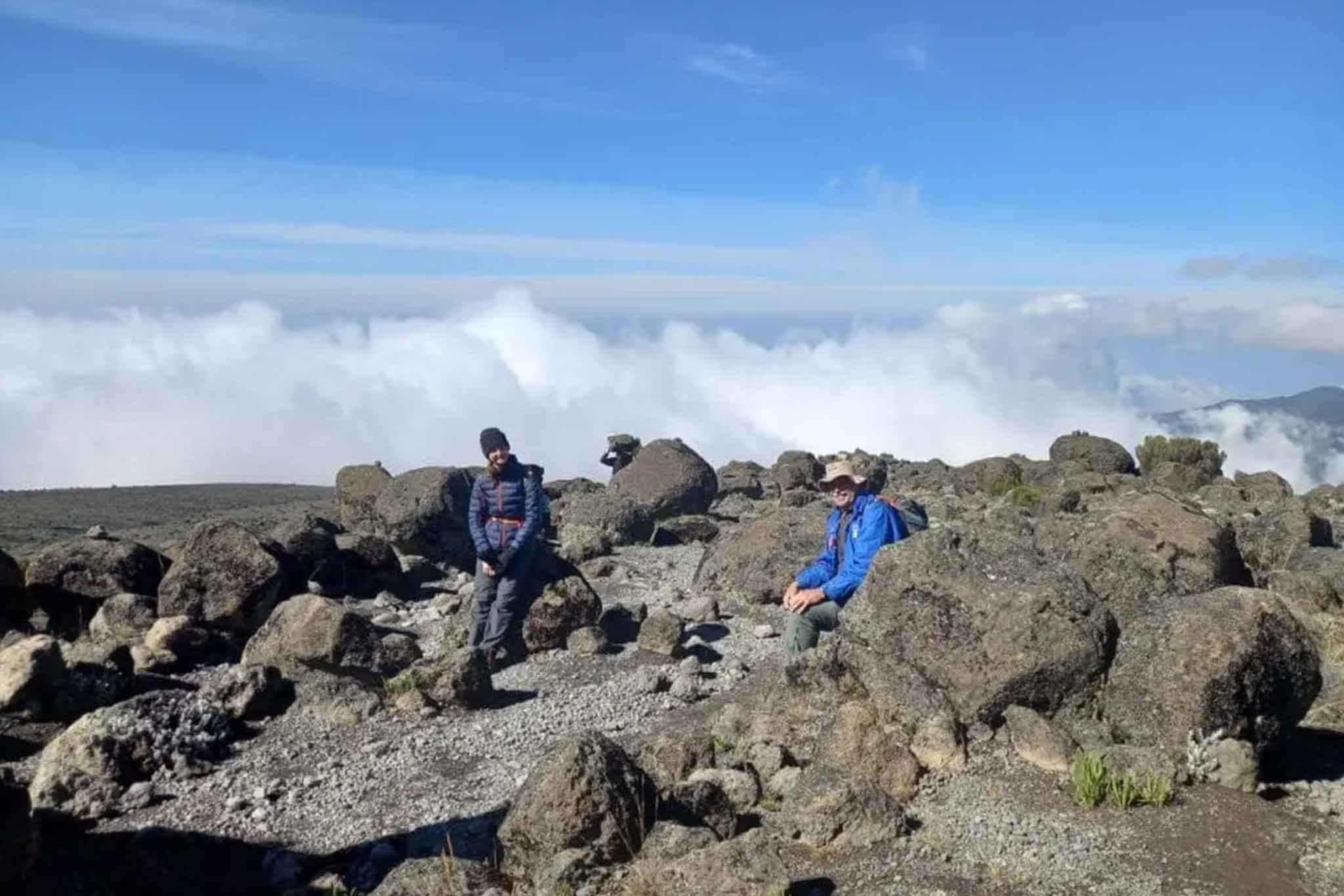
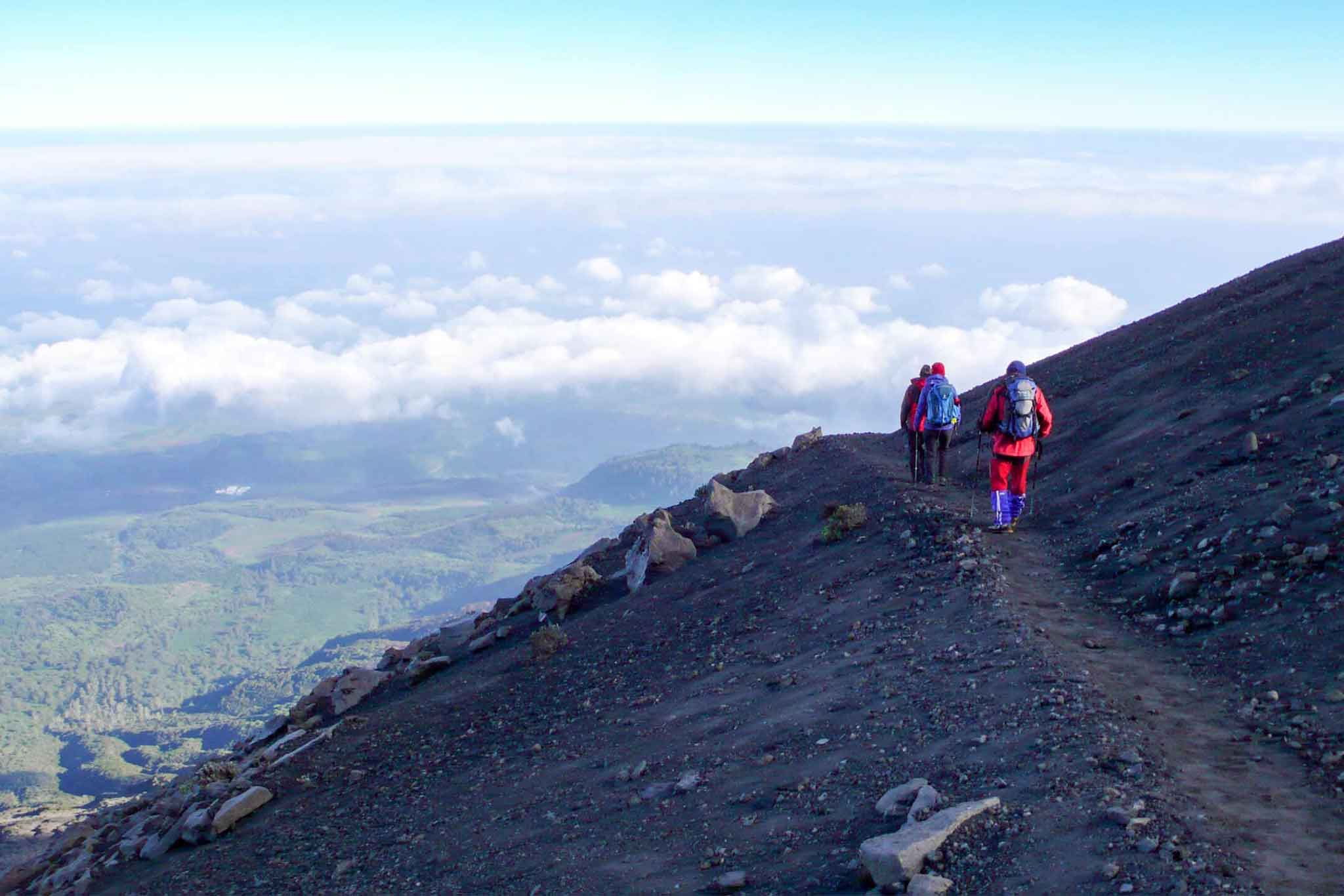
Today's walk is steeper, climbing through forest and then giant heather and moss-covered trees. The route follows wooden steps for long sections, with frequent viewpoints over the crater and down to the Momella Lakes.
After 3–5 hours, reach Saddle Hut (3,570 m) in time for lunch.
In the afternoon, climb Little Meru (3,820 m) with your guide, about 1 hour up and 45 minutes down. The view of the summit, the crater and Kilimanjaro in the distance is superb, especially at sunset. Return to the hut for an early dinner and rest.
Meals: Breakfast, Lunch, Dinner
Miriakamba Hut to Saddle Hut (3,570 m) and Little Meru
Hike 3–5 hrs · 5 km
Today's walk is steeper, climbing through forest and then giant heather and moss-covered trees. The route follows wooden steps for long sections, with frequent viewpoints over the crater and down to the Momella Lakes.
After 3–5 hours, reach Saddle Hut (3,570 m) in time for lunch.
In the afternoon, climb Little Meru (3,820 m) with your guide, about 1 hour up and 45 minutes down. The view of the summit, the crater and Kilimanjaro in the distance is superb, especially at sunset. Return to the hut for an early dinner and rest.
Meals: Breakfast, Lunch, Dinner
Summit day
Socialist Peak (4,566 m), descend to Miriakamba Hut
Hike 10–12 hrs
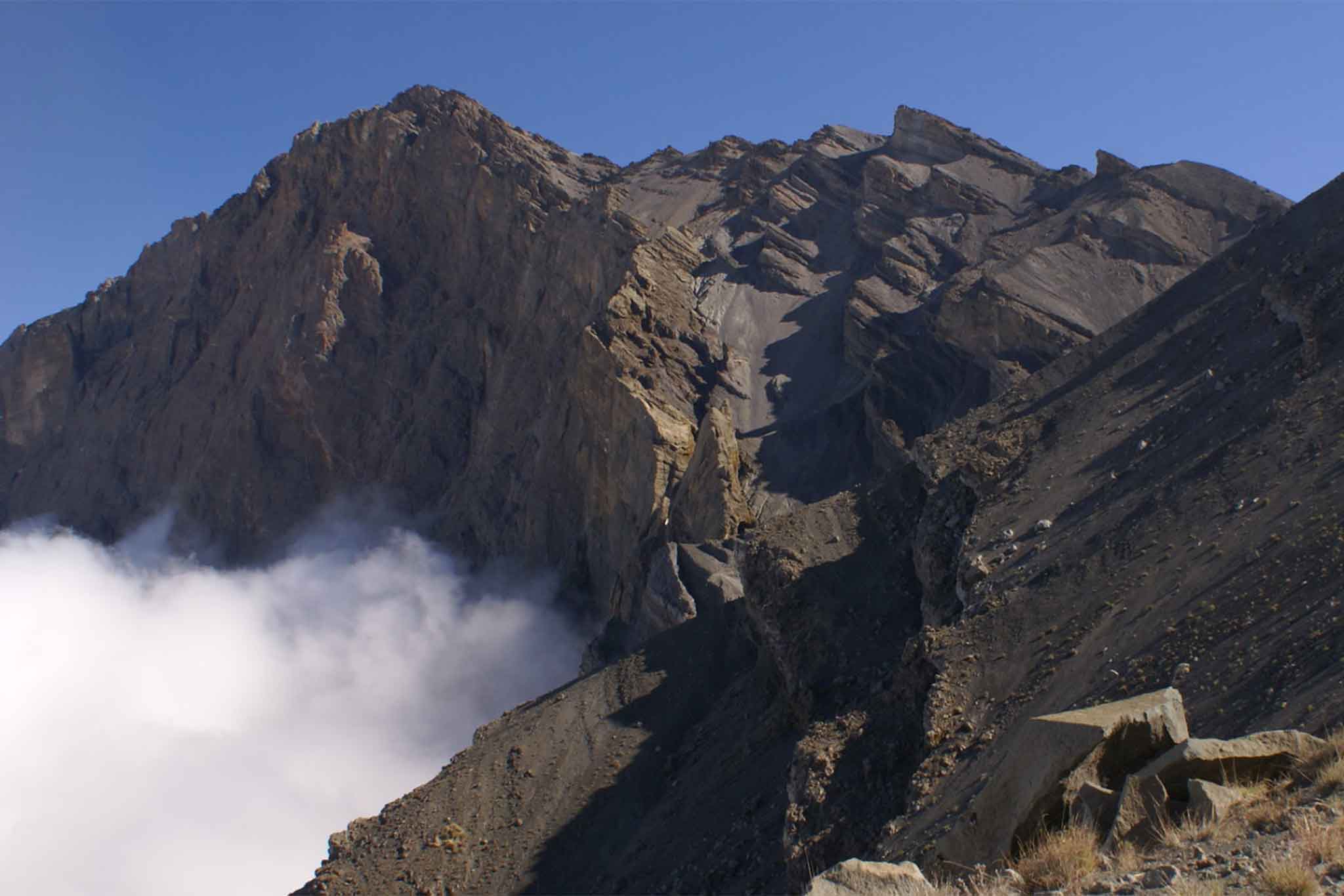
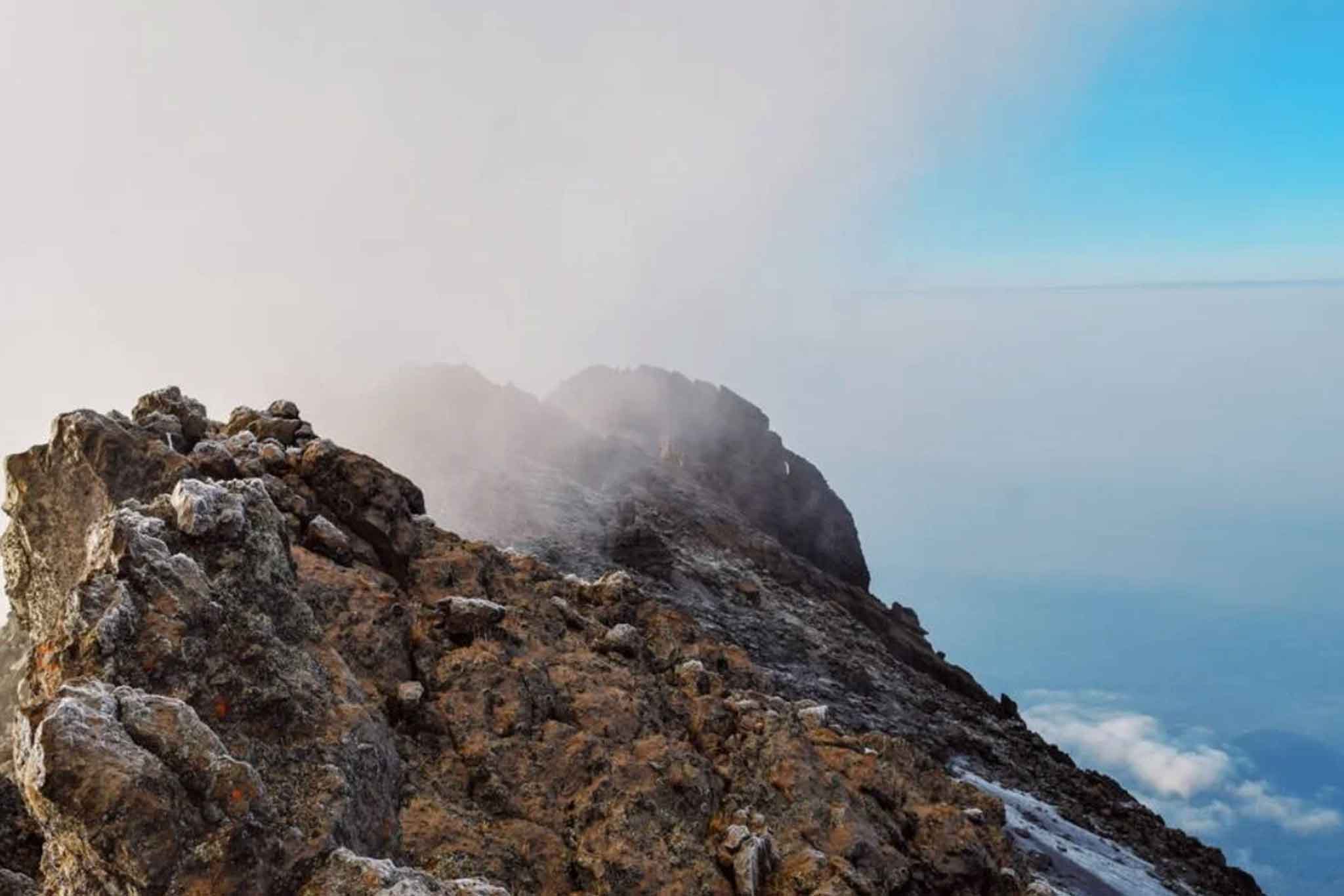
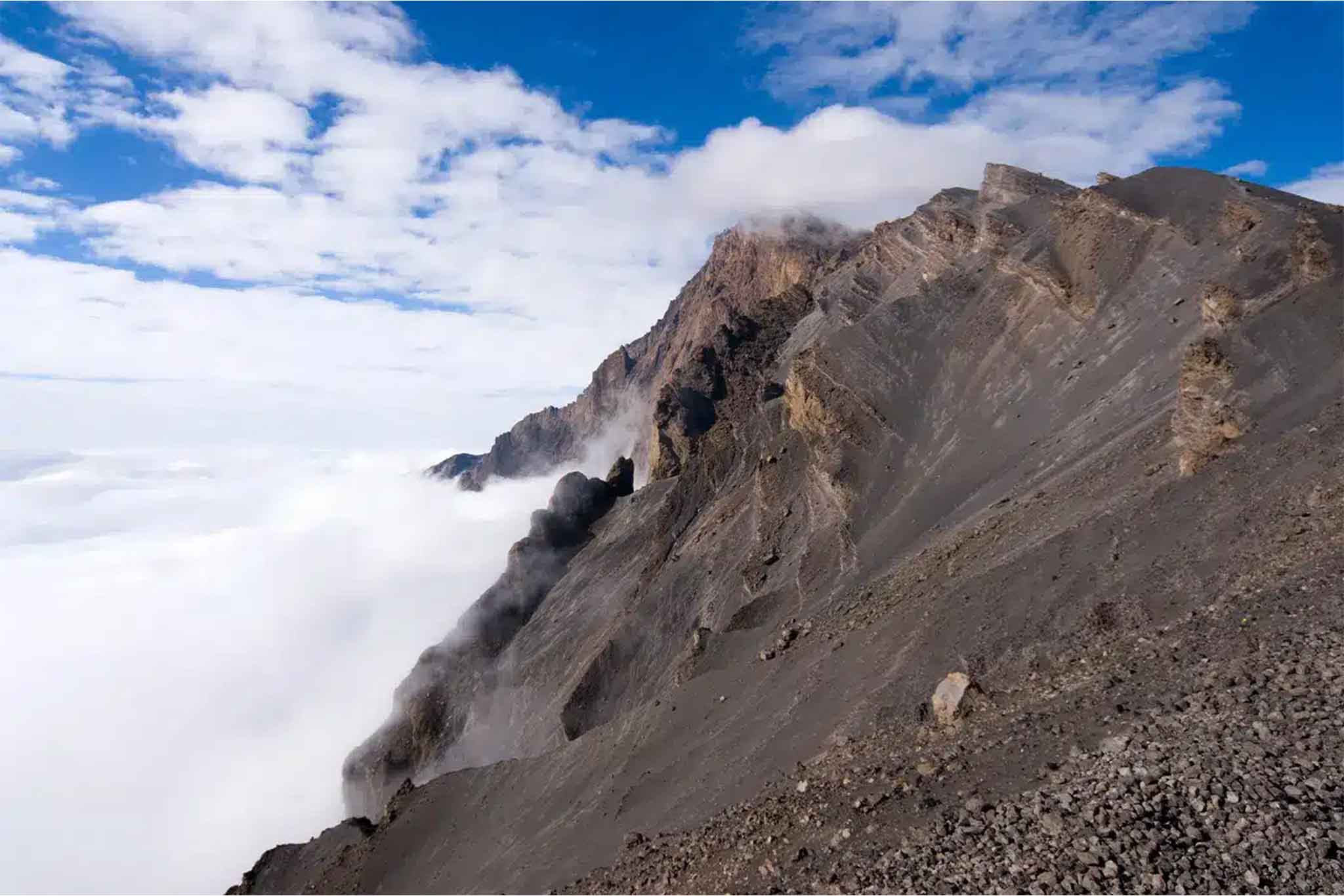
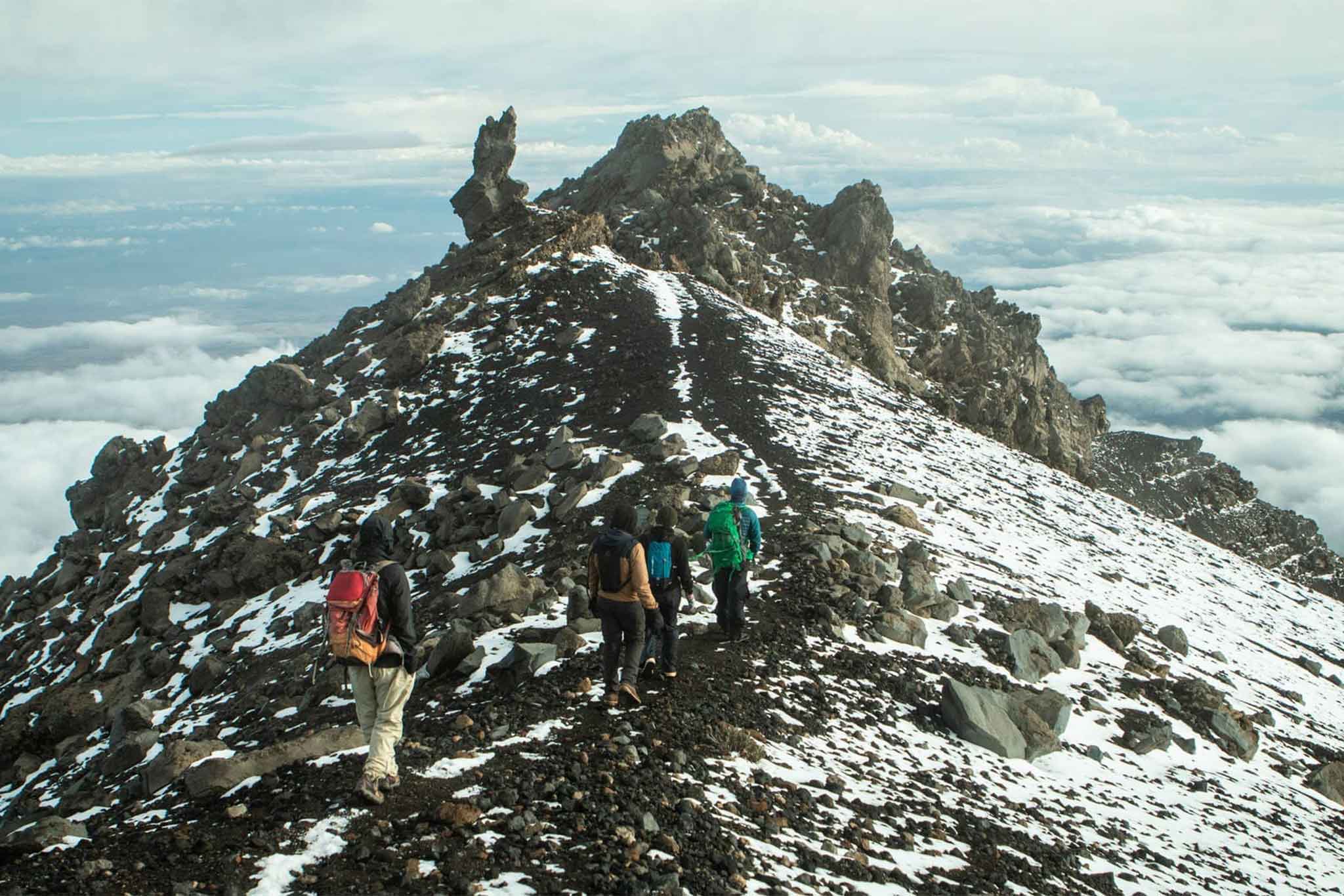
Wake around midnight for tea and biscuits, then start the climb by headlamp around 1 a.m. The trail climbs steeply to Rhino Point (3,800 m) and then follows a narrow, rocky ridge along the rim of the crater, with steep drops on one side. Your guide and ranger lead the way carefully.
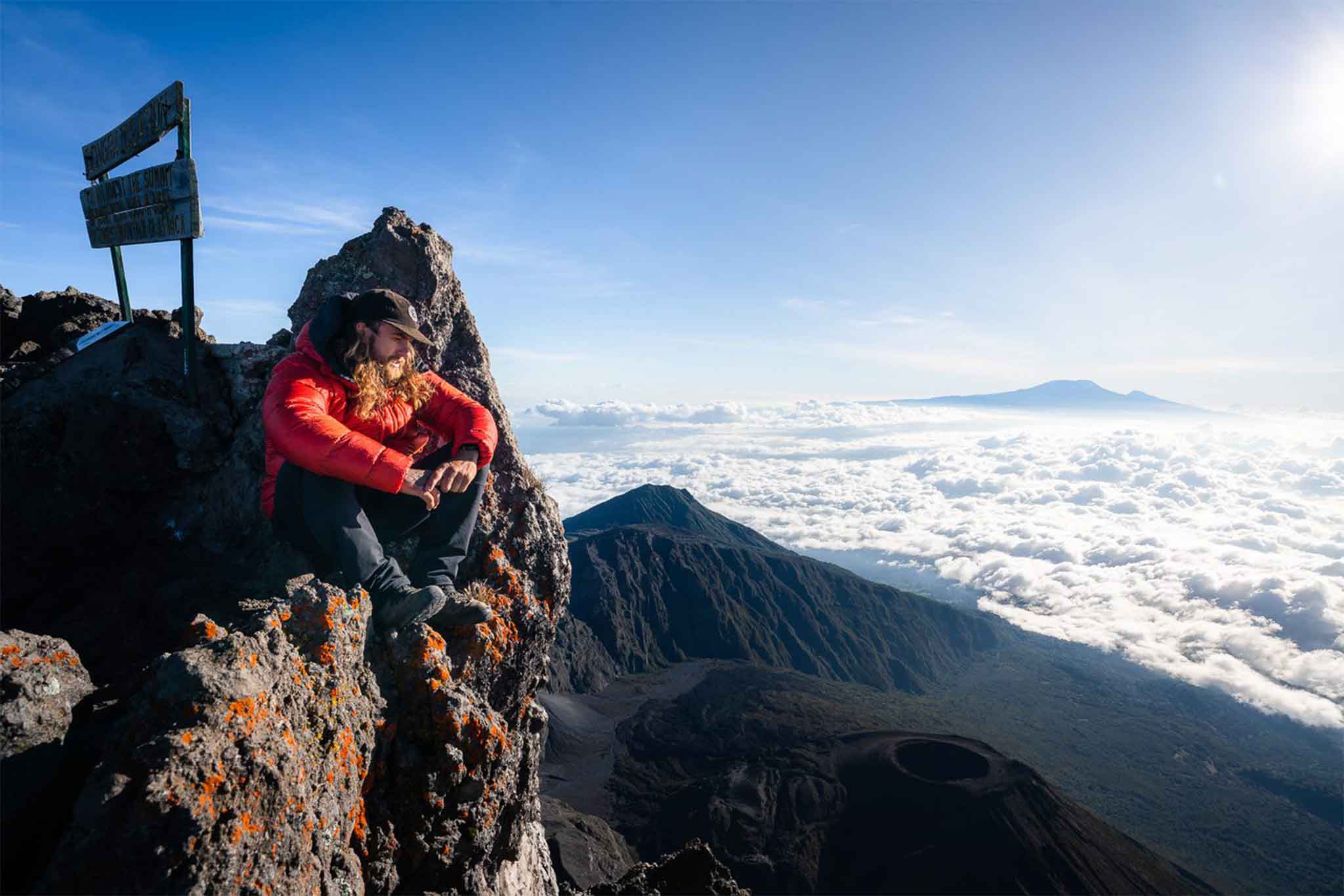
Reach Socialist Peak (4,566 m) around sunrise. Watch the sun rise behind Kilimanjaro, with the ash cone inside the crater below you. It is one of the most spectacular summit views in Africa.
Descend carefully to Saddle Hut for brunch and a short rest, then continue down through the forest to Miriakamba Hut for the night. It is a long day of 10–12 hours.
Meals: Breakfast, Lunch, Dinner
Miriakamba Hut to Momella Gate, transfer to Arusha
Hike 2–3 hrs
After breakfast, descend through the forest and grasslands to Momella Gate, a walk of 2–3 hours, with more chances to see giraffe, buffalo and colobus monkeys.
At the gate, receive your summit certificate and say farewell to your crew and ranger.
Drive back to your hotel in Arusha to relax and celebrate.
Meals: Breakfast, Lunch
Departure
Enjoy a relaxed breakfast. Depending on your flight time, visit the Arusha Cultural Heritage Centre or a coffee farm, or simply relax at the hotel.
Transfer to Kilimanjaro International Airport for your onward flight, or continue on to Kilimanjaro, a safari or Zanzibar with us. Kwaheri!
Meals: Breakfast
Overnight: End of tour
You've reached the end of your adventure
Best time to travel
The best time to climb Mount Meru is during the dry seasons, from June to October and from December to February. Skies are usually clear, the ridge to the summit is dry and safer, and the views of Kilimanjaro are at their best.
Dry season:
Firm trails, great visibility and good wildlife viewing on the lower slopes as animals stay near water.
Wet season (March–May and November):
The forest is lush but paths can be slippery and cloud often hides the views; April and May are the least suitable months.
Safari includes & excludes
Inclusions
- Airport pick-up and drop-off at Kilimanjaro International Airport
- Hotel nights before and after the climb in your chosen tier, on bed & breakfast
- All park entry, camping/hut and rescue fees
- Licensed mountain guide(s), assistant guides, cook and porters (1 guide to 2 climbers)
- Fair wages for the whole crew, in line with KPAP porter-welfare guidelines
- Quality mountain tents, sleeping mats, mess tent with table and chairs
- All meals on the mountain, freshly prepared, plus boiled and treated drinking water
- Daily health checks with pulse oximeter; emergency oxygen and first-aid kit
- Transfers to and from the trailhead
- Summit certificate
- Armed park ranger escort, as required by Arusha National Park
- Mountain hut fees (Miriakamba and Saddle Huts)
- Hotel nights in Arusha before and after the climb
Exclusions
- International flights and Tanzanian visa
- Travel insurance covering trekking to 6,000 m and emergency evacuation (compulsory)
- Tips for the mountain crew (see our tipping guideline)
- Personal climbing gear (rental available: sleeping bags, poles, jackets, gaiters)
- Private toilet tent (available on request)
- Lunch and dinner at the hotel, drinks and personal expenses
Why choose this safari
Few climbs in Africa combine a walking safari, a spectacular crater and a sunrise view of Kilimanjaro. Mount Meru does all three, and it is one of East Africa's best-kept secrets.
- Walk among giraffe and buffalo inside Arusha National Park
- A dramatic knife-edge crater rim at sunrise
- Far fewer climbers than Kilimanjaro
- The perfect acclimatisation climb before Kilimanjaro
- Comfortable mountain huts with bunk beds
Best for: Best for Adventure seekersSteep ridges and a dramatic crater rimKilimanjaro climbersThe ideal acclimatisation climb before KilimanjaroSomeone looking for something newFar quieter than KilimanjaroPhotographyWildlife on the trail and sunrise views of KilimanjaroSolo travellers and groupsPrivate climbs for any group size
Tailormake your journey
Add these must-do experiences
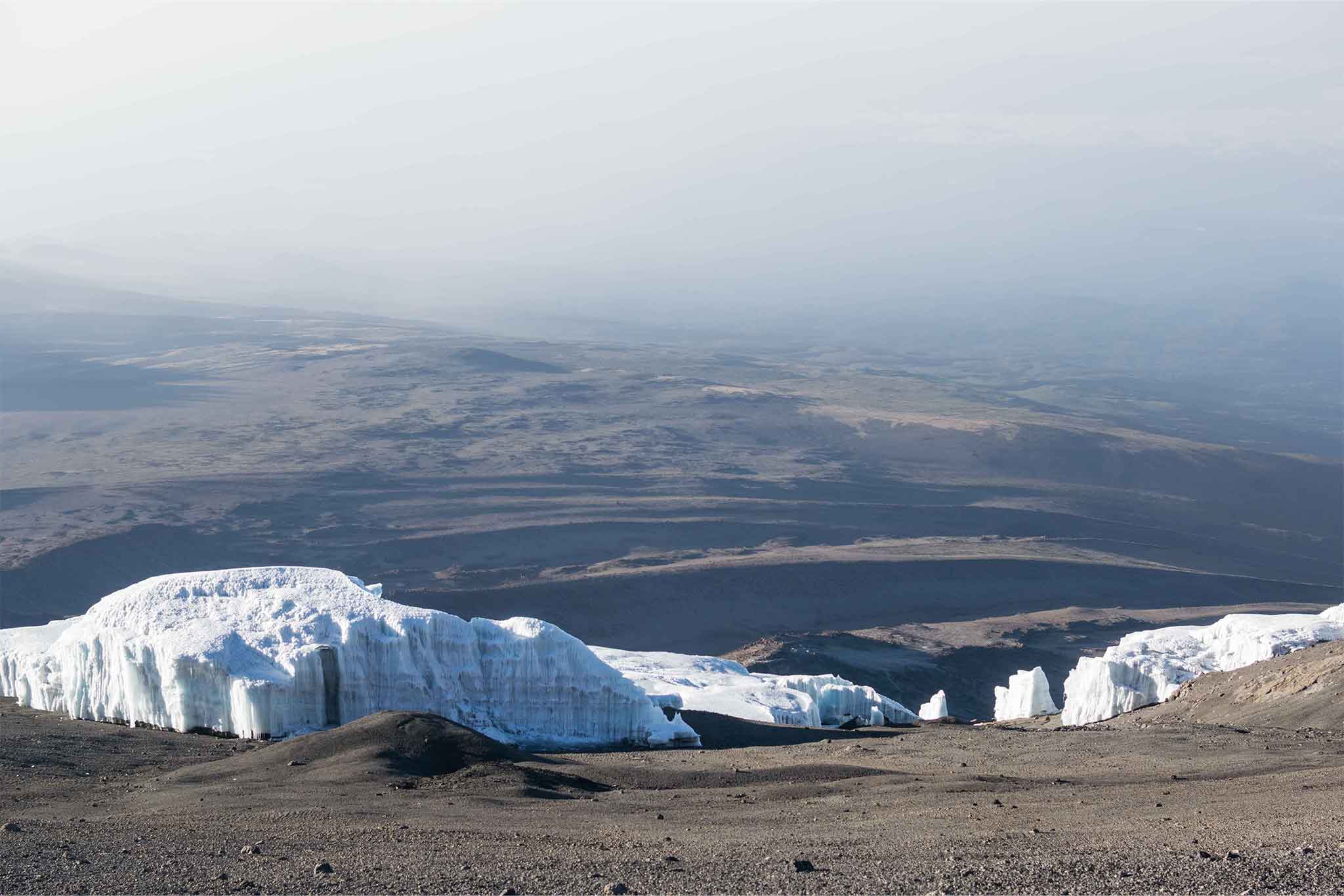
Kilimanjaro climb after Meru
After Meru
Continue to Kilimanjaro with a rest day in between. Being acclimatised from Meru greatly improves your chances of summiting.
Adds 8–10 days
Momella Lakes Canoe Safari
Arusha National Park
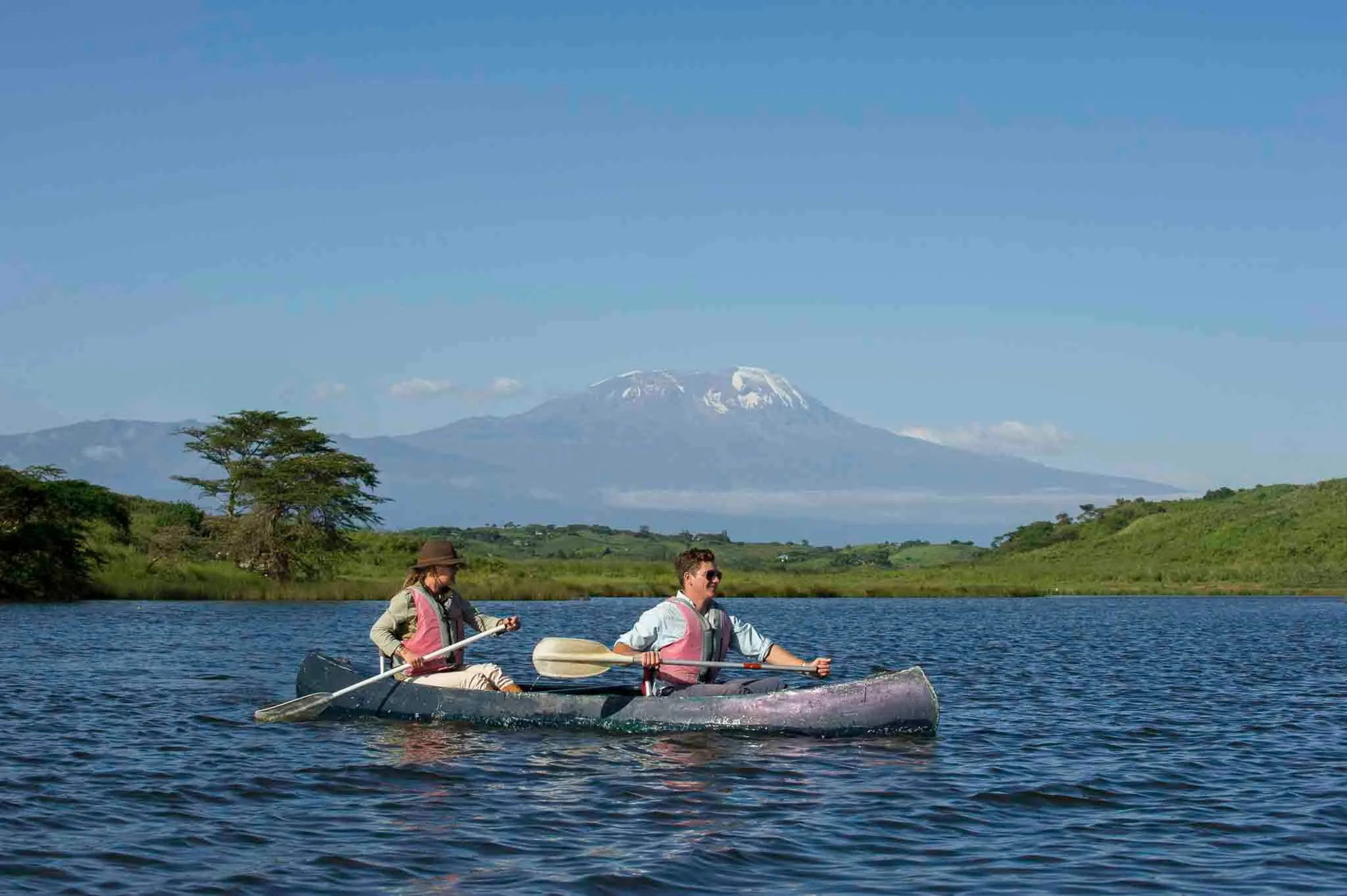
Paddle on the Momella Lakes among waterbirds and hippos, with Mount Meru reflected in the water (subject to water levels).
Fits into the itinerary (half day)
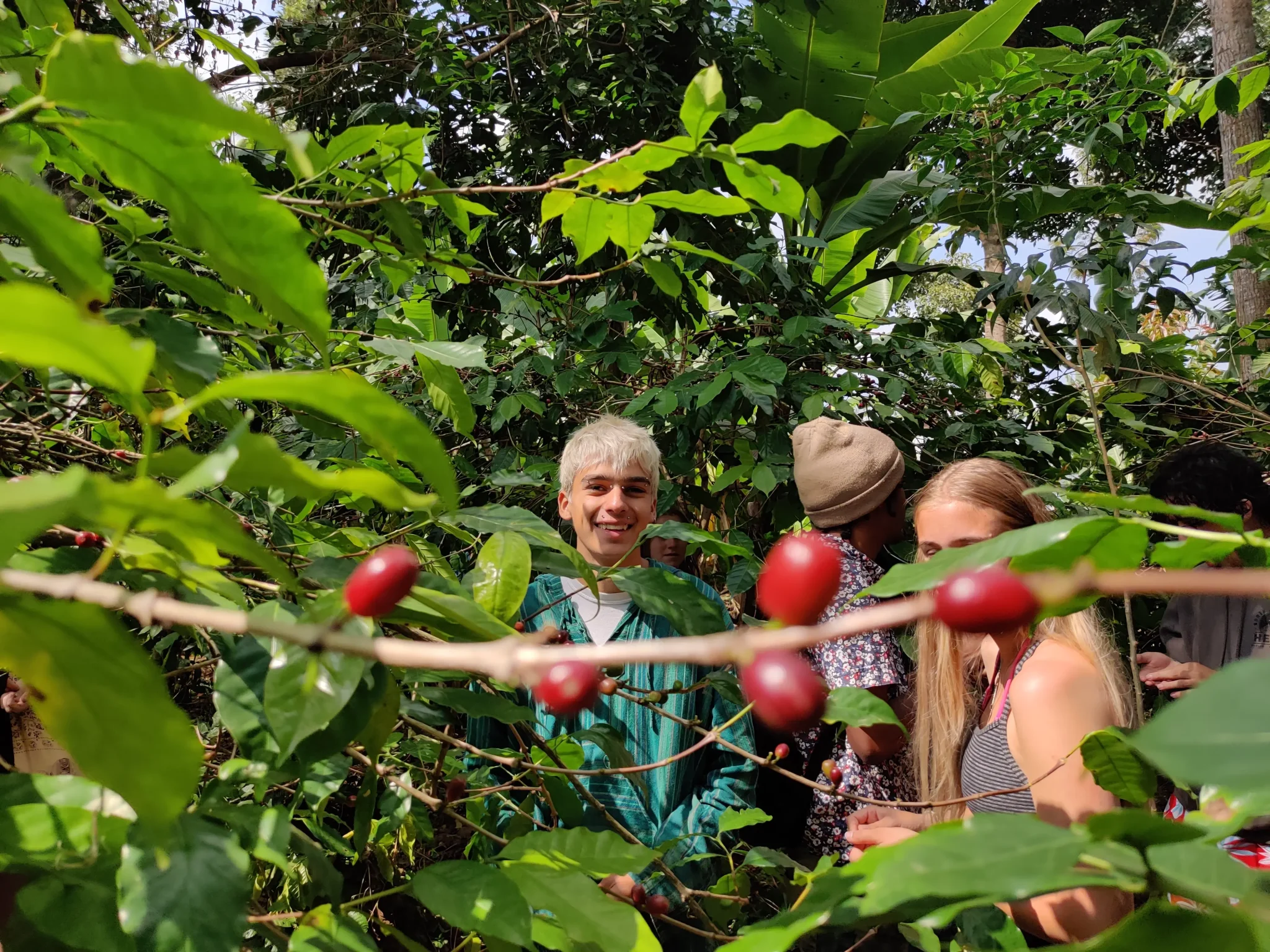
Arusha Coffee Farm Tour
Arusha
Tour a coffee plantation on the slopes of Mount Meru and learn how Tanzanian coffee goes from bean to cup.
Fits into the itinerary (half day)
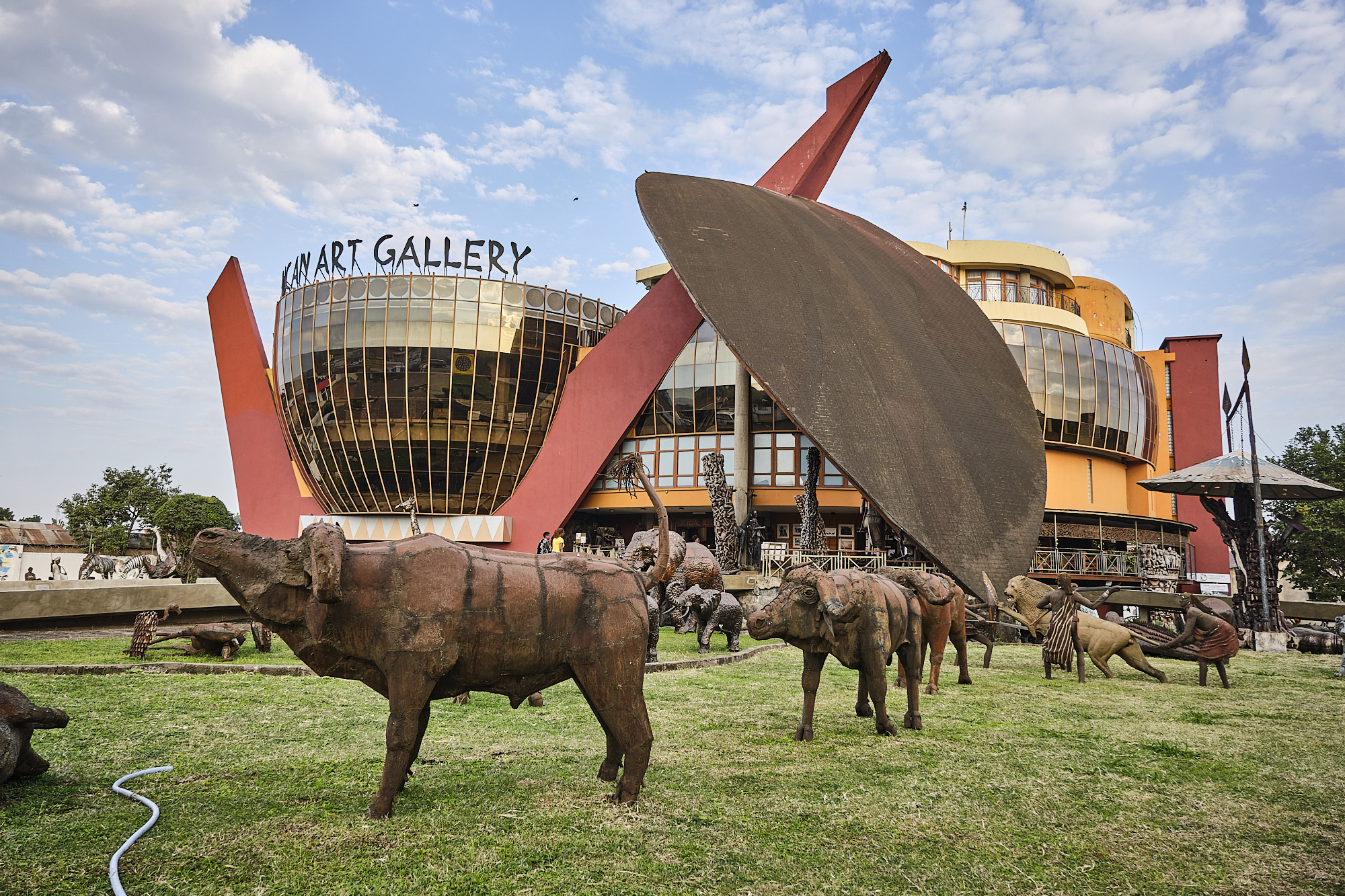
Arusha Cultural Heritage Centre
Arusha
A large gallery of Tanzanian art, carvings and jewellery, including tanzanite from the only place on earth it is mined.
No extra day needed
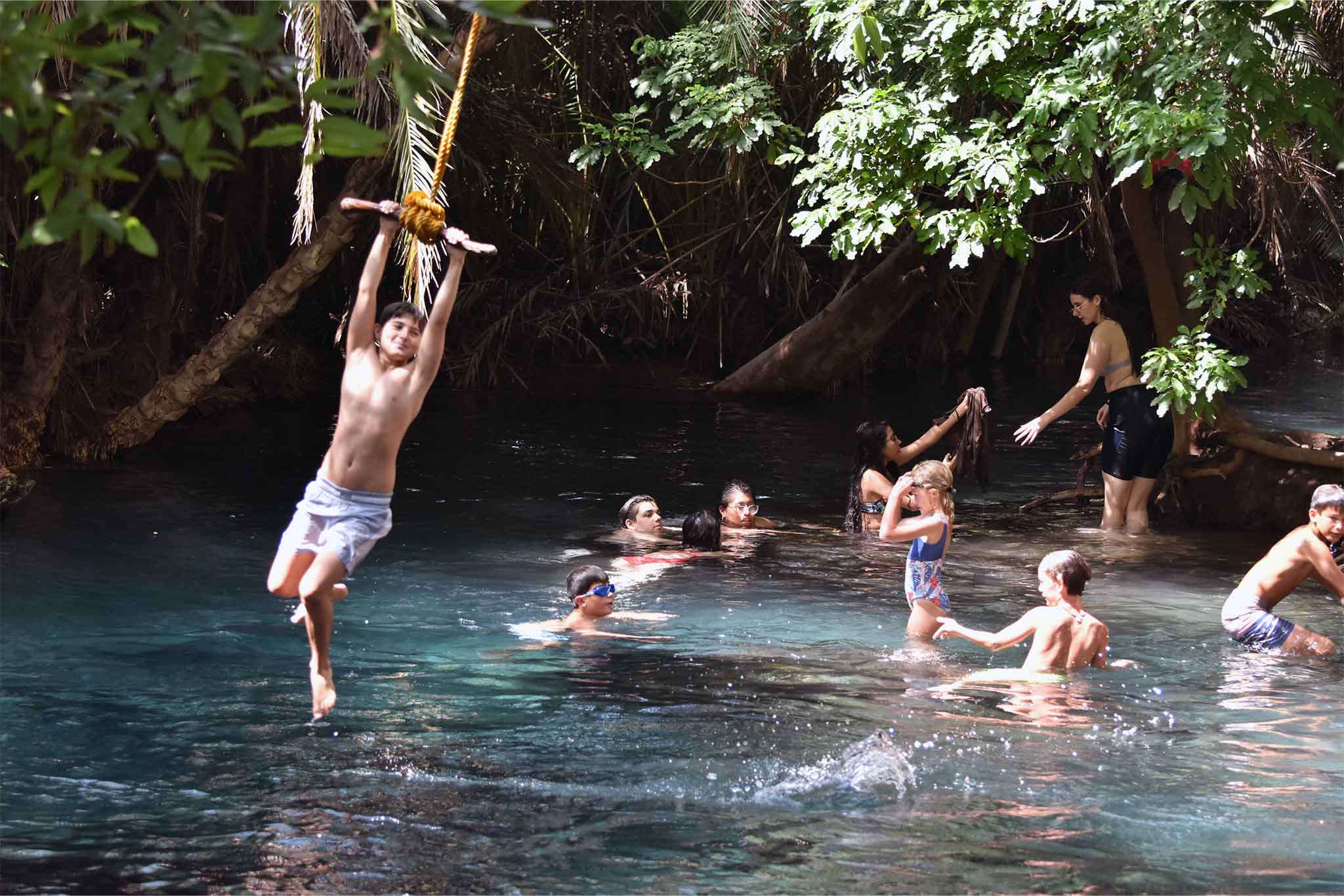
Chemka (Kikuletwa) Hot Springs
After the climb
After coming down from Meru, spend a lazy day swimming in the warm spring pools at Chemka, about an hour from Arusha.
Adds 1 day
Safari or Zanzibar extension
After the climb
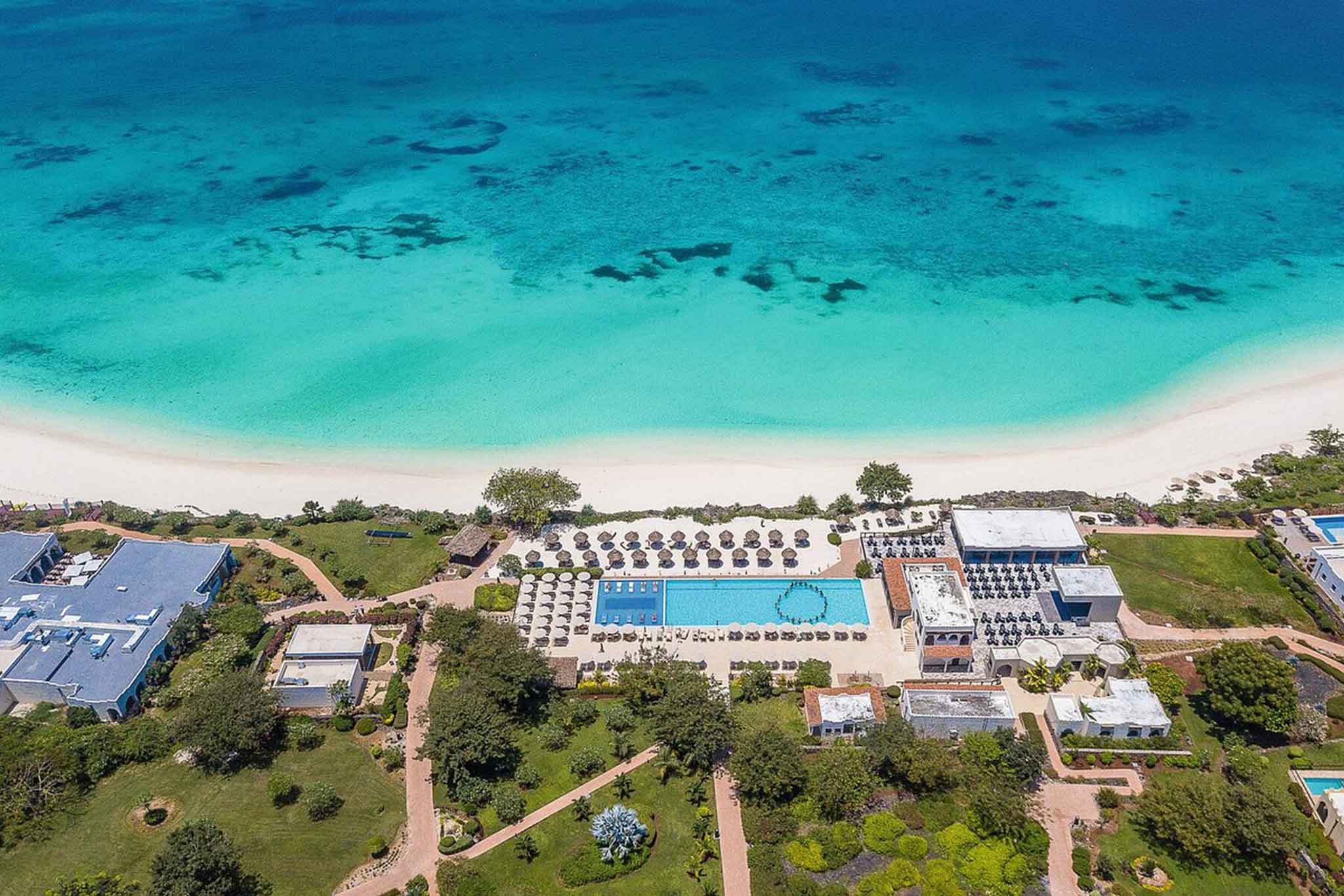
Arusha is the gateway to the northern parks, so it is easy to start a safari the day after your climb, or fly to Zanzibar for the beach.
Adds 3–6 days
Discover Tanzania
Your questions answered
How hard is Mount Meru?
Meru is shorter than Kilimanjaro but steeper in places, and summit night includes a narrow ridge. It suits fit walkers who are comfortable with some exposure. No technical climbing skills are needed.
Why do we sleep in huts?
Arusha National Park requires climbers to use the official huts, Miriakamba and Saddle Huts. They have bunk beds with mattresses, shared toilets and dining areas. Bring your own sleeping bag.
Why is there an armed ranger?
Wild animals such as buffalo and elephant live on the lower slopes, so a park ranger accompanies every group for safety.
Is Meru a good preparation for Kilimanjaro?
Yes. Climbing to 4,566 m is excellent acclimatisation. Many climbers do Meru first, rest for a day, then start Kilimanjaro.
What will I see on the way?
Giraffe, buffalo, warthog, zebra, and colobus monkeys on the lower slopes, a giant fig tree arch, and on summit day, views into the crater and across to Kilimanjaro.