
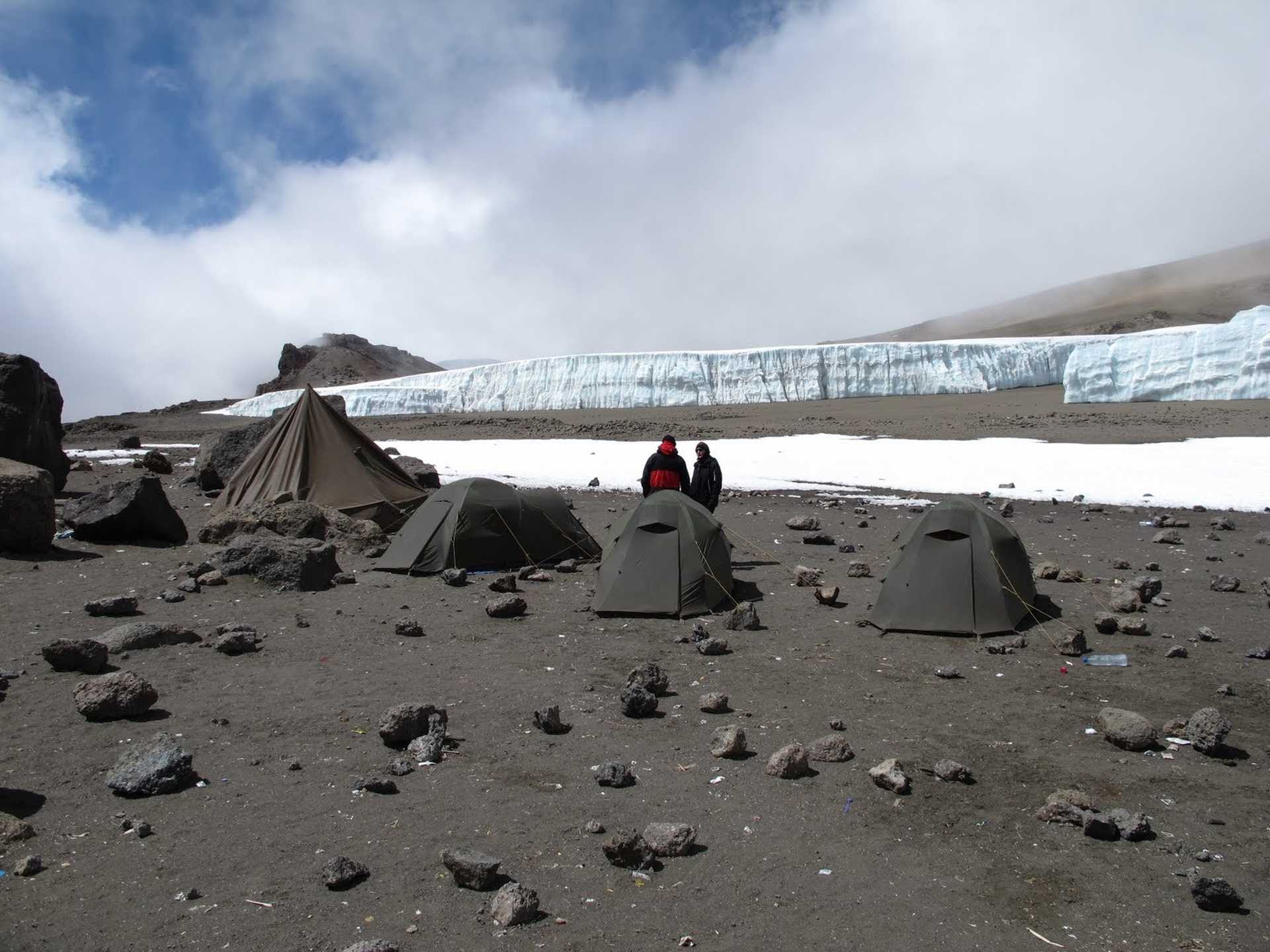
Tanzania
Kilimanjaro Climb – Rongai Route
Short Description The only route that climbs Kilimanjaro from the north, near the Kenyan border. It's drier and quieter than the southern routes, with an extra acclimatisation day at Mawenzi Tarn. A good choice for the rainy months or for anyone who prefers a gentler gradient.
From $100
Tour overview
7 Days Kilimanjaro Climb – Rongai Route
The Rongai Route starts at Nale Moru village, close to the Kenyan border, and climbs steadily through pine plantations and indigenous forest onto open moorland. Because the northern side of Kilimanjaro sits in a rain shadow, this route receives much less rain than the southern slopes, and far fewer people climb it.
The gradient is gentle, and our itinerary includes an extra day at Mawenzi Tarn. This small mountain lake lies beneath the jagged spires of Mawenzi, Kilimanjaro's second peak, and is one of the most dramatic campsites on the mountain. The acclimatisation hike here makes a real difference on summit night.
From Kibo Camp you climb to Gilman's Point on the crater rim and continue to Uhuru Peak for sunrise. You descend on the Marangu side, which means you see both the north and the south of the mountain.
Highlights
Rongai is the only route that approaches Kilimanjaro from the north, giving you wild, quiet trails on the drier side of the mountain. A highlight is the acclimatisation day at Mawenzi Tarn, 4,330 m, a small mountain lake beneath the jagged spires of Mawenzi peak.
On summit night you climb to Gilman's Point on the crater rim and on to Uhuru Peak, 5,895 m. You then descend on the Marangu side, so you see both the north and the south of Kilimanjaro in one climb.
Discover Tanzania
Crafted for you
Tailor make your trip with iTour Tanzania
Every journey can be shaped around your pace, lodges, and must-do moments. Tell us what matters most and we will build it with you.
Build your tripYour adventure begins
A taste of what to expect on this journey
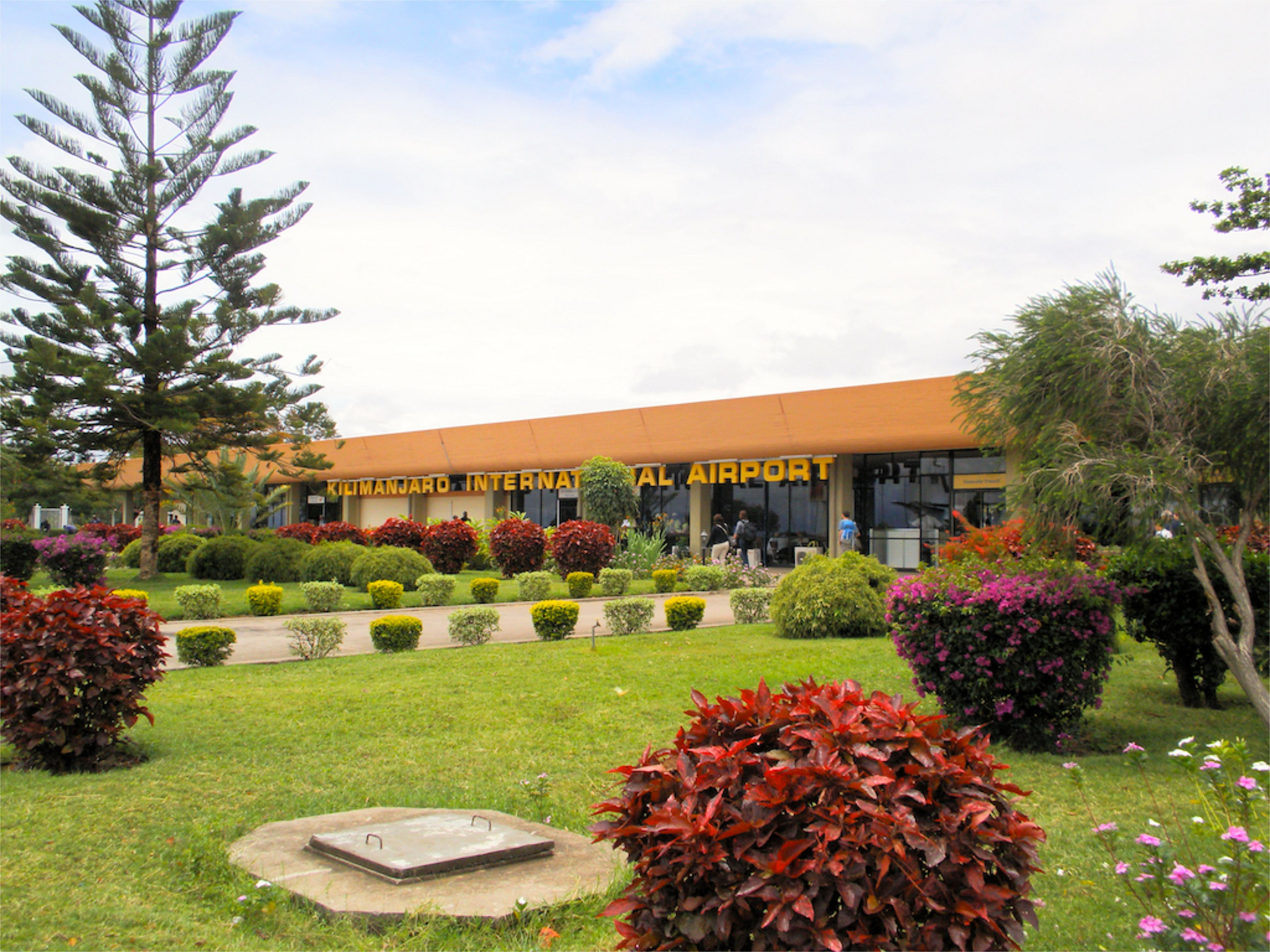
Arrival at Kilimanjaro International Airport
Transfer ~1 hr
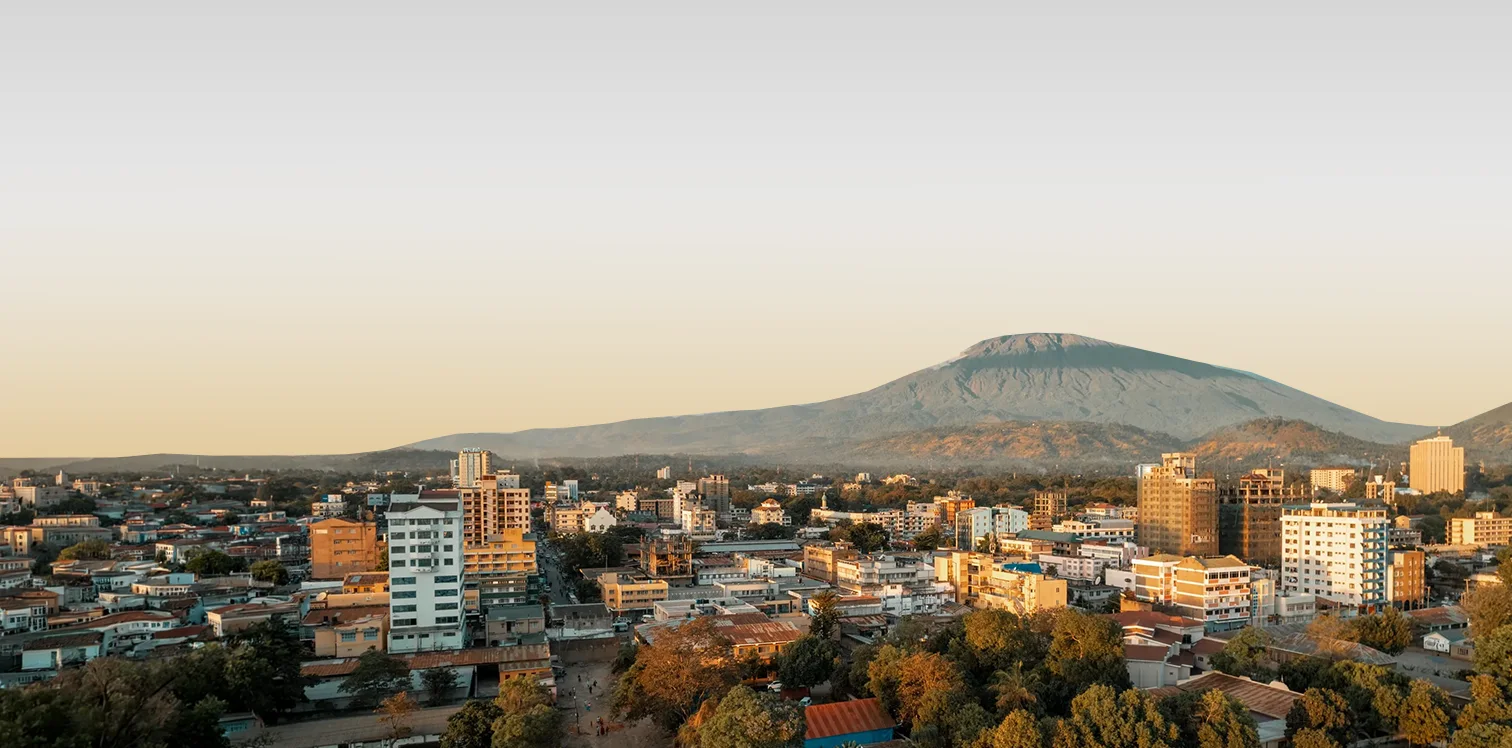
Karibu Tanzania! Our representative meets you at Kilimanjaro International Airport and takes you to Arusha, about an hour away, the gateway to northern Tanzania.
Rest at your hotel for the afternoon and drink plenty of water to prepare for the climb.
In the evening, your lead guide visits to brief you on the Rongai Route and the drive around to the northern side of the mountain. They check all your gear and arrange rentals if you need them.
Meals: Dinner
Nale Moru (1,950 m) to Simba Camp (2,600 m)
Drive 4–5 hrs · Hike 3–4 hrs · 8 km
After breakfast, drive around the eastern side of Kilimanjaro towards the Kenyan border, through farmland and villages, to Nale Moru (1,950 m), a journey of 4–5 hours. Your guide completes registration while the crew prepares the loads, and you have lunch.
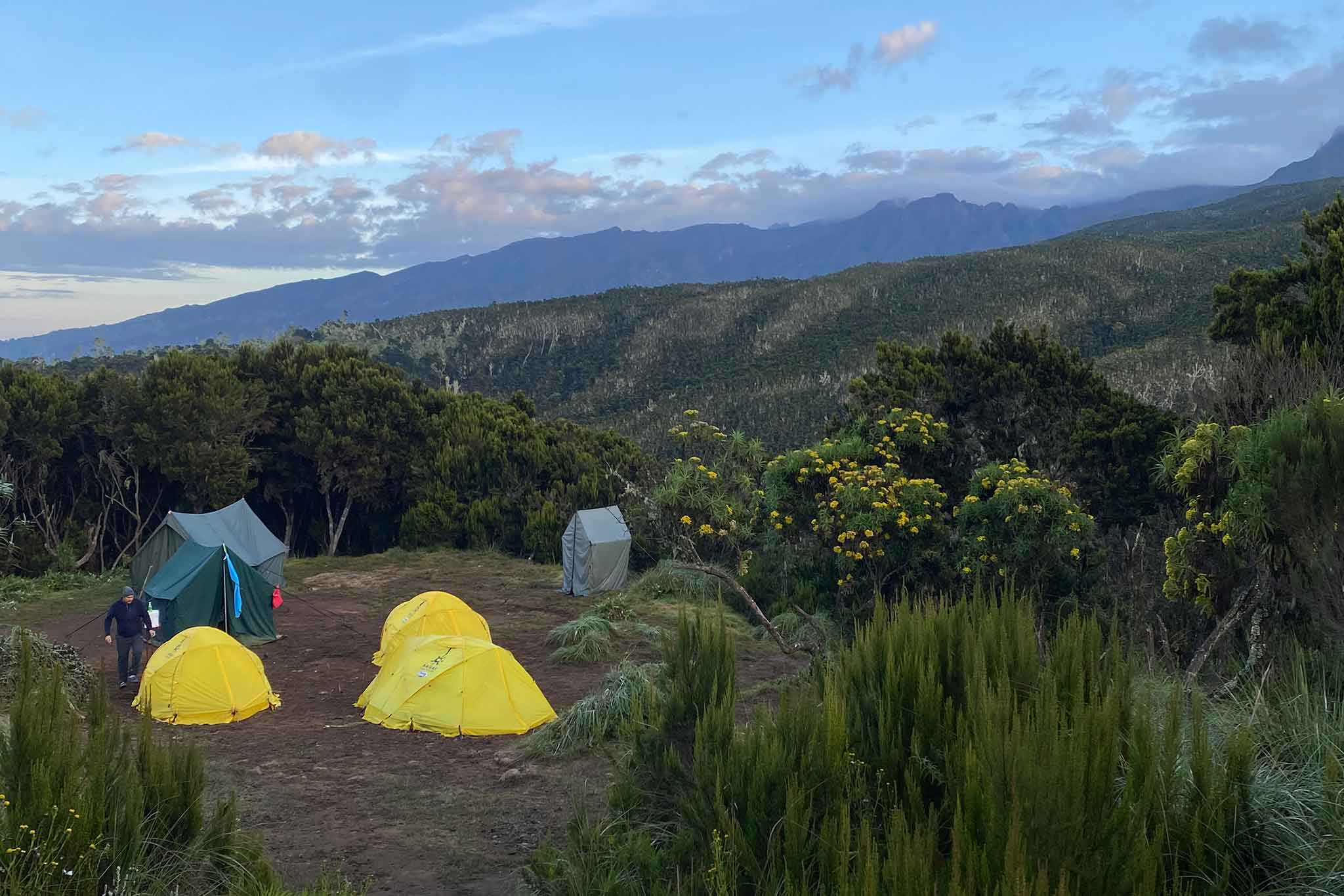
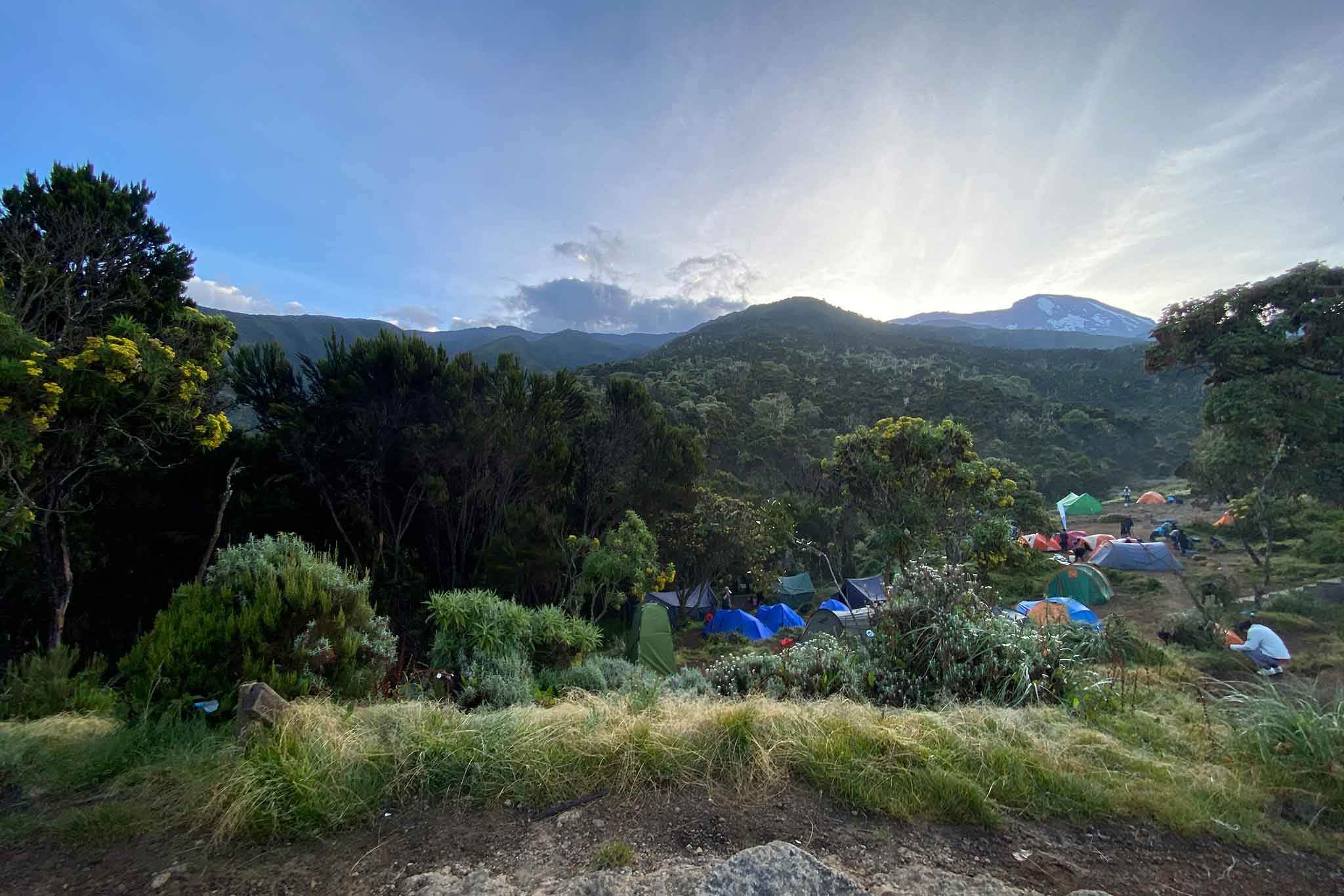
The trail starts through maize fields and pine plantations before entering a band of indigenous forest, where colobus monkeys are often seen. The climb is gentle and steady.
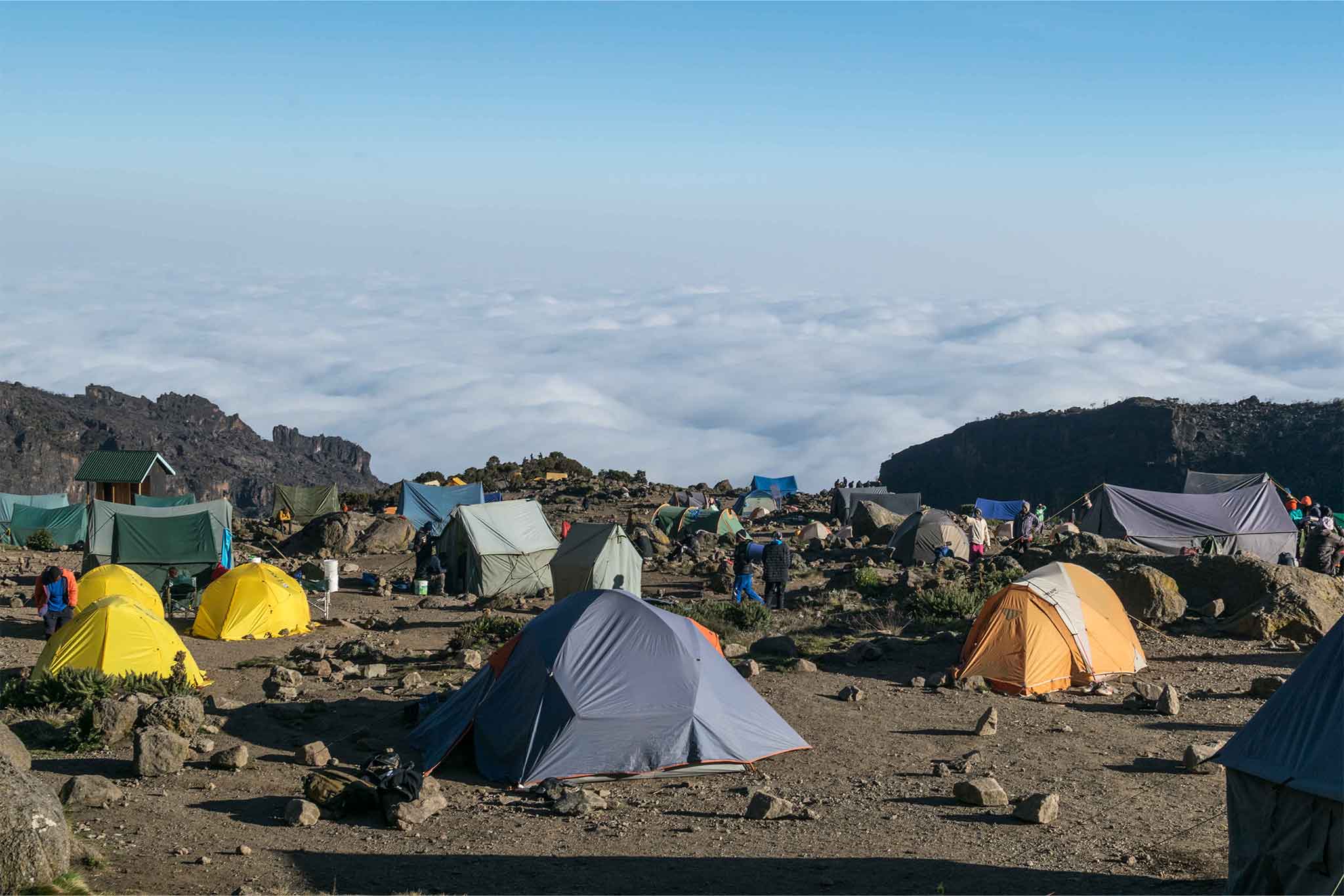
After 3–4 hours of walking, reach Simba Camp (2,600 m), near the first cave, on the edge of the moorland. On a clear evening, you look out over the plains of Kenya's Amboseli in the distance.
Meals: Breakfast, Lunch, Dinner
Simba Camp to Kikelewa Camp (3,600 m)
Hike 6–7 hrs · 12 km
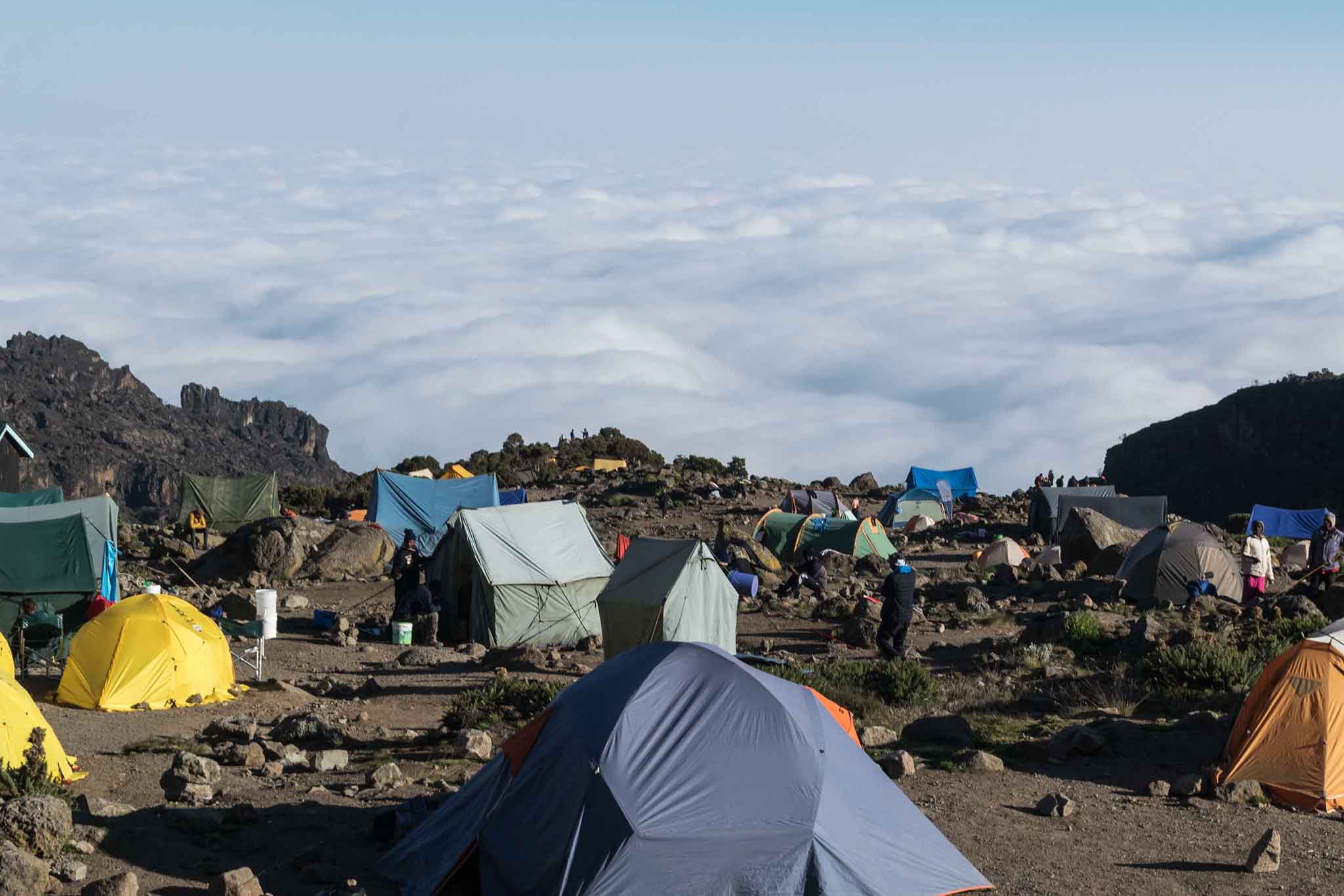
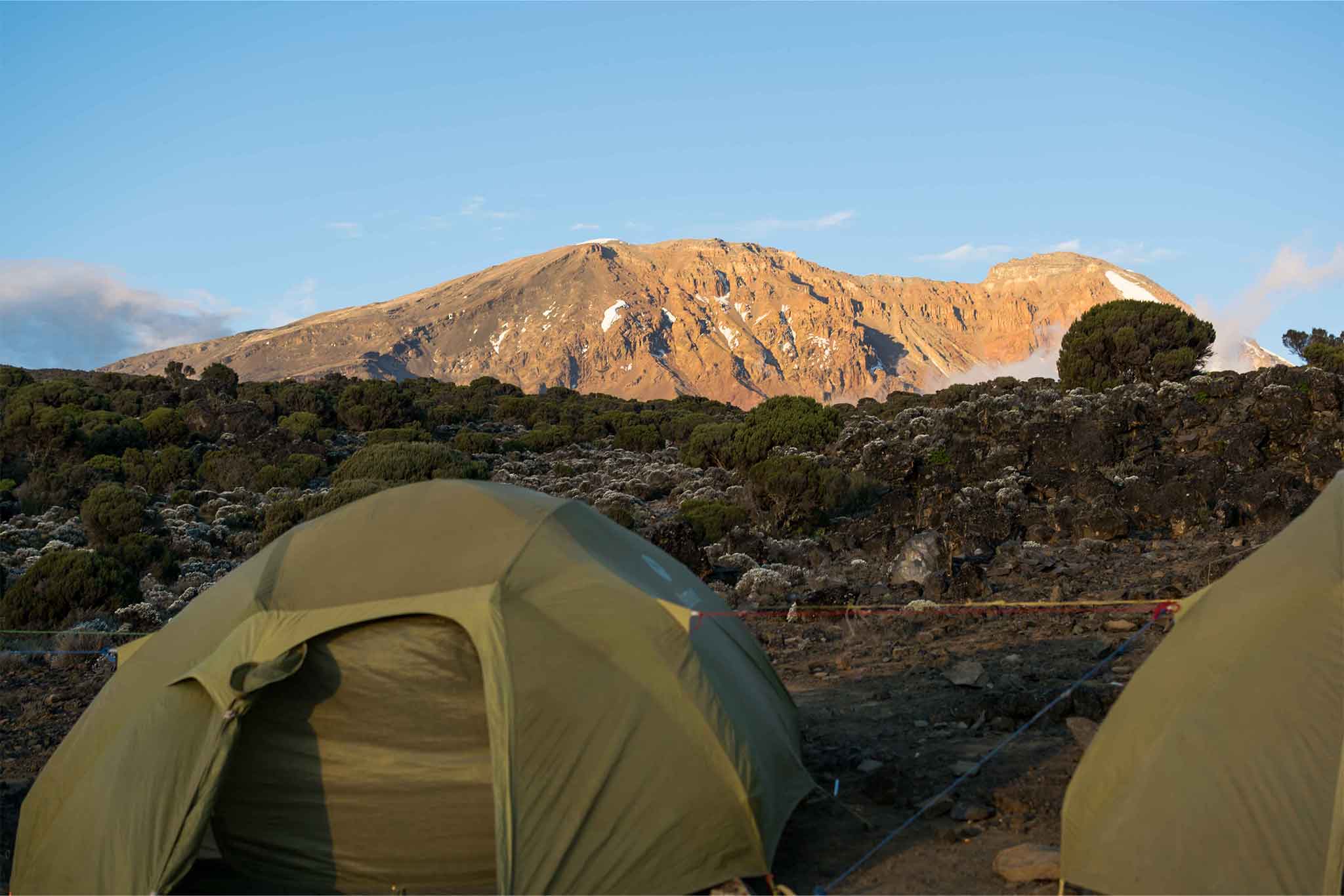
Today you climb steadily through moorland with Kibo's snowy dome ahead and the jagged peaks of Mawenzi coming into view. Stop for lunch near the Second Cave (3,450 m).
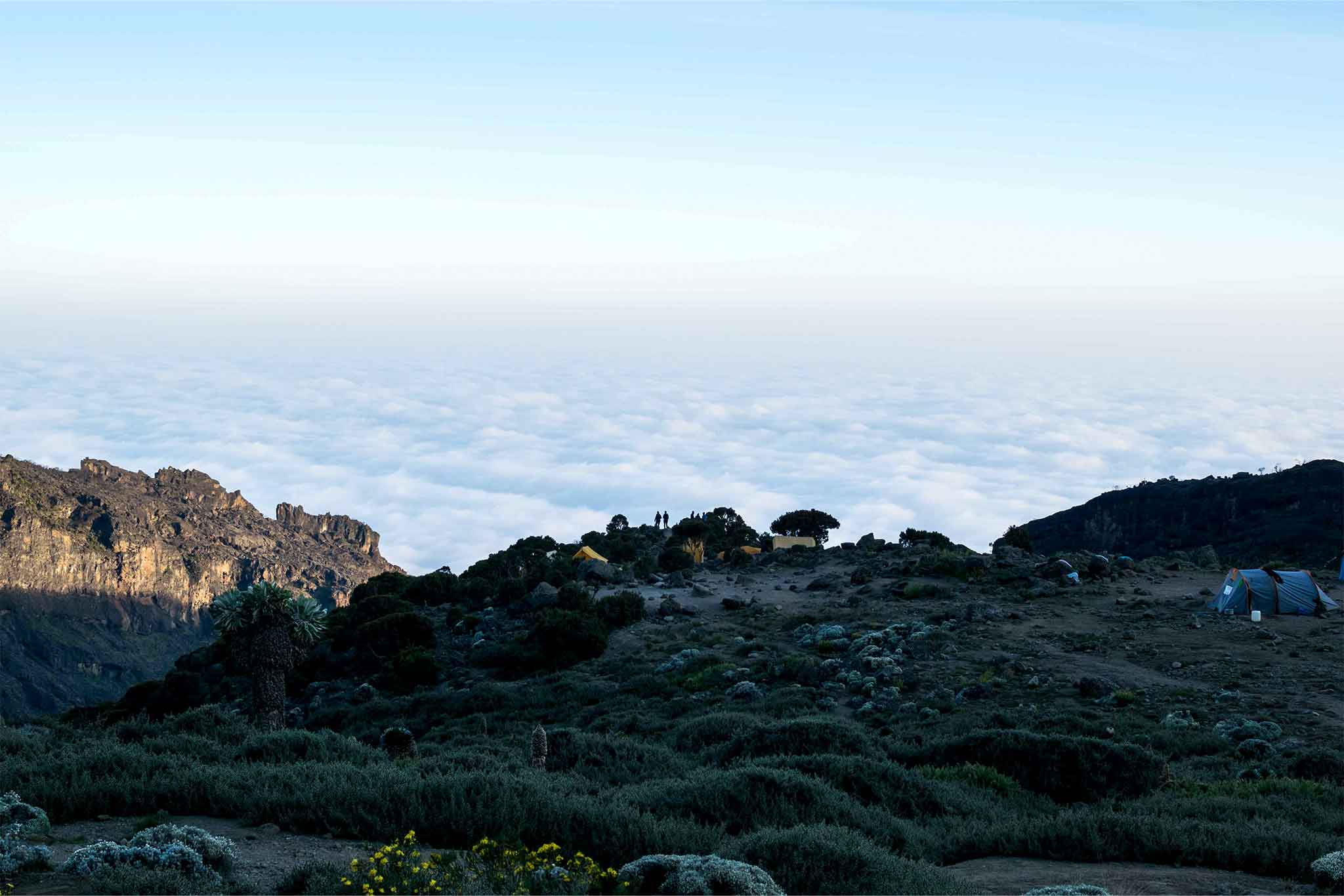
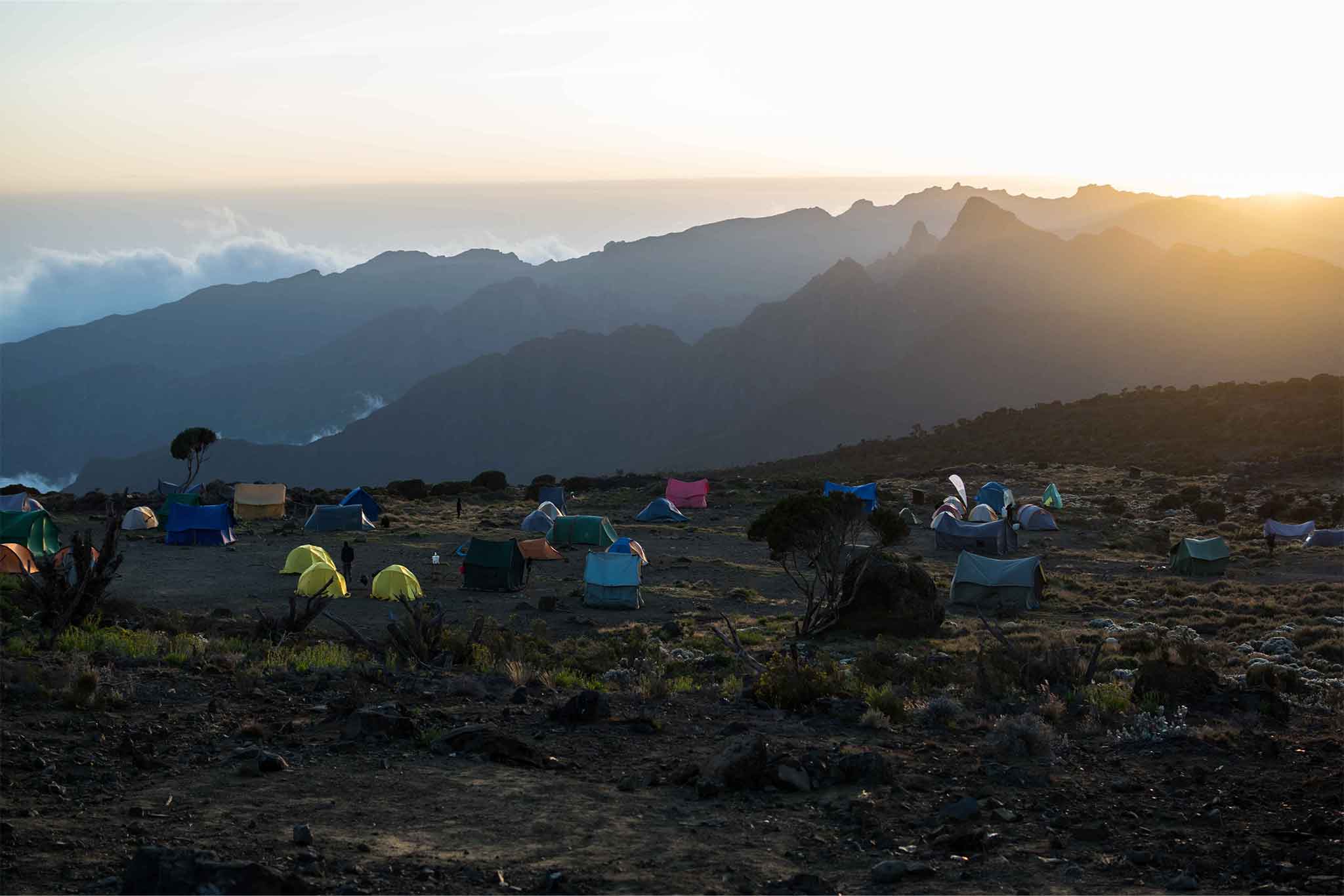
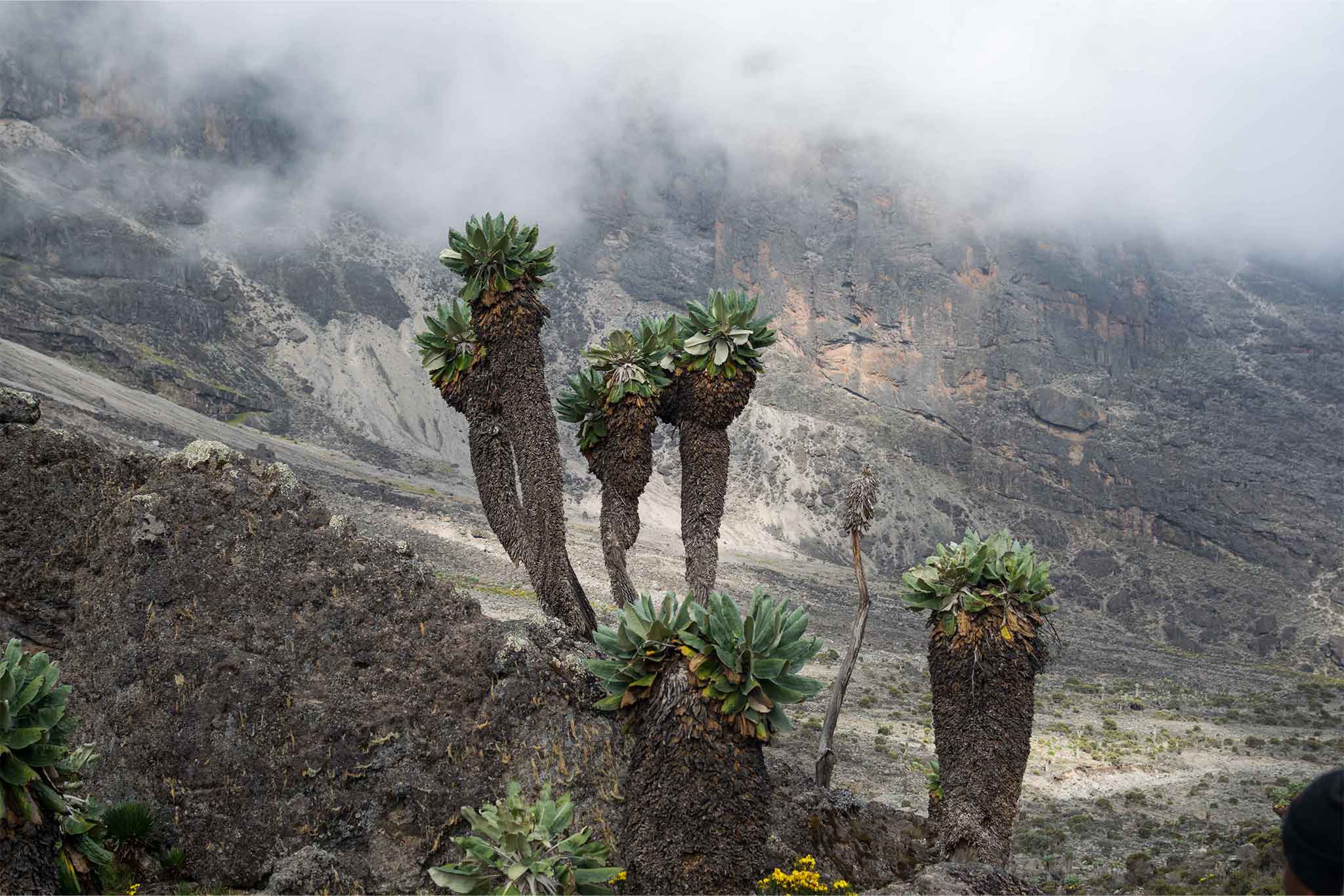
In the afternoon, leave the main trail and head across the heather towards Mawenzi, to Kikelewa Camp (3,600 m), set in a sheltered valley with giant groundsels. It is a longer day of 6–7 hours, but the gradient is gentle.
Enjoy dinner and the evening health check, and look out for the lights of villages far below.
Meals: Breakfast, Lunch, Dinner
Kikelewa Camp to Mawenzi Tarn (4,330 m)
Hike 3–4 hrs · 4 km
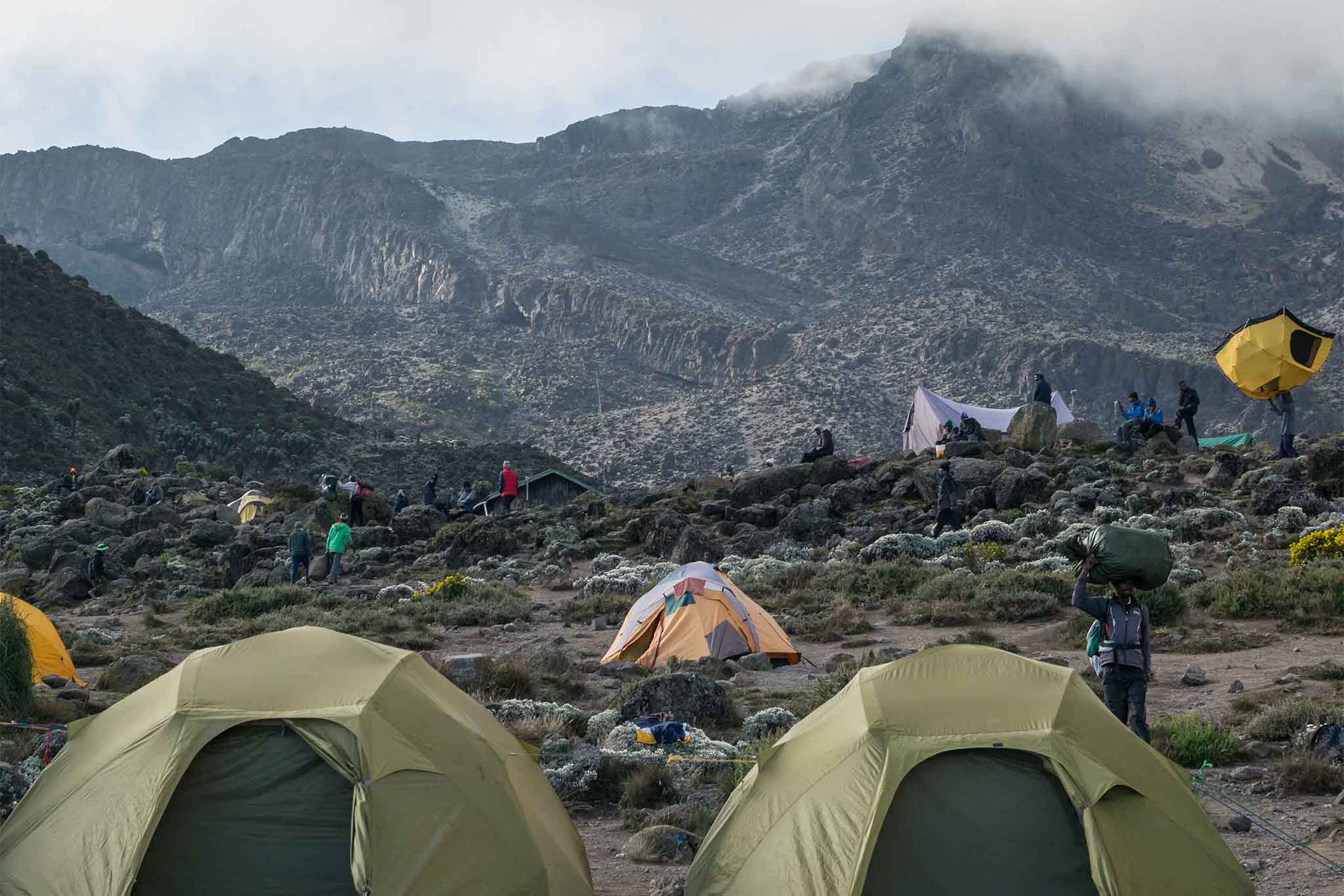
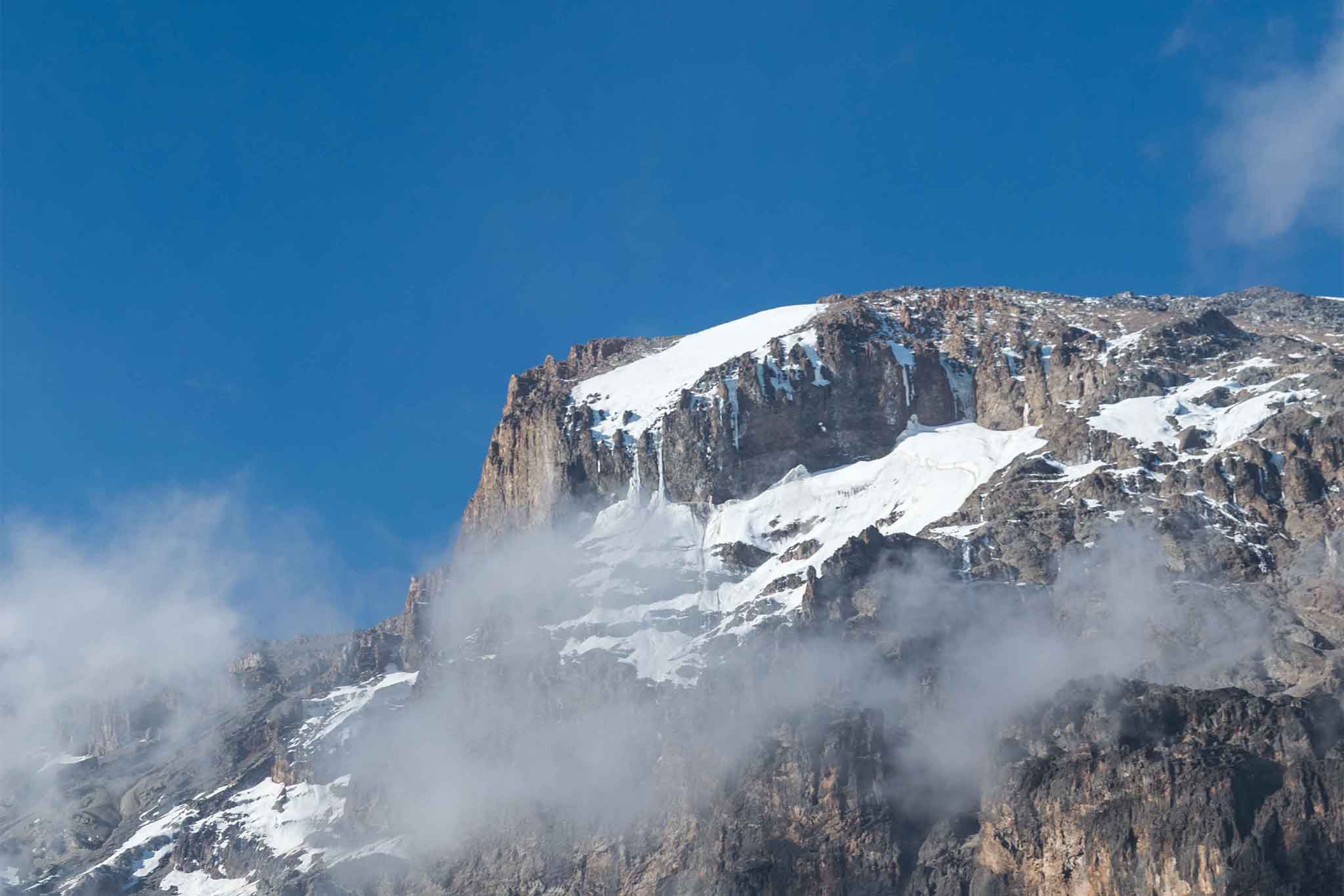
A short but steep climb on grassy slopes, with superb views of the rocky Mawenzi peak towering above you. As you climb, the vegetation becomes sparse and alpine.
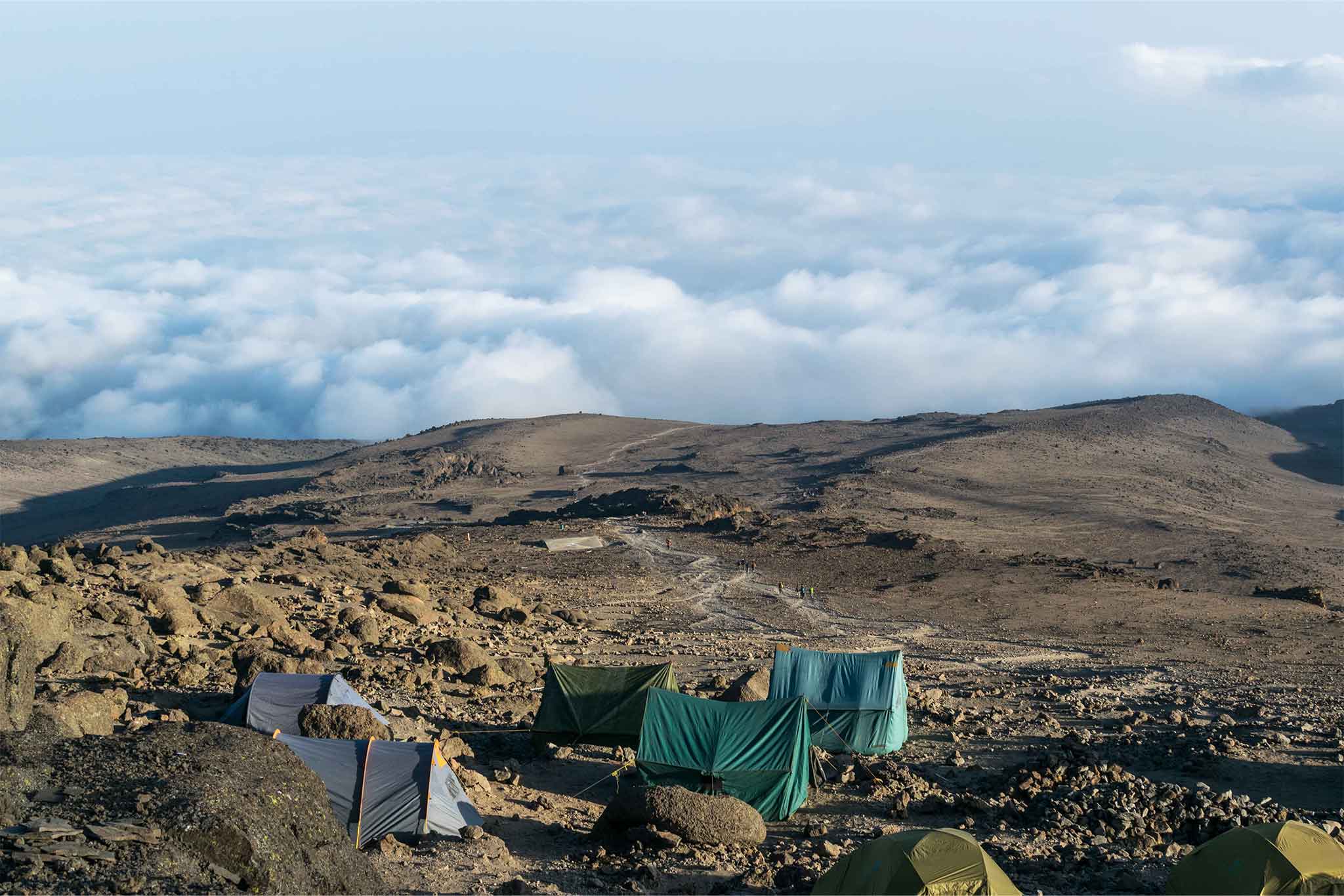
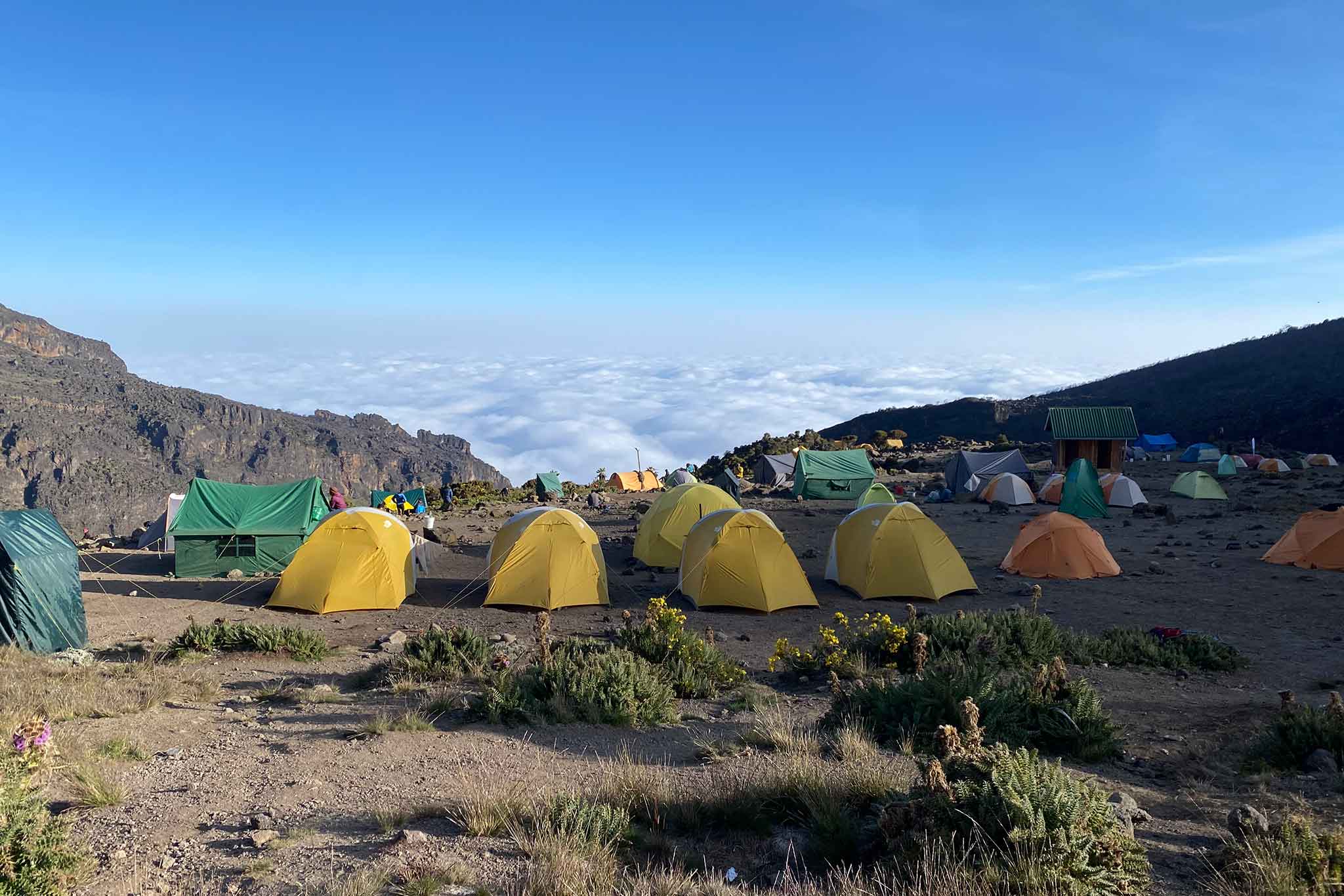
Arrive at lunchtime at Mawenzi Tarn (4,330 m), a small lake beneath the dramatic cliffs and pinnacles of Mawenzi. It is one of the most impressive campsites on Kilimanjaro.
Spend the afternoon resting, or join your guide for a short walk up the ridges to help acclimatisation.
Meals: Breakfast, Lunch, Dinner
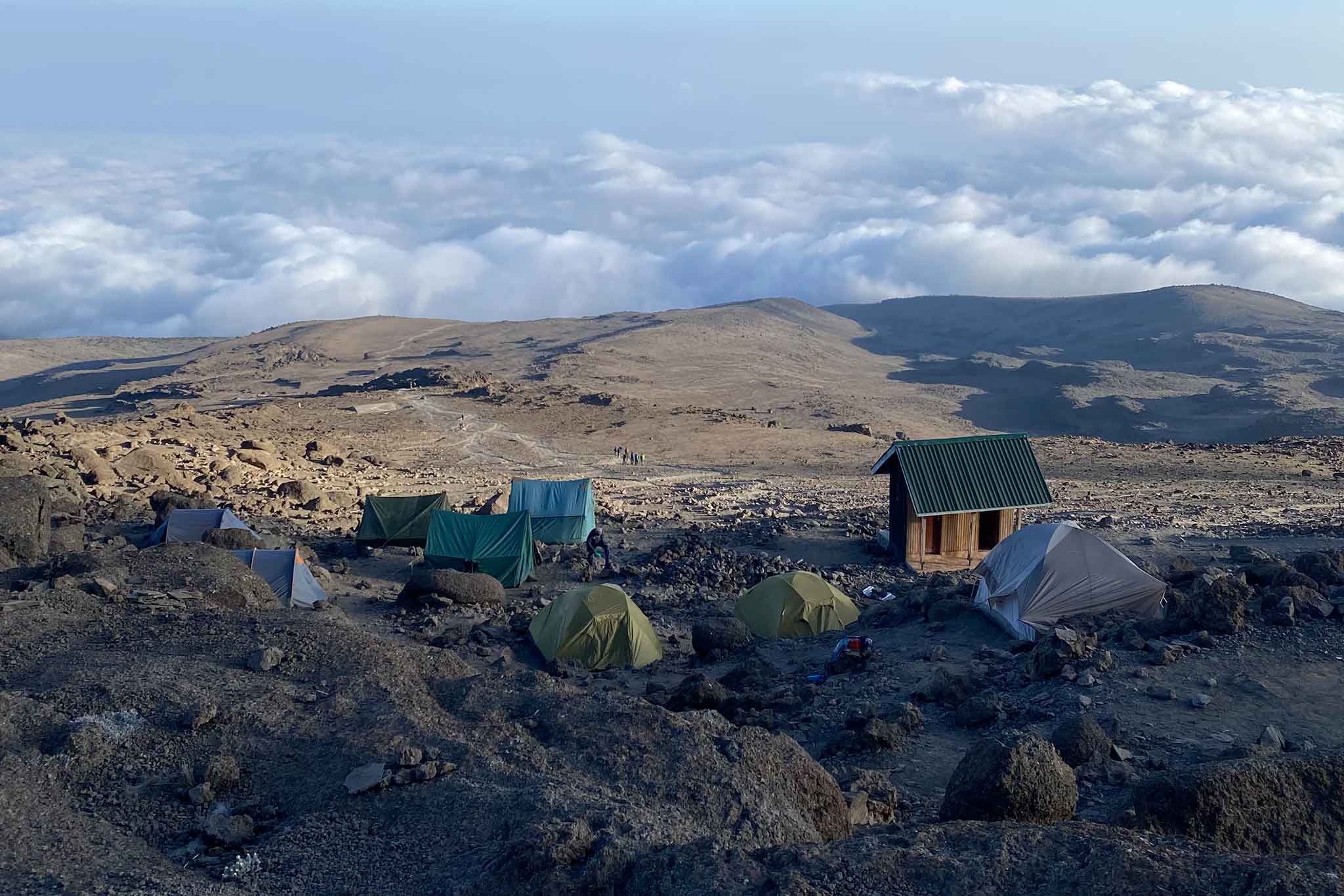
Acclimatisation day at Mawenzi Tarn
Hike 2–3 hrs
Today is an acclimatisation day, to help your body adjust to the altitude before the final push. After a relaxed breakfast, your guide leads a hike up the ridges of Mawenzi towards the Mawenzi Hut area, climbing to around 4,600 m for sweeping views over the Saddle and Kibo.
Return to camp for lunch and rest in the afternoon. Use the time to drink plenty of water, read, play cards with your crew and enjoy the stillness of the mountain.
Watching the sunset light up Mawenzi's spires from camp is a highlight of the trip.
Meals: Breakfast, Lunch, Dinner
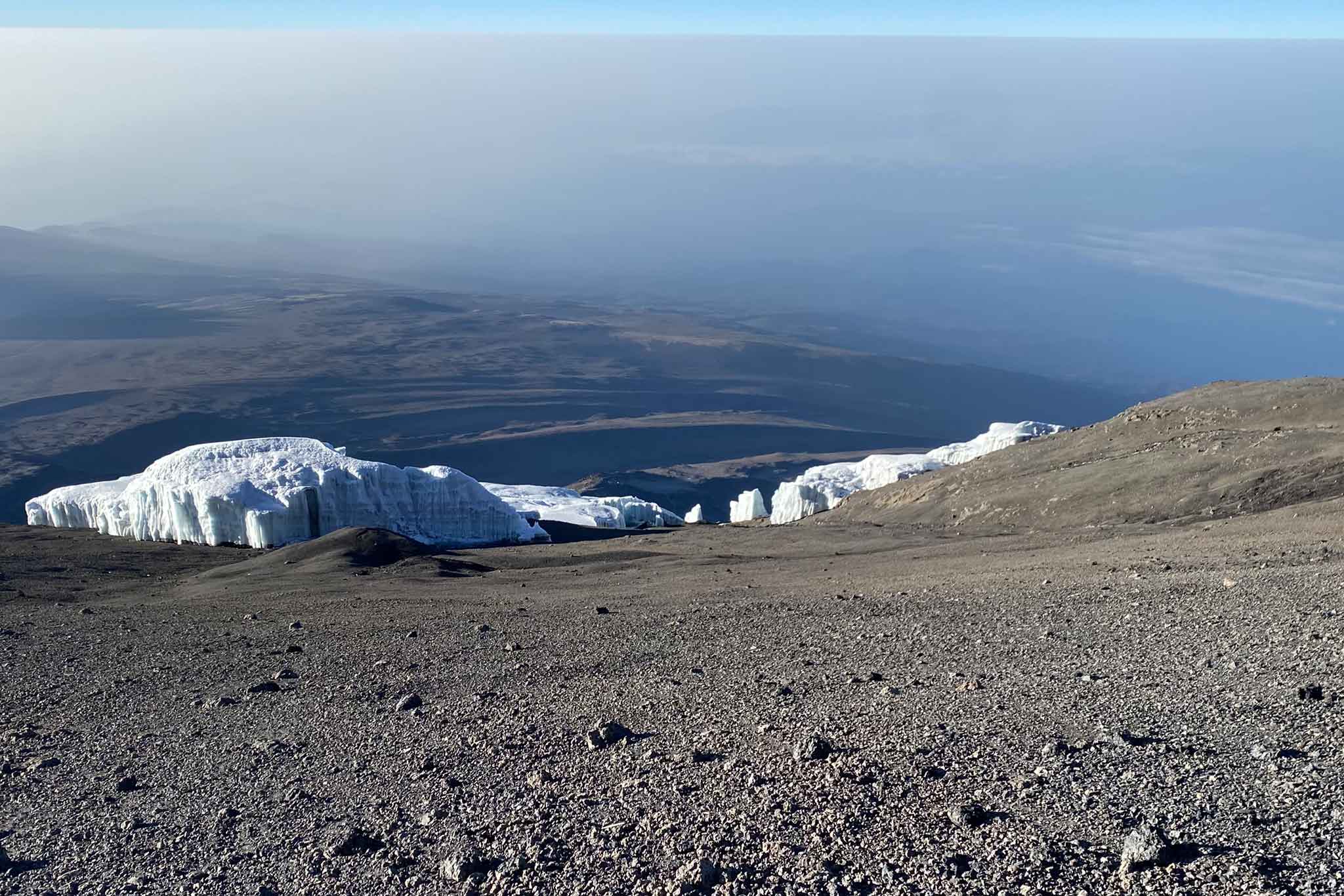
Mawenzi Tarn to Kibo Camp (4,720 m)
Hike 5–6 hrs · 9 km
After breakfast, cross the Saddle, a vast, stark plain of volcanic gravel between Mawenzi and Kibo. The landscape is like the moon, and the summit cone of Kibo grows closer with every step.
After 5–6 hours you reach Kibo Camp (4,720 m) at the foot of the summit cone. Lunch is followed by your summit briefing: your guide explains what to wear, what to carry and how the night will unfold.
Prepare your gear, have an early dinner around 5 p.m., and go to bed early to rest before the midnight start.
Meals: Breakfast, Lunch, Dinner
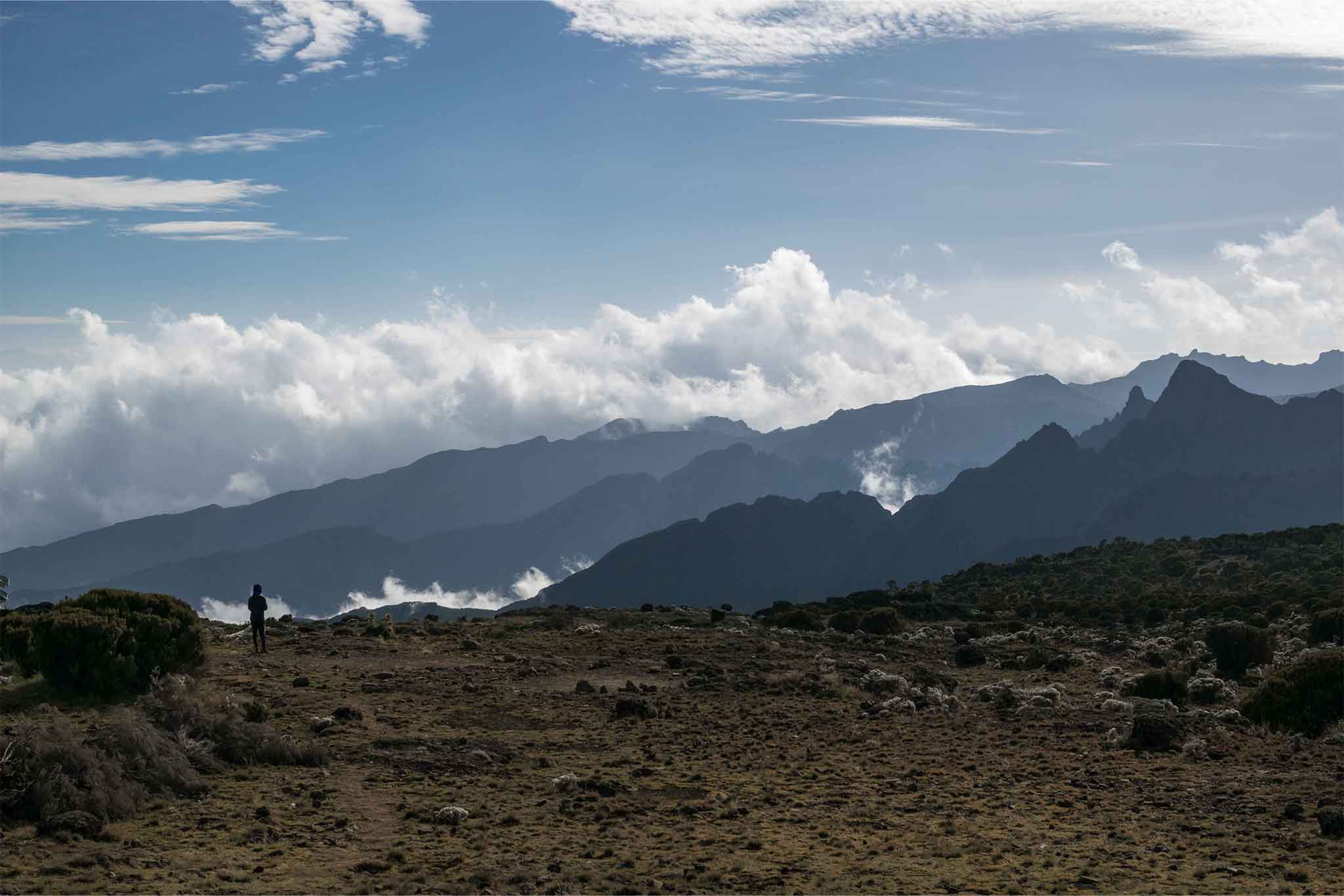
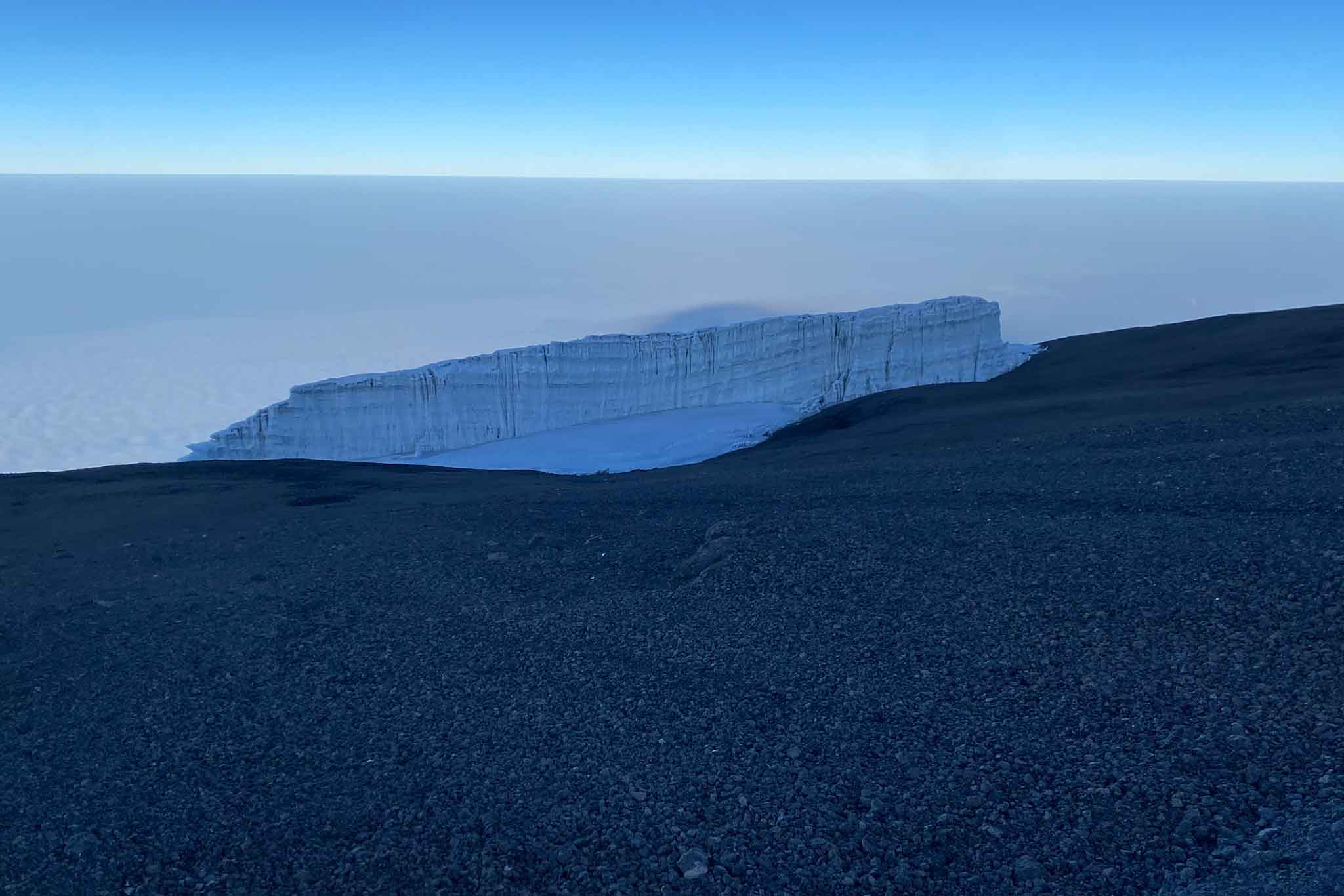
Summit day
Gilman's Point, Uhuru Peak (5,895 m), descent to Horombo (3,720 m)
Hike 12–14 hrs · 21 km
Your guide wakes you around 11 p.m. with hot tea. Begin the steep climb by headlamp up the switchbacks of the summit cone, past Hans Meyer Cave (5,150 m), towards the crater rim. It is cold, dark and demanding, and your guides keep a slow, steady pace with regular breaks.
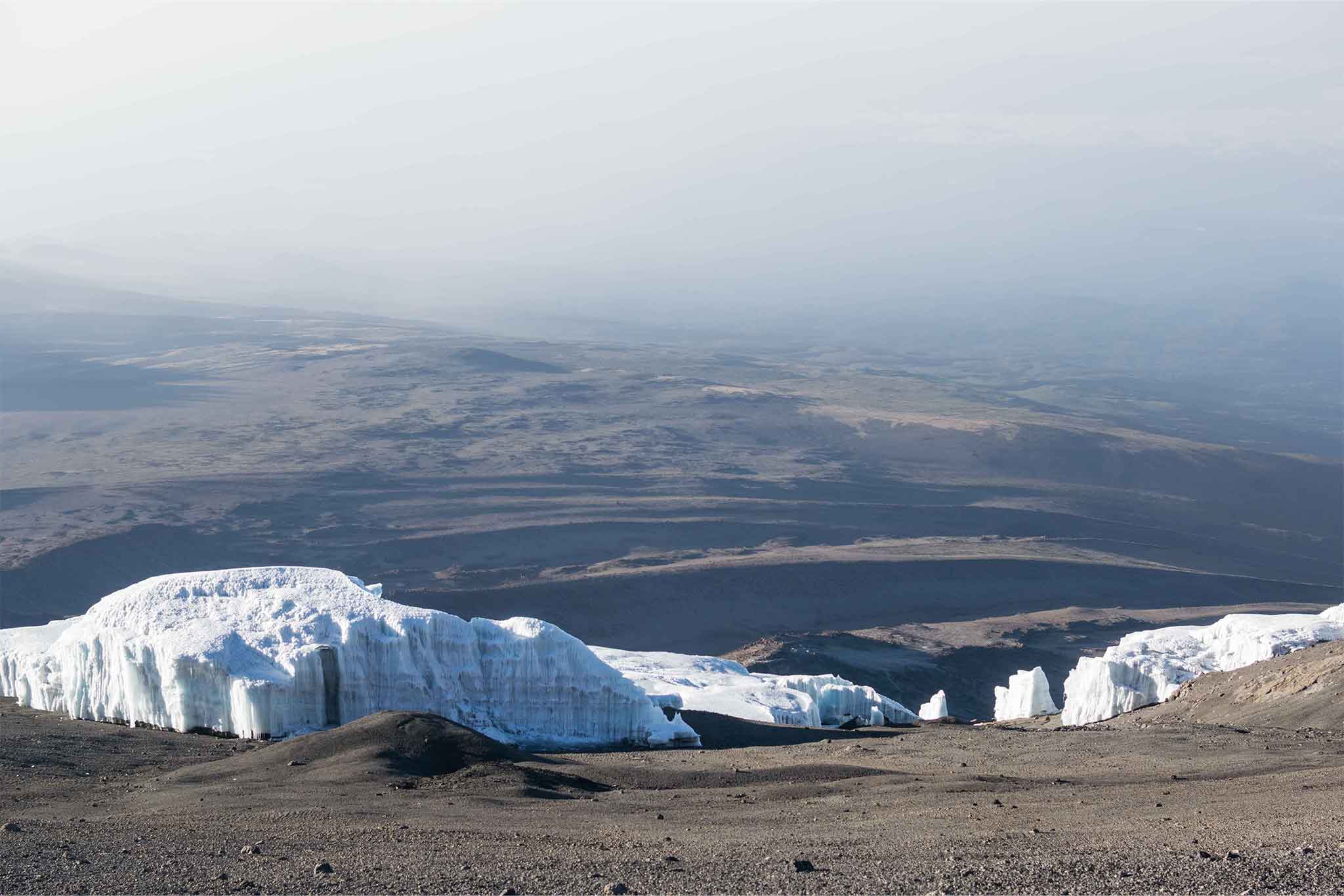
Around sunrise, you reach Gilman's Point (5,685 m) on the crater rim, where the sun rises over Mawenzi. Continue for another 1–2 hours around the rim, past Stella Point, to Uhuru Peak (5,895 m), the Roof of Africa. Celebrate, take photos and enjoy the view of the glaciers.
Descend to Kibo Camp for a rest and a hot meal, then continue down across the Saddle to Horombo Camp (3,720 m). It is a long day of 12–14 hours, but the thicker air makes the evening feel wonderful.
Meals: Breakfast, Lunch, Dinner
Horombo to Marangu Gate (1,860 m), transfer to Arusha
Hike 5–6 hrs · 20 km · Drive ~2.5 hrs
After a celebratory breakfast and the farewell ceremony with your crew, descend on the Marangu Route past Mandara Hut and through beautiful rainforest to Marangu Gate (1,860 m). The walk takes 5–6 hours.
At the gate, receive your summit certificate, then drive about 2.5 hours back to your hotel in Arusha.
Enjoy a hot shower, a soft bed and a celebration dinner.
Meals: Breakfast, Lunch
Departure
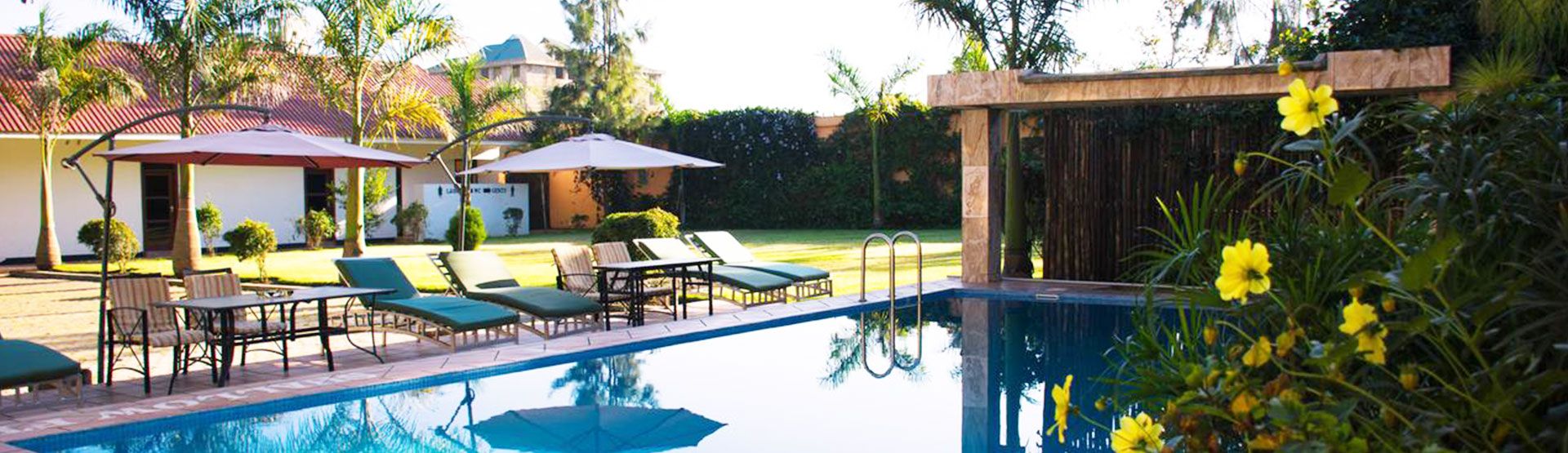
Sleep in, then enjoy breakfast at your own pace. You could take a short walk around Arusha or simply relax by the pool.
Transfer to Kilimanjaro International Airport for your onward flight, or continue on safari or to the beach with us. Hongera, congratulations on your summit!
Meals: Breakfast
You've reached the end of your adventure
Where you stay
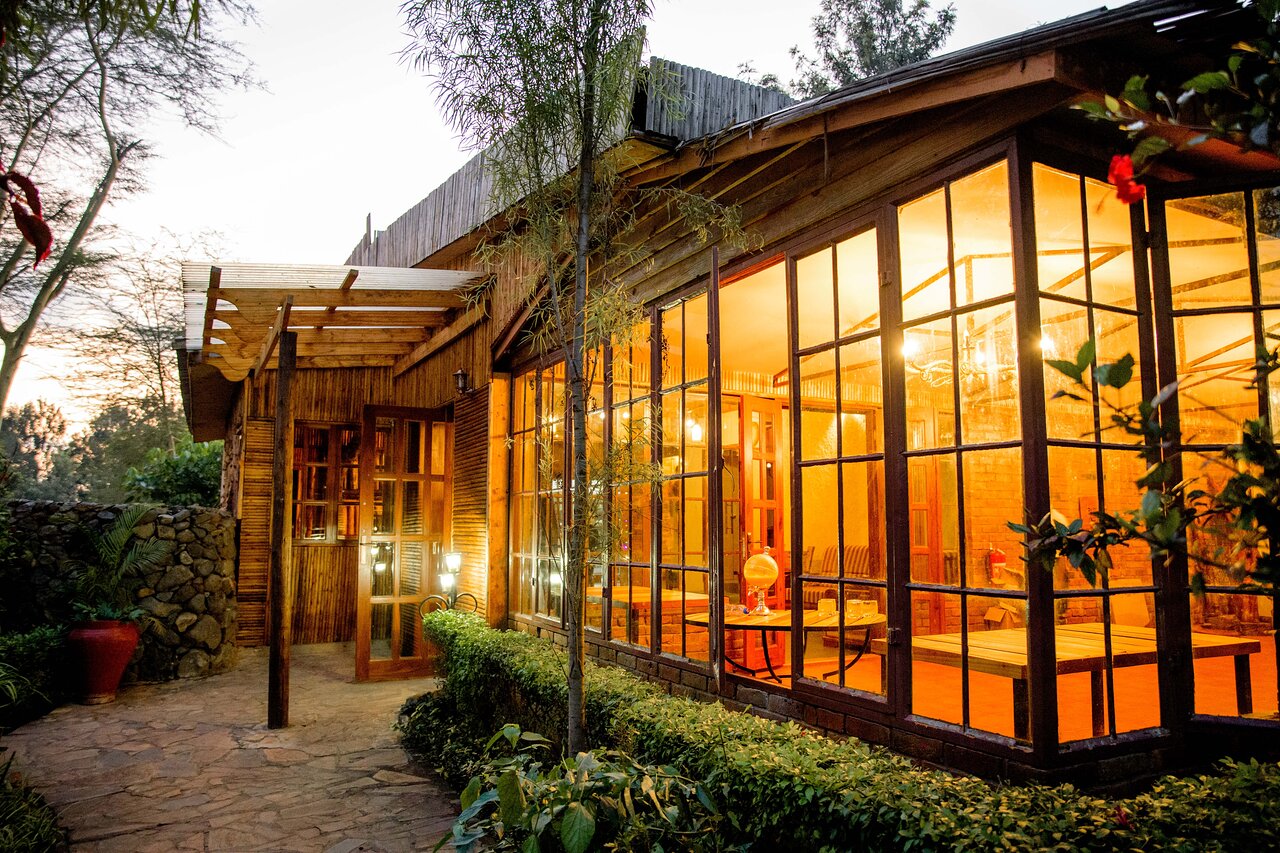
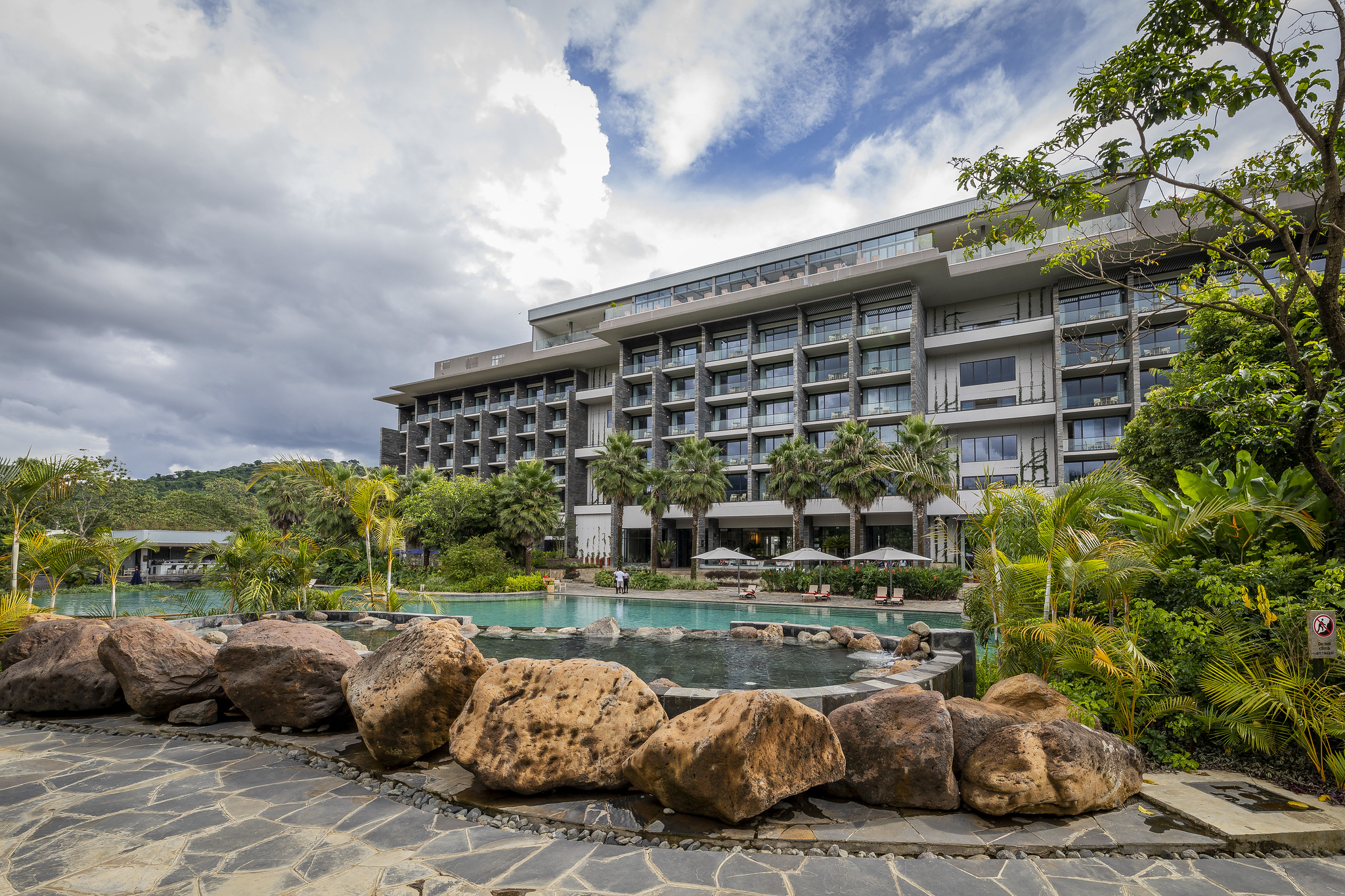
Accommodations
Best time to travel
Rongai can be climbed all year. Like all Kilimanjaro routes, it is at its best in the dry seasons (late June–October and January–early March), with clear skies and firm trails. Because the north side gets less rain, it is also the route we recommend most in the wetter months.
Dry season:
Clear views across to Kenya's Amboseli plains, cold nights and dry trails.
Wet season (late March–May and November):
The southern routes can be very muddy, while Rongai stays noticeably drier, so it is the best choice if you can only travel at this time.
Safari includes & excludes
Inclusions
- Airport pick-up and drop-off at Kilimanjaro International Airport
- Hotel nights before and after the climb in your chosen tier, on bed & breakfast
- All park entry, camping/hut and rescue fees
- Licensed mountain guide(s), assistant guides, cook and porters (1 guide to 2 climbers)
- Fair wages for the whole crew, in line with KPAP porter-welfare guidelines
- Quality mountain tents, sleeping mats, mess tent with table and chairs
- All meals on the mountain, freshly prepared, plus boiled and treated drinking water
- Daily health checks with pulse oximeter; emergency oxygen and first-aid kit
- Transfers to and from the trailhead
- Summit certificate
Exclusions
- International flights and Tanzanian visa
- Travel insurance covering trekking to 6,000 m and emergency evacuation (compulsory)
- Tips for the mountain crew (see our tipping guideline)
- Personal climbing gear (rental available: sleeping bags, poles, jackets, gaiters)
- Private toilet tent (available on request)
- Lunch and dinner at the hotel, drinks and personal expenses
Why choose this safari
Rongai is the smart choice for the rainy months, and for anyone who wants a gentle, peaceful climb away from the crowds.
- The driest route on the mountain
- Very few other climbers
- Gentle gradient with an acclimatisation day at Mawenzi Tarn
- See both the north and south sides of Kilimanjaro
- A good choice for less experienced hikers
Best for: Best for Wet-season travellersThe driest route in April, May and NovemberSomeone looking for something newWild, quiet trails on the less-visited north sideFirst-time climbersGentle gradient with an extra acclimatisation daySolo travellers and small groupsA peaceful, sociable trail
Tailormake your journey
Add these must-do experiences
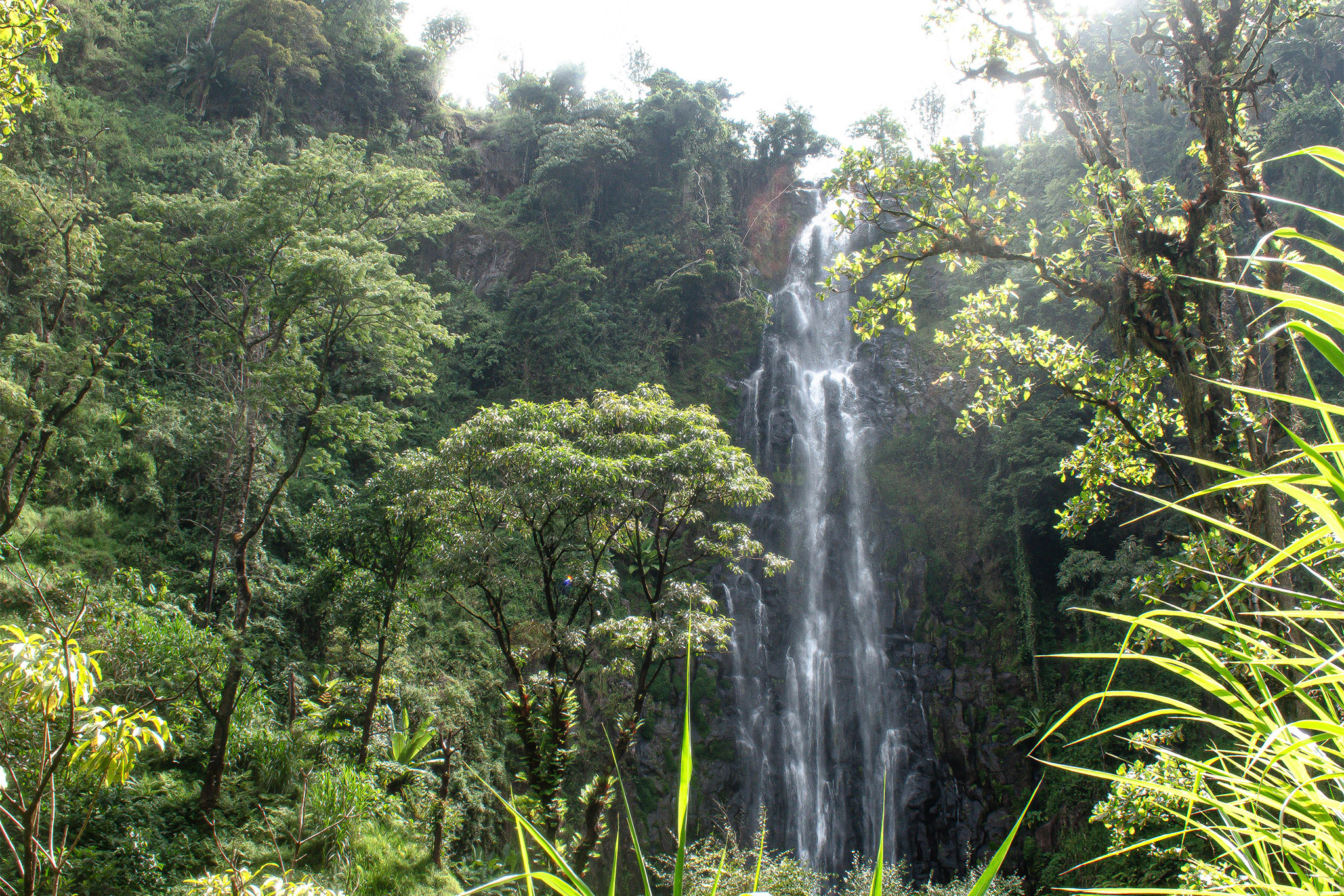
Materuni Waterfalls & Chagga Coffee Tour
Before or after the climb
A gentle day out to a waterfall and a Chagga coffee farm, perfect before or after the climb.
Adds 1 day
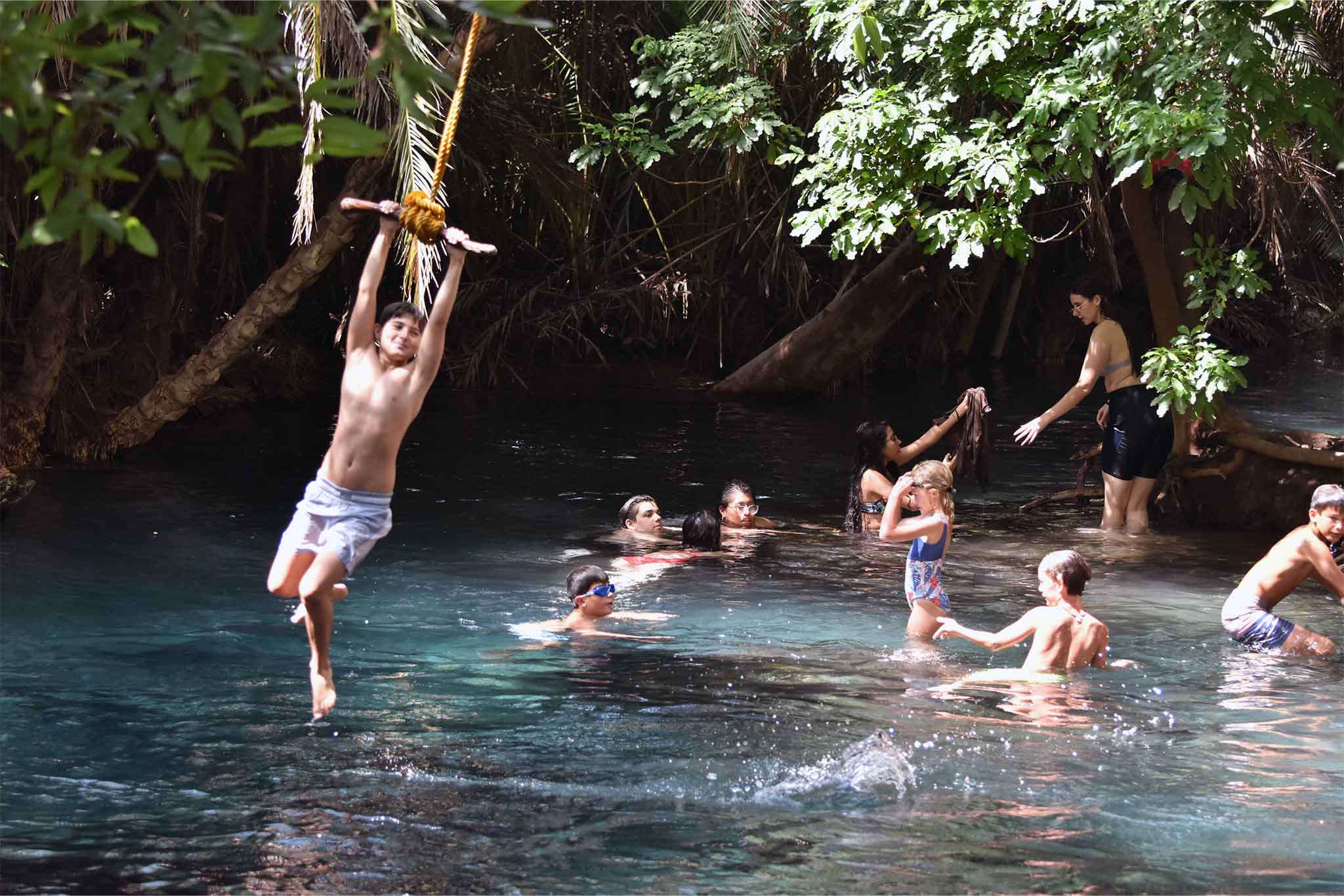
Chemka (Kikuletwa) Hot Springs
After the climb
Soak in the warm, natural spring pools between Arusha and Moshi, a favourite treat after the summit.
Adds 1 day
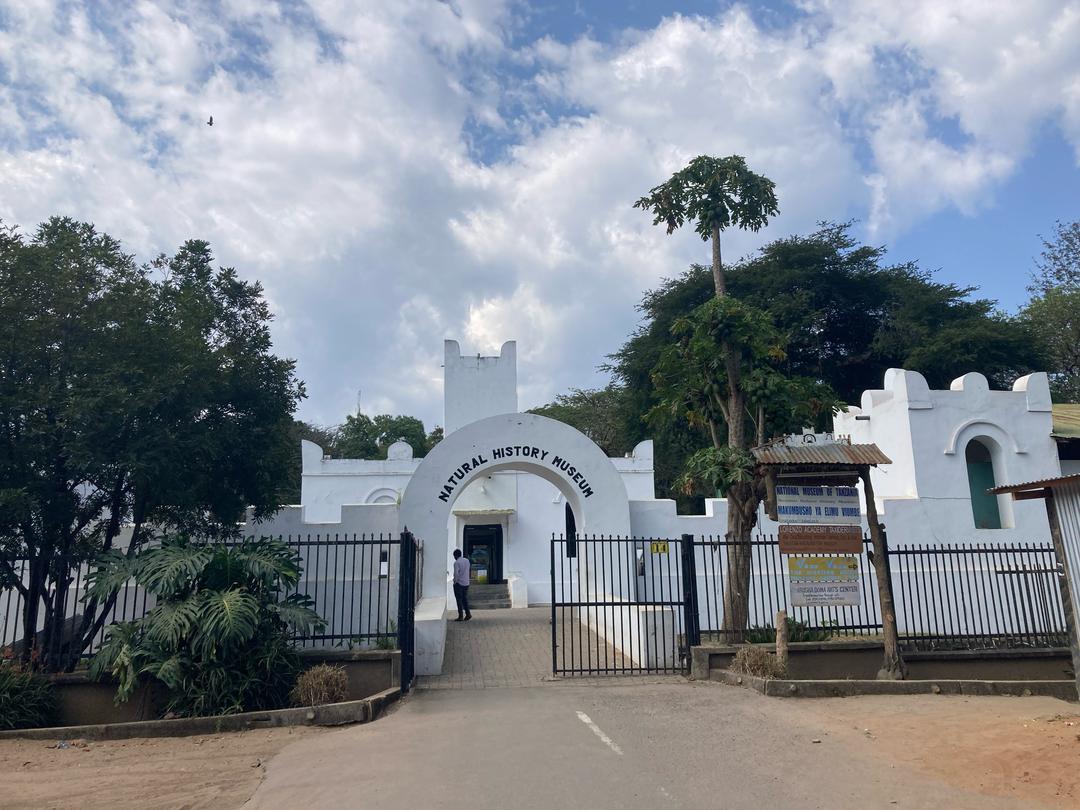
Extra rest day in Arusha
Before the climb
Give yourself a rest day before the climb to recover from your journey.
Adds 1 day
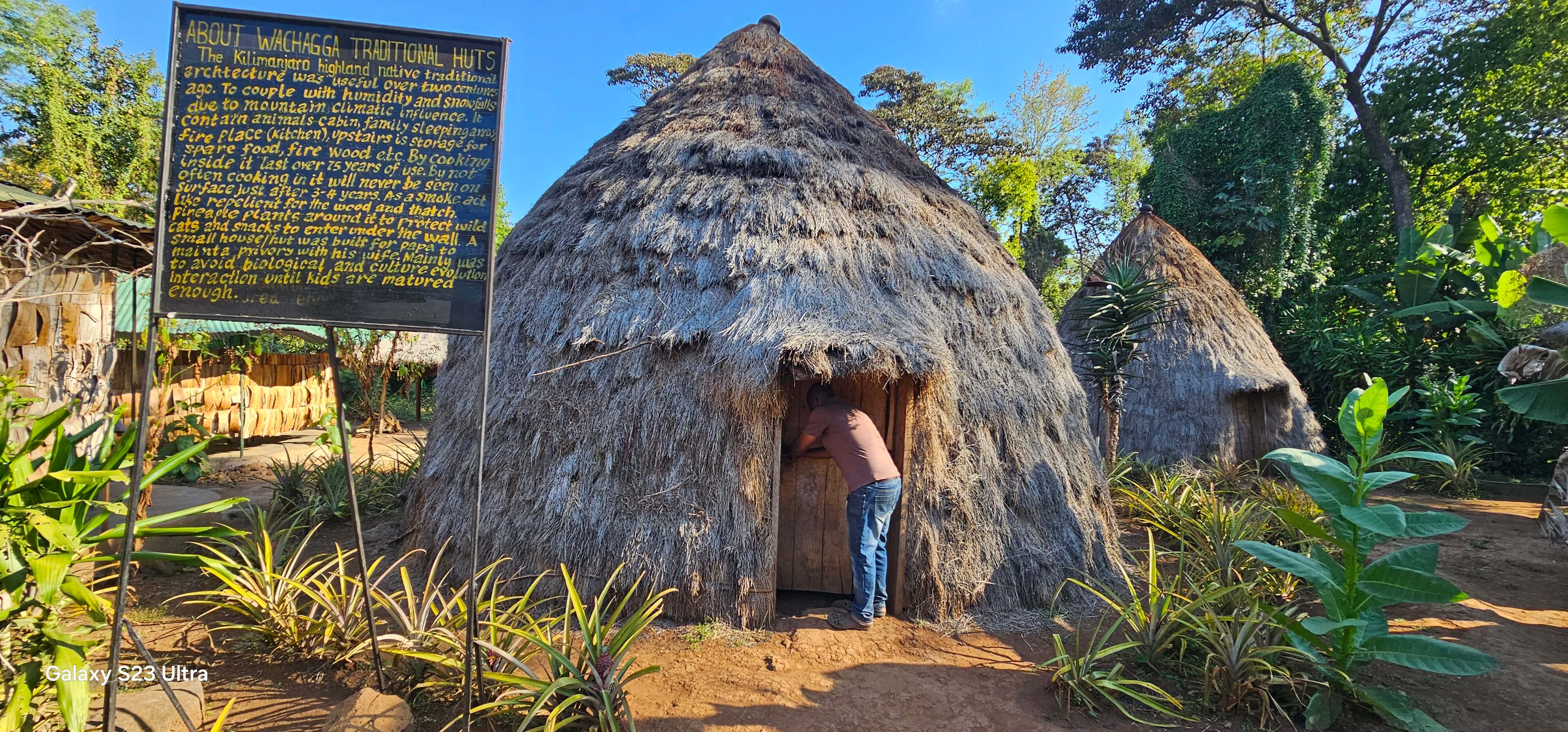
Marangu Chagga Cultural Tour
Before or after the climb
Since you descend on the Marangu side, add a day to explore Chagga culture in Marangu village.
Adds 1 day
Private toilet tent
During the climb
A private toilet tent at every camp, carried and cleaned by a porter.
No extra day needed
Discover Tanzania
Your questions answered
Is Rongai easier than other routes?
Its gradient is gentler, especially in the first days, so many climbers find it less tiring. Summit night is still steep and demanding, via Gilman's Point.
Why start from the north?
The northern side is in a rain shadow, so it gets less rain and the trail is quieter. The longer drive to the trailhead is part of the adventure.
Is Rongai suitable for beginners?
Yes. Rongai's gentle gradient and extra acclimatisation day make it a good choice for first-time high-altitude trekkers, although you still need good stamina for summit night.
What if I feel unwell on the mountain?
Tell your guide straight away. Headaches and tiredness are common and usually pass with rest and water. If symptoms get worse, your guide will take you down. Our guides carry emergency oxygen and a first-aid kit, and check your oxygen levels daily.
What will we eat on the climb?
Our mountain cooks prepare fresh, hot meals three times a day, with plenty of carbohydrates for energy, plus fruit, snacks and hot drinks. Special diets can be catered for.
Can I hire equipment?
Yes. Sleeping bags, warm jackets, poles and other gear can be rented in Arusha and checked by your guide before the climb.
How does tipping work on Kilimanjaro?
Tips are collected at the end of the climb and shared among the guides, cook and porters at a short ceremony. See our booking terms for suggested amounts.