
Destination
Shifting Sand
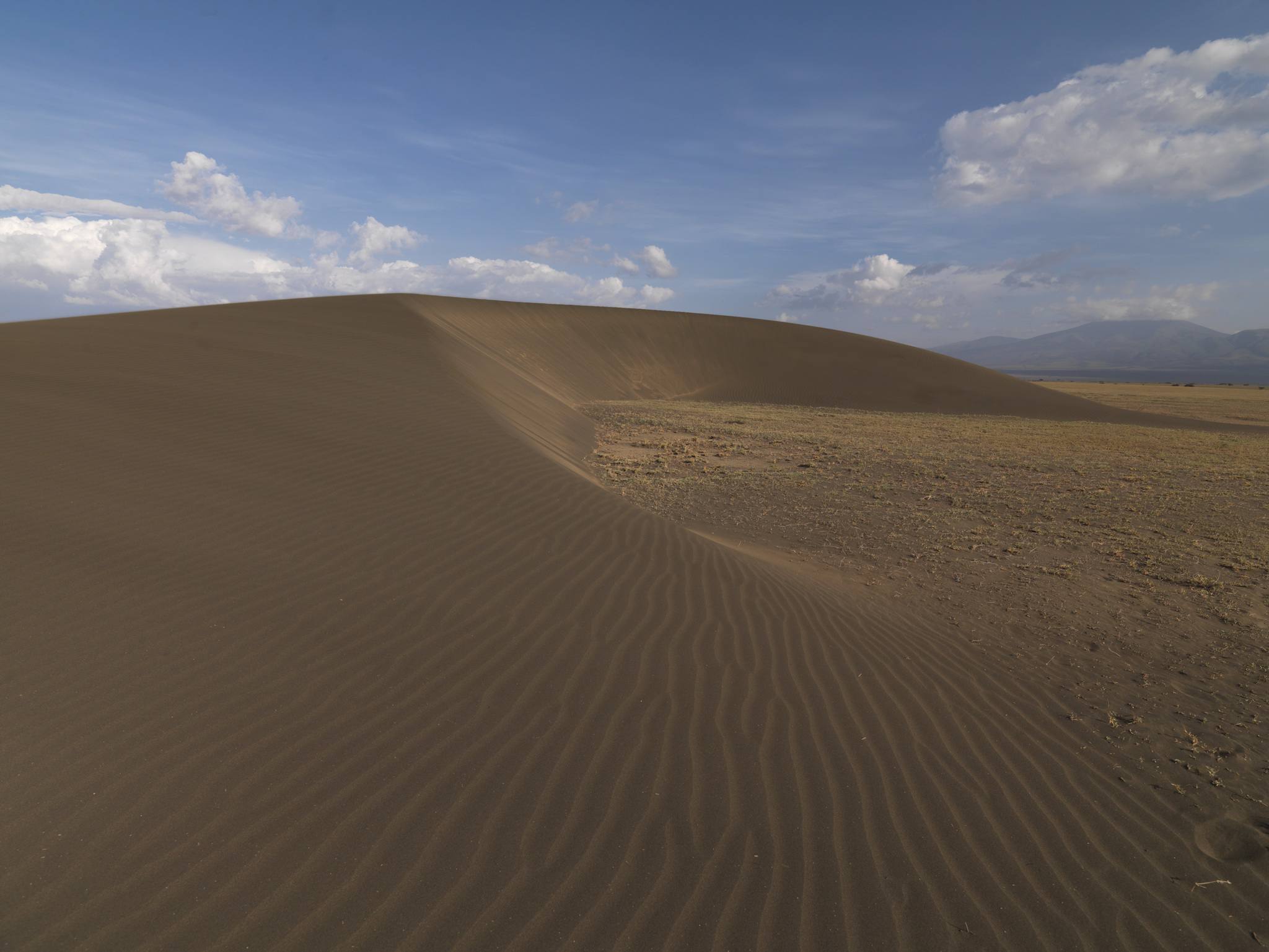
Near Olduvai Gorge, a crescent of black volcanic ash moves across the plains. Shaped by the winds and born of Ol Doinyo Lengai, the Maasai “Mountain of God,” the dune creeps roughly 15–17 metres a year, and it never stays in one place for long. Its magnetic sands cling together, so even as it travels, it keeps its form.
Destination Overview
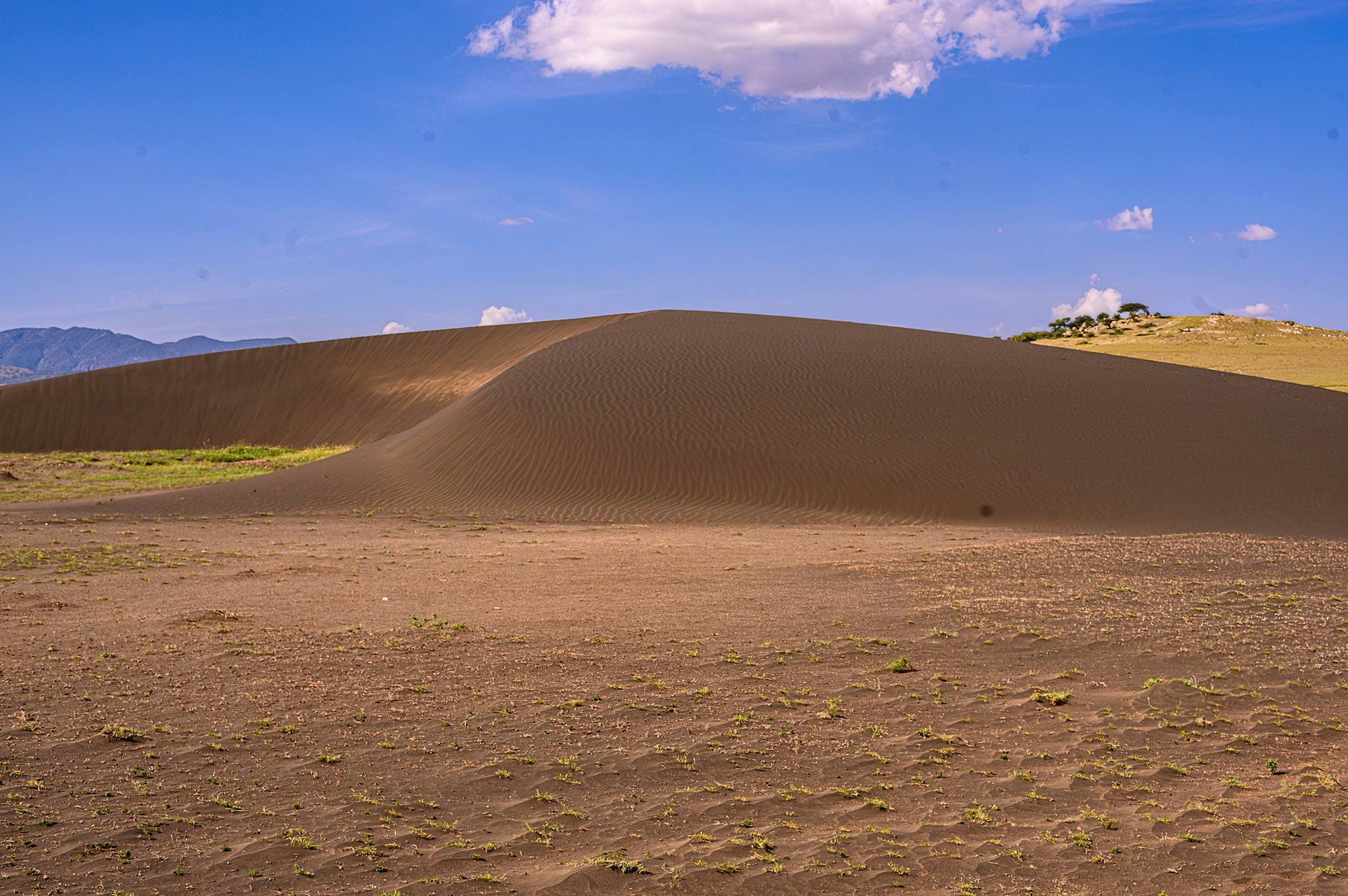
Tucked into the short-grass plains of the Ngorongoro Conservation Area, just north of Olduvai Gorge, Shifting Sands is one of Tanzania’s most unusual natural wonders. The dune is a crescent of fine black volcanic ash, about 9 metres high and around 100 metres long. The ash is believed to have come from Ol Doinyo Lengai, the active volcano the Maasai call the “Mountain of God.” Steady winds sweep the open plains and push the dune westward by roughly 15 to 17 metres each year. The iron in the ash gives the sand a magnetic quality, which helps the grains cling together, so the dune holds its graceful shape as it moves. Marker stones placed along its path show where it has rested over the years and trace its slow journey across the landscape.
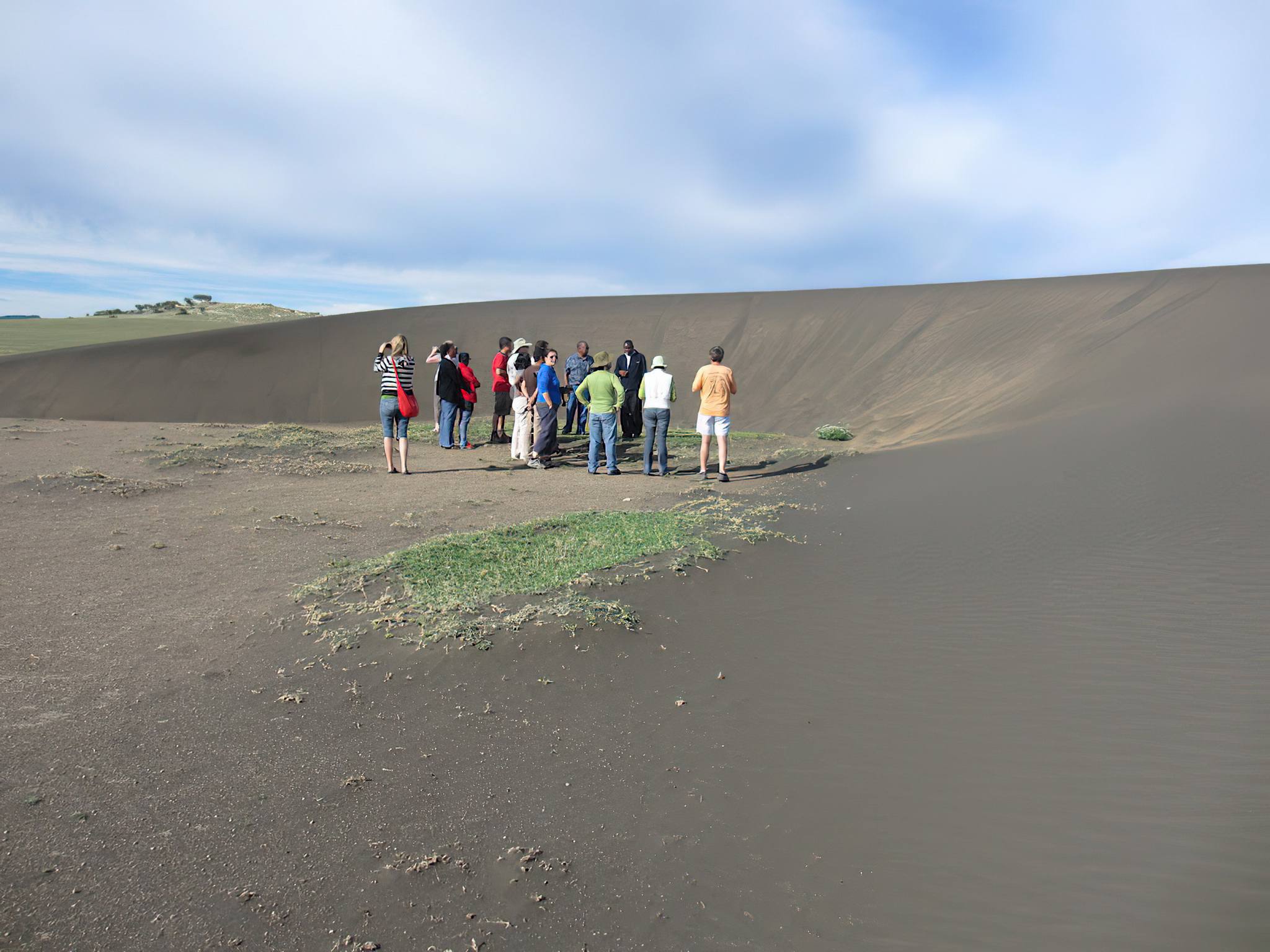
A visit to Shifting Sands is about more than geology. The Maasai consider the dune sacred, and local guides often share the stories and beliefs connected to it, adding a cultural depth to the experience. The surrounding plains offer sweeping views of the volcanic highlands, and during the Great Migration, herds of wildebeest and zebra often graze nearby, followed by predators such as lions, hyenas and cheetahs. Its location near Olduvai Gorge, one of the world’s most important sites for discoveries about early human origins, makes the dune an easy and rewarding stop on the way between the Ngorongoro Crater and the Serengeti.
The Migrating Dune
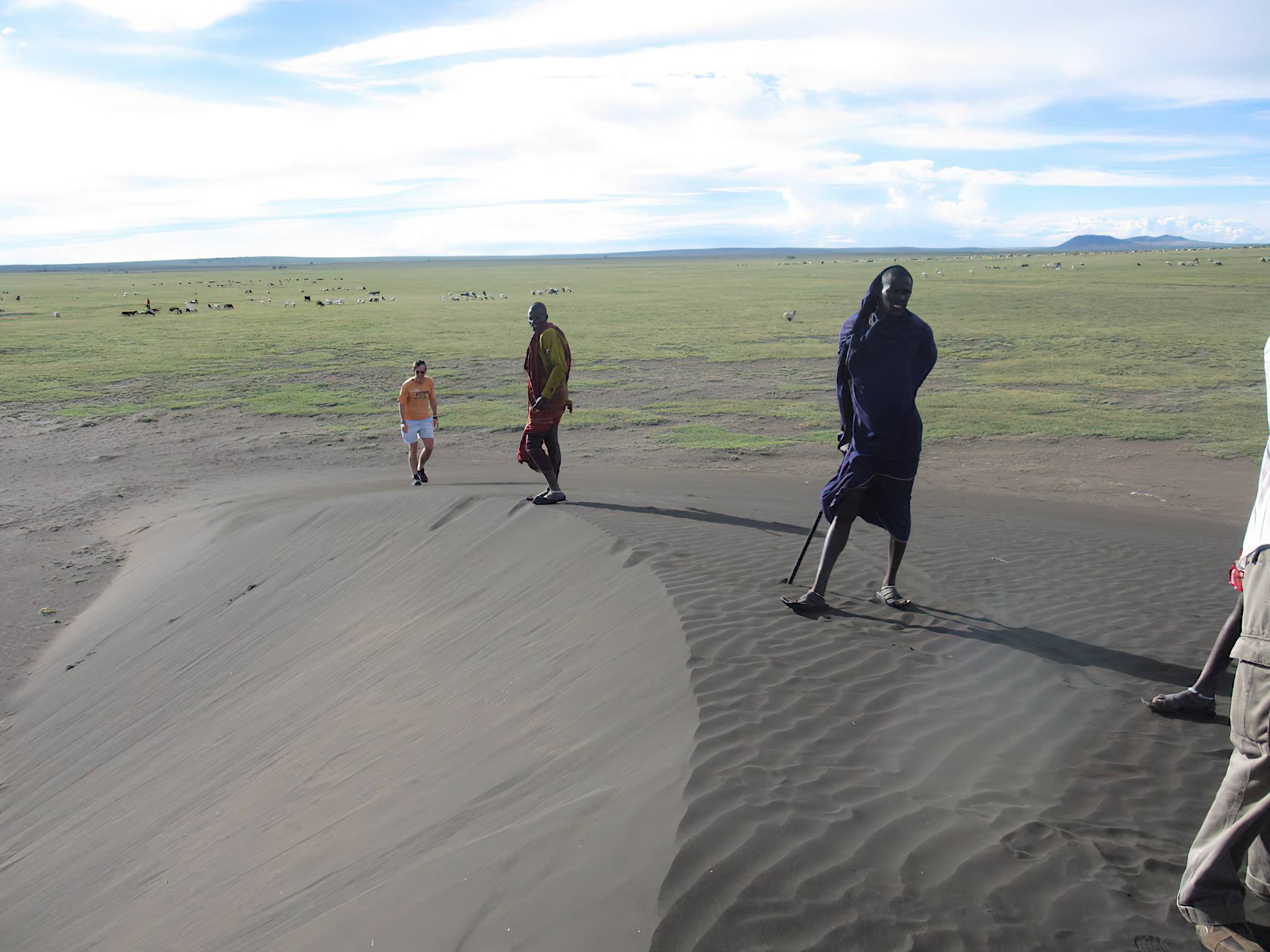
The star attraction is a smooth crescent of jet-black volcanic ash that rises about 9 metres high and stretches around 100 metres long. Unlike most landmarks, it never stays in one place. Steady easterly winds push it westward across the plains by roughly 15 to 17 metres every year, and you can watch fine grains ripple and slide down its steep face. Marker stones placed along its path record where it has stood in past years, so walking from one to the next shows how far it has travelled.
Volcanic and Magnetic Sand
The ash is believed to have come from Ol Doinyo Lengai, the active volcano whose highlands can be seen on the horizon on clear days. The ash is rich in iron, which gives it a magnetic quality. If you toss a handful into the air, the grains tend to clump together as they fall instead of scattering. This same property helps the dune hold its crescent shape as it moves, making it one of the most memorable hands-on moments of a visit.
Maasai Culture and Legend
The Maasai consider the dune sacred, and the surrounding land is part of their traditional grazing grounds. Local guides often share the stories and beliefs linked to it. You may also see Maasai herders moving cattle, goats and sheep across the plains, and nearby bomas offer a chance to learn about their way of life.
Wildlife and Birdlife
The open short-grass plains attract gazelles, zebras, giraffes, jackals and ostriches. From roughly December to March, the Great Migration herds of wildebeest and zebra often move through the nearby southern plains, followed by lions, cheetahs and hyenas. Birdwatchers can look for kori bustards, secretarybirds, crowned lapwings, sandgrouse, larks, coursers, vultures and tawny eagles.
Landscapes and Photography
The contrast of black sand against golden or green grasslands, open skies and distant volcanic peaks makes this a superb spot for photography. Early morning and late afternoon bring soft light, long shadows and the richest colours.
Prime Location near Olduvai Gorge
Shifting Sands lies just north of Olduvai Gorge, one of the world’s most important sites for discoveries about early human origins, and the two are usually visited together, with the Olduvai Gorge Museum adding context about the region’s geology and prehistory. Its position also makes it an easy and rewarding detour on the route between the Ngorongoro Crater and the Serengeti, adding geology, culture and wildlife to a classic northern Tanzania safari.
Activities in Shifting Sand
- See the moving dune of black volcanic ash up close
- Test the magnetic sand by tossing a handful and watching it clump back together
- Find the marker stones that show where the dune sat in past years
- Listen to a Maasai guide share the legends behind the dune
- Photograph the dune against the open Serengeti plains
- Look for wildlife grazing nearby, such as gazelles, zebras and wildebeest during the migration
- Take in the views of the volcanic highlands and Ol Doinyo Lengai on clear days
- Pair the stop with a visit to Olduvai Gorge and its museum
Year-Round Weather in Shifting Sand
The long dry season runs from June to October, bringing clear skies, dry golden grasslands and strong winds that often carry dust across the plains; this is when the dune is most actively pushed along. The short rains arrive in November and December, refreshing the grasses and turning the plains green. A shorter, warmer dry spell follows in January and February, a time when the Great Migration herds often gather on the nearby southern Serengeti plains to calve. The long rains fall from March to May, bringing the heaviest showers of the year, lush green landscapes and occasionally muddy roads, before the cycle begins again with the return of the dry season.
Want to see more? This video is worth watching
Related Trips
Discover Tanzania
Your questions answered
Where exactly is Shifting Sands?
Shifting Sands lies within the Ngorongoro Conservation Area, on the open plains north of Olduvai Gorge, between the Ngorongoro Crater and the Serengeti National Park. It’s reached on rough, unpaved tracks, so our guides always travel there in a 4x4 safari vehicle. Because it sits right on the main route between the two parks, it fits naturally into most northern Tanzania safaris.
What makes Shifting Sands so special?
It is one of the few dunes in the world you can visit that genuinely moves. This crescent of black volcanic ash, believed to come from Ol Doinyo Lengai, is pushed westward by the wind at roughly 15 to 17 metres a year. Its iron-rich sand is also magnetic, which helps it keep its shape as it travels. Add the Maasai legends surrounding it and the sweeping views of the plains, and it becomes a stop our guests often remember long after the safari ends.
How much time should I plan for a visit?
Most guests spend about 30 minutes to an hour at the dune itself. That’s enough time to walk around it, see the marker stones, test the magnetic sand and take photographs. We usually combine it with Olduvai Gorge and its museum, which together make a relaxed half-day before continuing to the Serengeti or the Ngorongoro area.
Can I climb the dune?
Visitors are asked not to climb or walk on the dune. Foot traffic can damage its shape, and the Maasai consider it sacred. You can still get very close, walk around its base, touch the sand and see the wind shaping its surface. Our guides will make sure you enjoy it fully while respecting the site.
Is there an entrance fee?
Shifting Sands is inside the Ngorongoro Conservation Area, so visits are covered by the conservation area fees that apply when you travel through the region. When you book with iTour Tanzania, all relevant park and conservation fees are included in your tour, so there’s nothing extra to arrange on the day. Some visits also include a small contribution to the local Maasai community, which our team will let you know about in advance.
When is the best time to visit?
Shifting Sands can be visited all year round. The dry season from June to October brings clear skies, firm roads and strong winds that keep the dune active. From roughly December to March, the Great Migration herds often gather on the nearby southern plains, so the area can be excellent for wildlife. The long rains from March to May turn the landscape green but can make the tracks muddy, which our experienced drivers are used to handling.
What wildlife and birds might I see?
The surrounding short-grass plains attract gazelles, zebras, giraffes, jackals and ostriches. During the migration season, wildebeest and zebra herds pass through, often followed by lions, cheetahs and hyenas. Birdwatchers can look out for kori bustards, secretarybirds, sandgrouse, larks, coursers, vultures and eagles.
Is Shifting Sands suitable for children and older travellers?
Yes. The visit involves only short, easy walks on flat ground, making it suitable for families, older travellers and anyone who prefers a gentle pace. Children especially love the magnetic sand experiment and the idea of a dune that moves on its own.
Are there facilities at the dune?
There are no shops, restrooms or shaded areas at the dune itself. We recommend using the facilities at the Olduvai Gorge Museum before or after your visit. Our vehicles carry drinking water, and we suggest bringing a hat, sunscreen and sunglasses, as the plains can be hot, bright and windy.
What should I wear and bring?
Light, comfortable clothing in neutral colours, closed shoes, a hat, sunglasses and sunscreen are ideal. A light jacket is useful in the early morning, especially from June to August. Bring your camera and binoculars, and consider a dust cover for your camera during the windy dry season.
Can Shifting Sands be added to any safari?
Yes. Because it lies between the Ngorongoro Crater and the Serengeti, it can be added to most northern Tanzania itineraries, often without needing an extra day. Our team can include it as part of a private or small-group safari, combined with Olduvai Gorge, a Maasai cultural visit or a game drive on the surrounding plains.
Why visit Shifting Sands with iTour Tanzania?
With up to 15 years of experience organising tours across Tanzania, our team knows how to make the most of this unique stop. Our guides share the geology, wildlife and Maasai stories behind the dune, and we plan your route so the visit fits smoothly into your safari. Every tour is designed around you, so you can discover Tanzania, authentically.