
Destination
Saadani National Park
Where safari meets the sea — Saadani National Park is East Africa's only wildlife reserve with an Indian Ocean beachfront, letting you watch lions, elephants, and giraffe roam within sight of the surf.
Destination Overview
Saadani National Park covers about 1,062 square kilometers on Tanzania's central coast, roughly 130 km (a 4-5 hour drive) north of Dar es Salaam and directly across the channel from Zanzibar. Gazetted in 2005 from a former game reserve, the Wami River corridor, and the coastal Zaraninge Forest, Saadani holds the distinction of being Tanzania's first and only coastal national park — the sole wildlife sanctuary in East Africa where savanna game and Indian Ocean beaches meet in the same place. The historic village of Saadani itself adds another layer: once a 19th-century Swahili trading port on par with Bagamoyo and Pangani, it still holds the ruins of old stone trading houses and a colonial-era German administrative building.
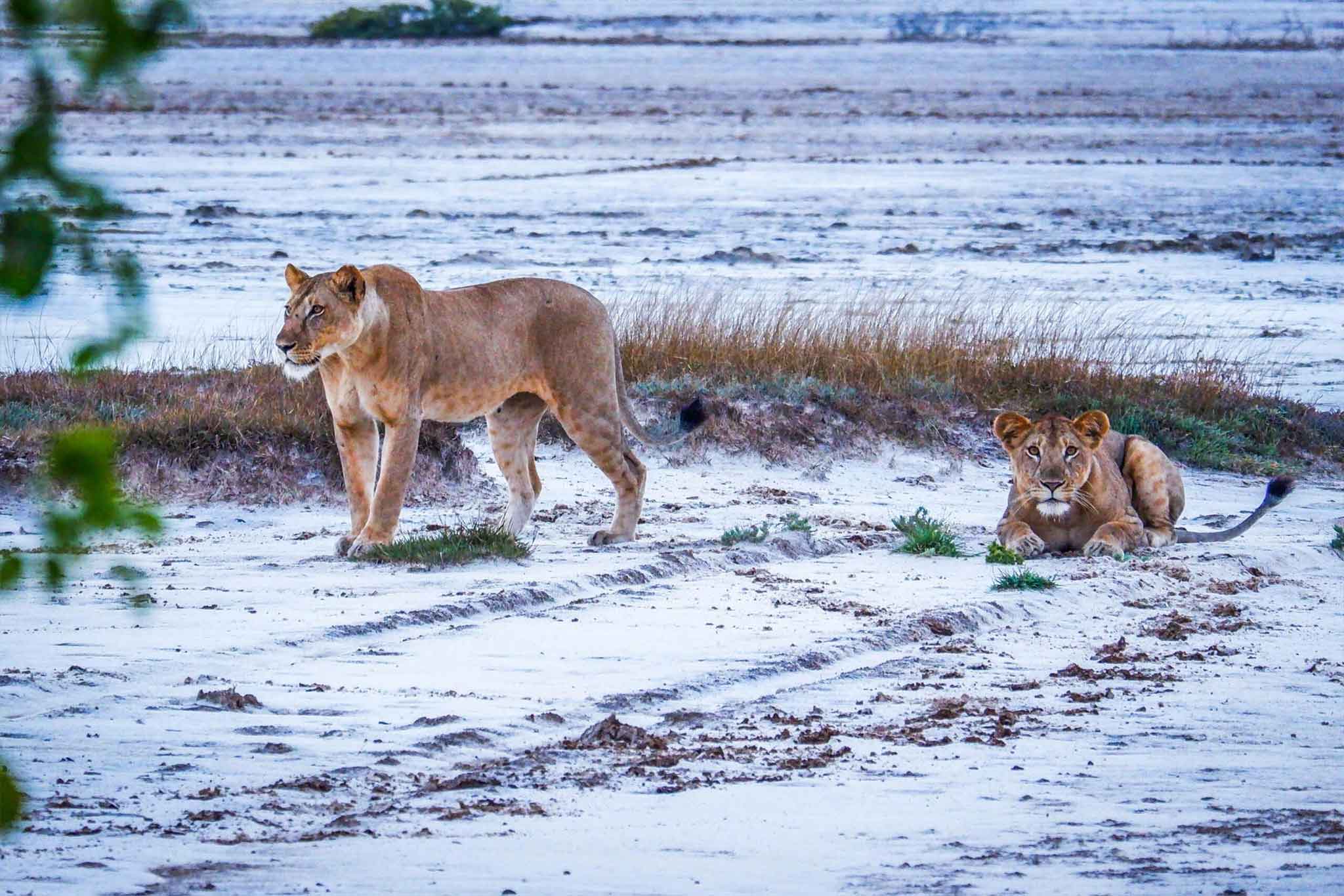
Wildlife here leans toward elephant, giraffe, Cape buffalo, and hippo, with lion and leopard present but notably rarer than on the northern circuit, and cheetah and rhino absent altogether — Saadani's appeal lies less in Big Five density and more in its unusual combination of experiences: game drives, Wami River boat safaris past hippos and crocodiles, mangrove canoeing, and green sea turtle nesting on its beaches roughly between May and August. Most visitors spend two to three nights, often combining Saadani with a longer Zanzibar stay or a Dar es Salaam stopover. It's visitable year-round, with the dry season from June to October offering the best game viewing and the wetter months bringing lush scenery, active birdlife, and fewer crowds.

Africa's Only Beach-Meets-Bush Safari
Saadani is the sole wildlife sanctuary in East Africa that borders the Indian Ocean directly, meaning game drives through open savanna and woodland unfold within walking distance of a genuine beach. Watching elephants or giraffe move against a backdrop of white sand and turquoise water is a combination found nowhere else on the continent.
Elephant, Giraffe, and Buffalo on the Shore
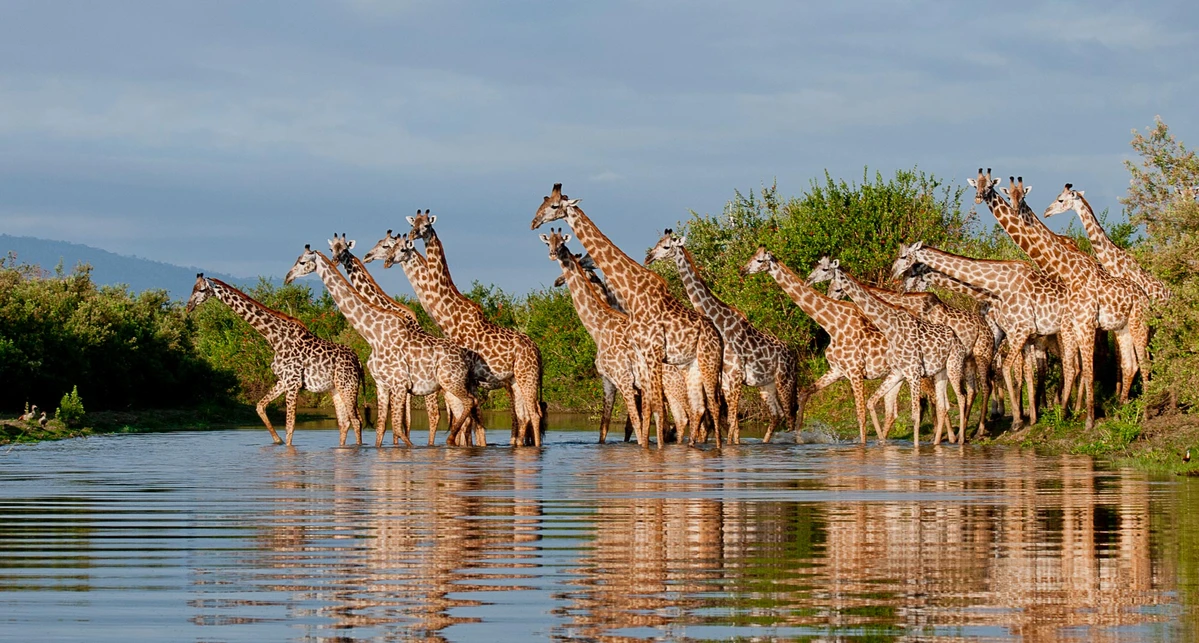
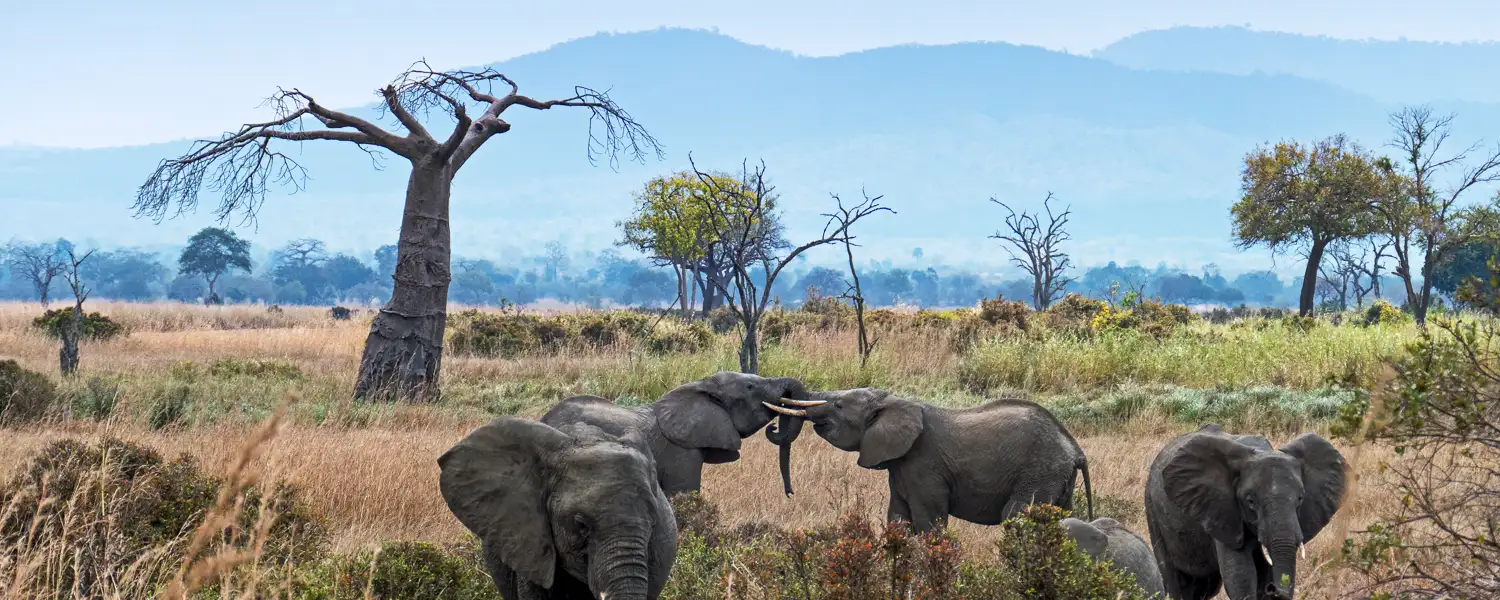
While lions and leopards are present but rare, Saadani's more reliable wildlife draws are its elephant herds, giraffe, Cape buffalo, and hippos, often spotted moving through coastal bush or drinking at the Wami River within sight of the ocean. It's a genuinely different safari rhythm from the dense wildlife concentrations of the northern circuit — quieter, slower, and shaped by the coast.
The Wami River Boat Safari
A boat trip along the Wami River is one of Saadani's signature experiences, drifting past hippos, crocodiles, and mangrove-fringed banks alive with kingfishers, herons, and fish eagles. It's a completely different vantage point from a standard game drive, and one of the best ways to see the park's wetland wildlife up close.
Zaraninge Forest: A Vanishing Coastal Rainforest
Tucked within the park's boundaries, Zaraninge Forest is one of the last remaining patches of coastal rainforest in Tanzania, once managed by the World Wide Fund for Nature before being folded into the national park. It holds a remarkable concentration of plant species found nowhere else, a fragment of an ecosystem that has all but vanished elsewhere along the East African coast to logging and farming.
Green Sea Turtle Nesting Beaches
Saadani's shoreline is one of the last major green sea turtle nesting sites in Tanzania, with nesting activity typically running from around May through August. Visitors who time their trip right may get to see nesting females coming ashore or witness a hatchling release, a rare and moving wildlife encounter found on very few Tanzanian beaches.
Historic Saadani Village and Its 19th-Century Ruins
Saadani village itself has a rich history as a 19th-century Swahili trading port, once ranked alongside Bagamoyo and Pangani as a hub for the ivory and, historically, slave caravan trade linking the interior to Zanzibar. Local leader Bwana Heri bin Juma famously resisted Zanzibari and later German control here, and the village today still holds the ruins of old stone trading houses, a colonial-era German administrative building, and historic graves alongside its modern fishing community.
Mangrove Channels and Canoeing
Beyond the main river, Saadani's mangrove channels offer quiet canoeing through a tangled, tidal ecosystem that supports its own set of specialized wildlife, including Angolan colobus monkeys and mangrove kingfishers. It's an intimate, low-impact way to explore a habitat most safari-goers never get close to.
A Designated Lion Conservation Unit
Since 2005, Saadani has been recognized as a Lion Conservation Unit as part of wider East African efforts to protect the species, reflecting the park's role in a regional conservation strategy even though lion sightings themselves remain uncommon here compared to the northern circuit.
Night Safaris with Thermal Technology
Saadani offers night safaris using thermal scope technology to pick out nocturnal wildlife like hyenas and elephants moving through the dark, an activity not widely available across Tanzania's more heavily regulated northern parks. It adds a genuinely different dimension to a Saadani stay beyond standard daytime game drives.
Over 250 Bird Species Across Every Habitat
Between its mangrove rivers, salt ponds, coastal forest, grassland, and open ocean shoreline, Saadani supports more than 250 recorded bird species — an unusually wide range for a single park. Migratory Palearctic and intra-African species boost the numbers further between November and April, making it a rewarding stop for birders alongside its bigger wildlife draws.
Activities in Saadani National Park
- Game drives (morning and afternoon)
- Walking safaris with a guide
- Night safaris using thermal scope technology
- Wami River boat safaris (hippos, crocodiles, birdlife)
- Canoeing through mangrove channels
- Swimming and beach walks on the Indian Ocean shoreline
- Birdwatching across river, wetland, forest, and coastal habitats
- Green sea turtle conservation and nesting/hatchling viewing (seasonal)
- Cultural village visits
- Nature walks
Year-Round Weather in Saadani National Park
The short rains typically arrive from October through December, bringing brief afternoon showers that rarely last all day or seriously disrupt game drives and boat safaris. January and February usually offer a shorter, less predictable dry spell between the two rainy seasons.
The long rains run from March through May, the hottest and most humid period, with afternoon temperatures reaching around 32°C (90°F) and nights staying warm near 23°C (73°F). Rainfall is frequent during this stretch, often as afternoon thunderstorms, though sea breezes help take the edge off the heat, and it also lines up with green sea turtle nesting season on Saadani's beaches, which typically continues into the following dry months.
Want to see more? This video is worth watching
Related Trips
Discover Tanzania
Your questions answered
Where is Saadani National Park, and how far is it from Dar es Salaam or Zanzibar?
Saadani National Park sits on Tanzania's central coast, about 130 km north of Dar es Salaam, roughly a 4-5 hour drive on coastal roads (a 4x4 is recommended, especially in the wet season). It also sits directly across the channel from Zanzibar, making it a natural add-on for travelers splitting time between a beach holiday and a safari.
What is Saadani National Park known for?
Saadani is Tanzania's first and only coastal national park, the one place in East Africa where you can watch elephants, lions, giraffe, and buffalo roam within sight of Indian Ocean beaches. It combines savanna wildlife, the Wami River, mangrove forest, and open coastline into a single, compact park experience.
Can I really do a safari and a beach holiday in one place at Saadani?
Yes — that's exactly what makes Saadani unique. Game drives and walking safaris happen just a short distance from lodges right on the beach, so it's entirely possible to spend a morning tracking elephants and an afternoon swimming in the Indian Ocean without changing location.
Is it safe to swim and relax on the beach with wildlife nearby?
Lodges are set up with this balance in mind, and while animals do sometimes wander close to camps, dangerous wildlife encounters directly on the beach are uncommon. Our guides and lodge staff brief every guest on sensible precautions, and walking around camp after dark is generally done with an escort, just as on any bush safari.
How big is Saadani National Park?
The park covers about 1,062 square kilometers, combining a former game reserve, the Wami River corridor, Zaraninge Forest, and a stretch of Indian Ocean coastline, and was officially gazetted as a national park in 2005.
Is Saadani a Big Five destination?
Saadani hosts four of the Big Five — lion, elephant, buffalo, and leopard — though sightings of lions and leopards are notably rarer here than on the Serengeti or Ngorongoro circuit, and rhino and cheetah are absent altogether. Elephant, giraffe, buffalo, and hippo are the more reliable sightings, alongside the park's unusual coastal setting.
When is the best time to visit Saadani National Park?
The dry season from June to October offers the best wildlife viewing, with animals concentrated around permanent water sources and clearer visibility for game drives. The wetter months from November to May bring lush scenery, active birdlife including migrants, and fewer visitors, plus the added draw of green sea turtle nesting season from roughly May to August.
Can I see sea turtles at Saadani?
Yes — Saadani's beaches are one of the last major green sea turtle nesting sites in Tanzania, with nesting activity typically running from around May to August. Depending on timing, visitors may get the chance to see nesting turtles or hatchlings being released, usually coordinated through the park's conservation program.
What's the Wami River boat safari like?
A boat safari on the Wami River is one of Saadani's signature activities, taking you past hippos, crocodiles, and a wide range of waterbirds along mangrove-lined banks, a very different perspective from a standard game drive elsewhere on the circuit.
How long should I plan to stay at Saadani?
Two to three nights is typical, giving enough time for a couple of game drives, a Wami River boat safari, and proper beach time, though Saadani also works well as a shorter one- or two-night stop for travelers combining it with a longer Zanzibar or Dar es Salaam stay.
Where can I stay at Saadani National Park?
Accommodation ranges from simple budget camping to comfortable mid-range lodges and a handful of higher-end beachfront properties, most located along the coastline within reach of the park's game-viewing areas. We match you with a property that fits your comfort level and budget as part of your itinerary.
Can I combine Saadani with Zanzibar, and are there fees?
Yes — Saadani's coastal location makes it a natural stop on the way to or from Zanzibar, either by road and boat transfer or a short flight. Like all Tanzania National Parks Authority parks, Saadani charges entrance and activity fees, which we build directly into your itinerary quote.