
Destination
Olduvai Gorge
Known as the “Cradle of Humankind,” Olduvai Gorge sits between Ngorongoro Crater and the Serengeti. Fossils and tools found here by the Leakeys trace our ancestors back nearly two million years. A short stop at the museum and viewpoint brings this ancient story to life.
Destination Overview
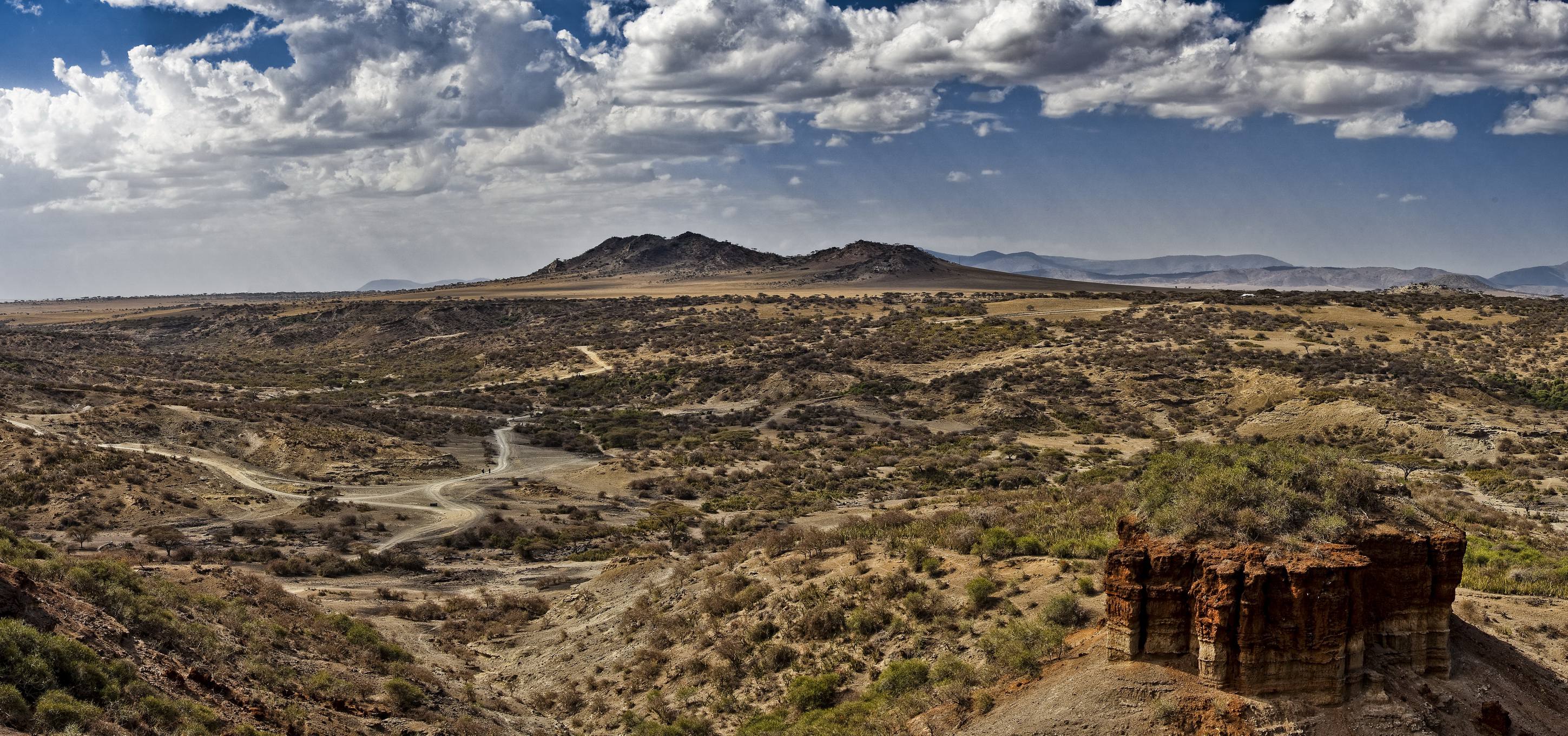
Set on the edge of the Serengeti plains within the Ngorongoro Conservation Area, Olduvai Gorge is one of the most important paleoanthropological sites on Earth. This steep-sided ravine stretches for about 48 kilometres and drops to depths of around 90 metres, its exposed rock layers revealing nearly two million years of history. It was here that Louis and Mary Leakey made discoveries that reshaped our understanding of human origins, including the Paranthropus boisei skull and the first remains of Homo habilis. The gorge also gave its name to the Oldowan tradition, among the oldest known stone tool industries, earning it a lasting reputation as the “Cradle of Humankind.”
Conveniently located between Ngorongoro Crater and the Serengeti, Olduvai makes a rewarding stop on the safari circuit. Visitors can explore the on-site museum, with its fossils, ancient tools and casts of the 3.6-million-year-old Laetoli footprints, then join a guided talk at the viewpoint overlooking the gorge or descend with a guide to the original excavation sites. Nearby, the Shifting Sands dune and neighbouring Maasai communities add further interest, while the open plains offer chances to spot wildlife such as giraffe, gazelle and, in the wet season, the great migration. Combining history, culture and sweeping landscapes, Olduvai Gorge offers a meaningful glimpse into the story of humanity itself.
The Cradle of Humankind
Olduvai Gorge is one of the most important paleoanthropological sites in the world and a cornerstone of what we know about human origins. The ravine runs for about 48 kilometres across the southeastern Serengeti plains and plunges to around 90 metres deep, its walls exposing layer upon layer of ancient sediment. Within these layers, scientists have found the remains of early humans, their tools and the animals they lived alongside, creating one of the longest continuous records of human evolution anywhere on Earth. Its name comes from the Maasai word oldupai, meaning wild sisal, which still grows across the gorge today.
The Leakey Legacy
Fossils were first noticed here in 1911 by a German entomologist, but it was Louis and Mary Leakey who made Olduvai famous after Louis’s first expedition in 1931. Working through decades of patient excavation, often in tough conditions, the Leakeys uncovered thousands of fossils and artefacts. Their biggest breakthrough came in 1959, when Mary Leakey discovered the Paranthropus boisei skull, nicknamed “Zinj” or “Nutcracker Man” for its massive jaw and teeth. Soon after, the family found remains of Homo habilis, or “handy man,” one of the earliest members of our own genus and likely the maker of many of the tools found here. Their work drew global attention to East Africa as the birthplace of humankind.
Birthplace of the Oldowan Tools
Olduvai gave its name to the Oldowan tool tradition, among the oldest stone tool industries known. These tools, simple choppers, scrapers and sharp flakes struck from volcanic rock and quartz, were used to cut meat, break bones for marrow and process plants. Later layers of the gorge also hold more advanced Acheulean hand axes, showing how toolmaking skills developed over hundreds of thousands of years. Together, these finds tell the story of growing intelligence and changing ways of life among our early ancestors.
Layers of Ancient History
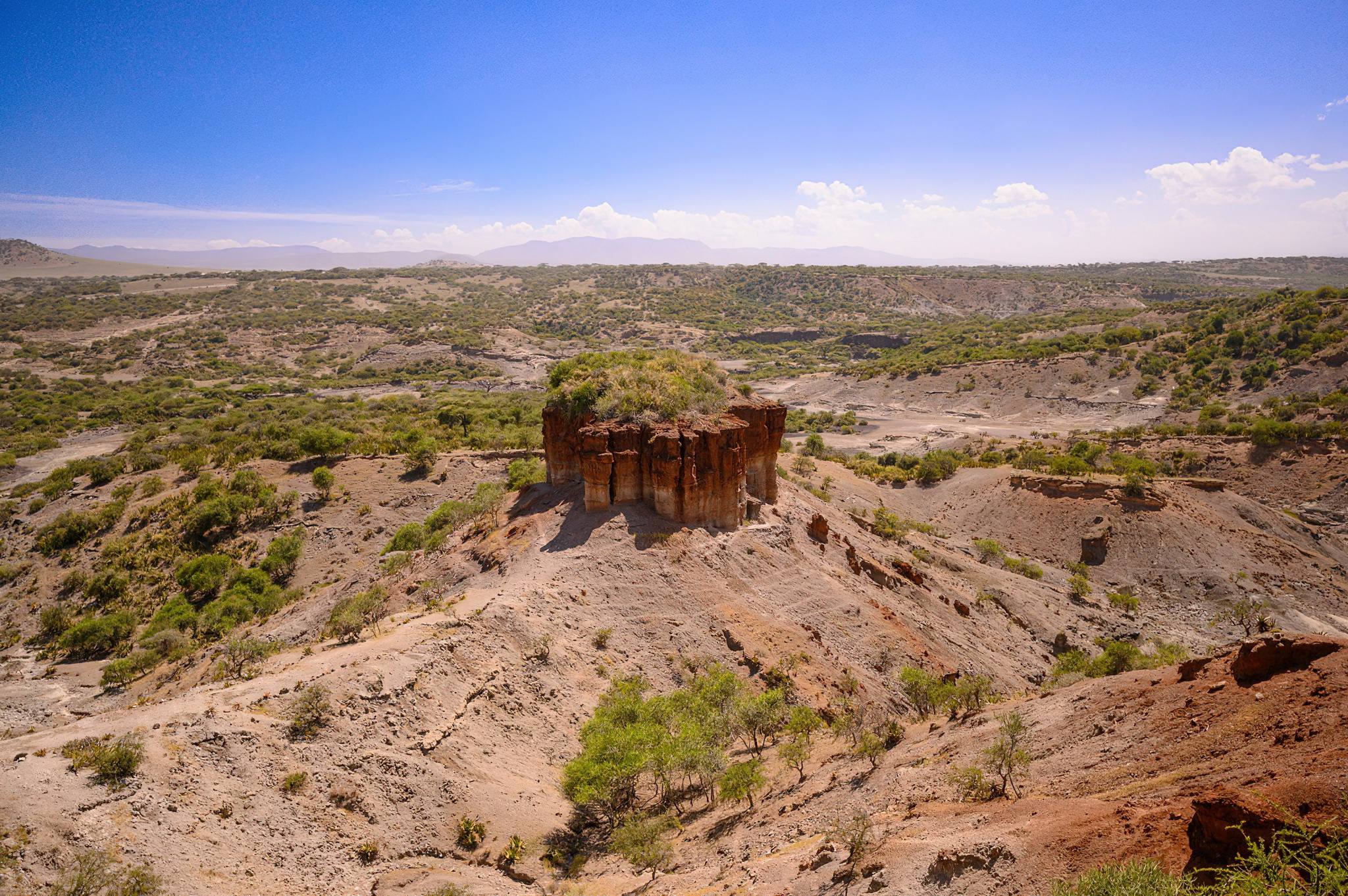
The gorge was formed as rivers cut through the deposits of an ancient lake basin, revealing distinct geological beds stacked like pages in a history book. The oldest layer, known as Bed I, dates back nearly two million years, with younger beds above it recording later periods. Volcanic ash from nearby highland volcanoes settled between the layers, allowing scientists to date them accurately, and Olduvai was among the first sites where this dating method was used to confirm the great age of early human fossils. These layers also show how the area changed from a lakeside environment rich in wildlife to the dry plains seen today.
Olduvai Gorge Museum
Perched on the rim of the gorge, the museum offers an excellent introduction to the site’s significance. Its displays include fossil casts of early humans, original stone tools, and remains of ancient animals such as giant buffalo, early elephants and prehistoric pigs that once roamed the area. Exhibits explain the excavations, the science of human evolution and the work of the Leakeys and later researchers. It’s a great place to start a visit before heading to the viewpoint or into the gorge.
Laetoli Footprints
One of the museum’s most fascinating exhibits is a cast of the Laetoli footprints, discovered by Mary Leakey’s team in 1978 about 45 kilometres south of Olduvai. The prints were left around 3.6 million years ago by early hominins, likely Australopithecus afarensis, walking across fresh volcanic ash that later hardened and preserved them. Stretching for several metres, the trail provides some of the earliest direct evidence that our ancestors walked upright on two legs, long before larger brains or stone tools appeared.
Guided Talks and Gorge Viewpoint
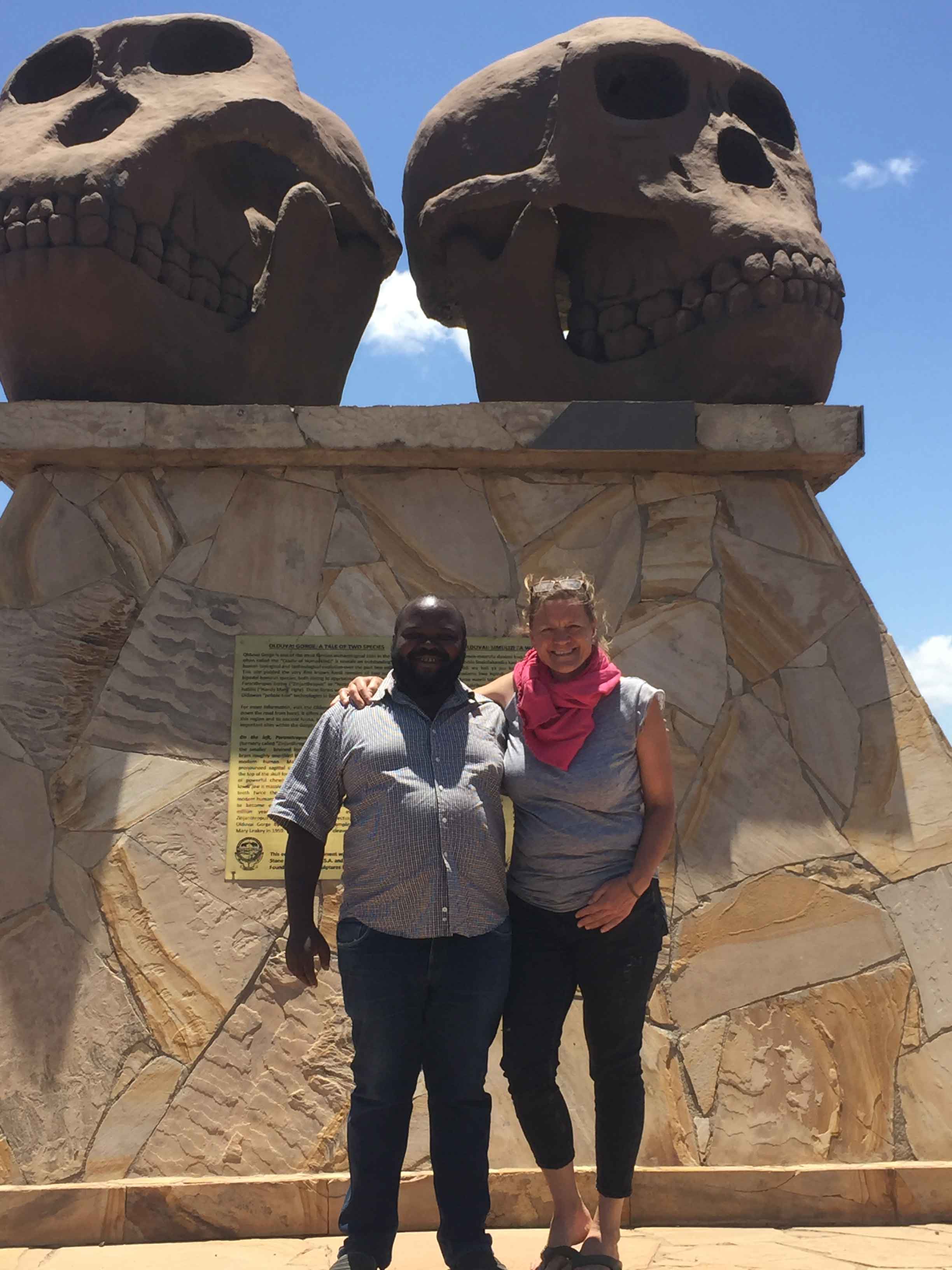
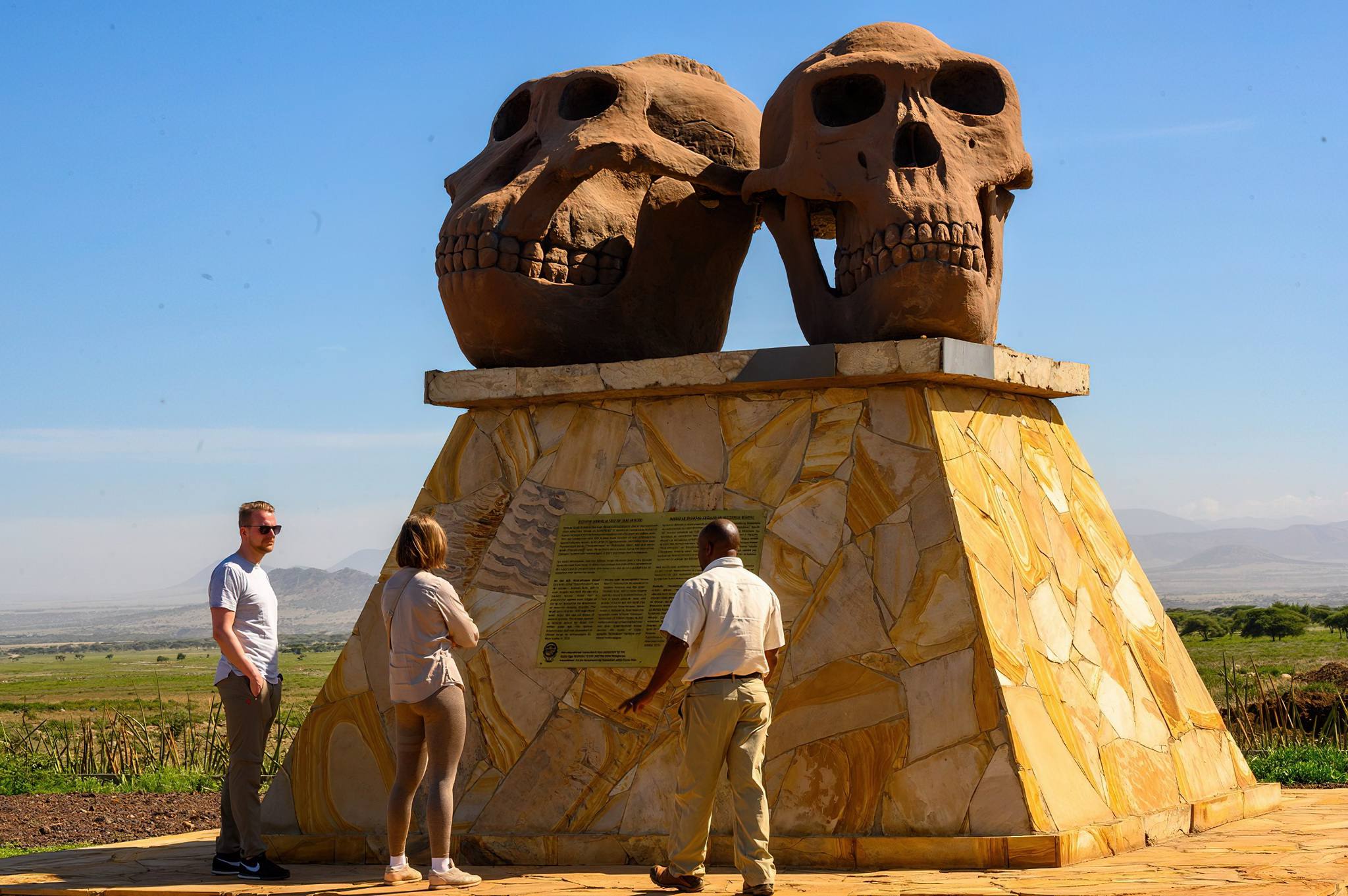
From a shaded viewpoint overlooking the ravine, knowledgeable local guides explain the gorge’s geology, discoveries and importance, pointing out key landmarks across the landscape. The view takes in the layered gorge walls and a distinctive rock formation known as “the Castle.” On the main road nearby, a monument featuring large replica skulls marks the turnoff to the site, a popular photo stop for travellers.
Excavation Site Walks
For a deeper experience, visitors can walk down into the gorge with a guide to see the original excavation sites, including the place where “Zinj” was uncovered. Walking among the exposed beds, you get a real sense of the scale of the gorge and the painstaking work involved in uncovering its secrets. Research still continues at Olduvai, and visitors may occasionally see active excavation areas.
The Shifting Sands
A short drive from the gorge lies the Shifting Sands, a striking crescent-shaped dune of black volcanic ash believed to have come from Ol Doinyo Lengai. Pushed by steady winds, the dune creeps across the plains by several metres each year, and markers show how far it has moved over time. Its iron-rich ash is magnetic, which helps hold the dune together as it travels. The Maasai regard the dune as sacred, and it makes a memorable and unusual stop.
Maasai Culture
Olduvai lies within Maasai lands, where communities continue to live alongside wildlife as they have for generations. Visits to nearby bomas offer a chance to see traditional homesteads built from wood, mud and dung, learn about cattle herding, hear traditional songs and watch the famous jumping dance. Visitors can also browse colourful handmade beadwork, with purchases directly supporting local families.
Wildlife and the Great Migration
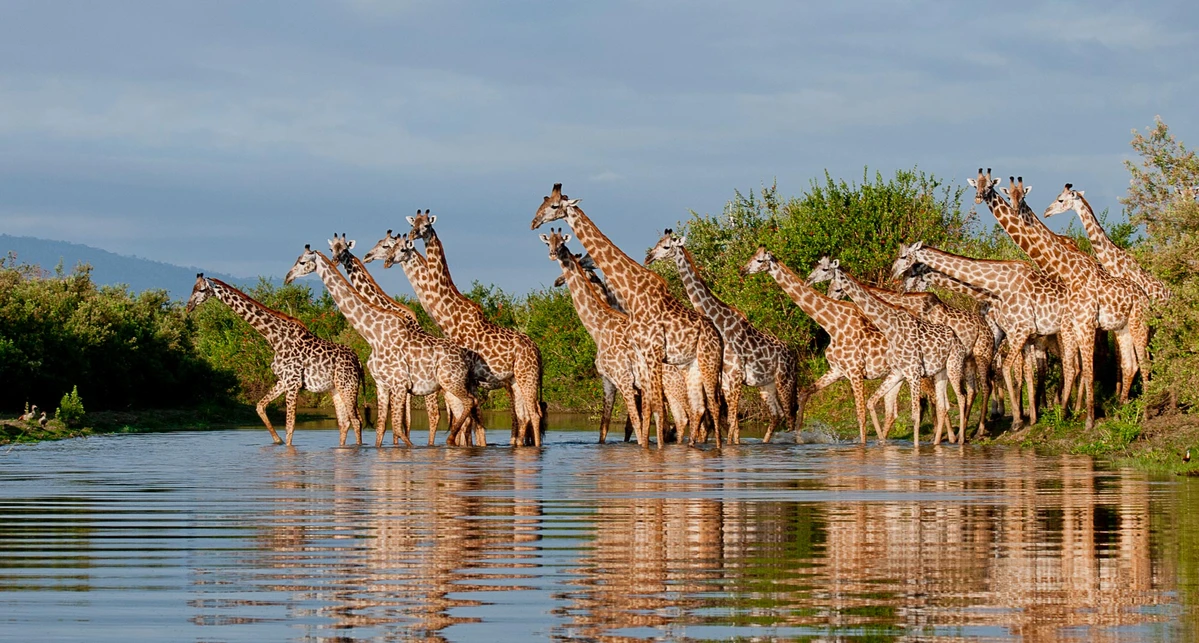
The open plains around Olduvai support giraffe, Thomson’s and Grant’s gazelles, zebra, eland and warthog, along with predators such as lion, cheetah, spotted hyena and jackal. From roughly December to March, the great wildebeest migration gathers on the nearby southern Serengeti and Ndutu plains to give birth, filling the landscape with huge herds and drawing predators in large numbers. Visiting Olduvai during this season can add exceptional wildlife viewing to a day rich in history.
Birdlife
The grasslands and acacia scrub provide good birding throughout the year. Commonly seen species include ostrich, kori bustard, secretarybird, lilac-breasted roller, superb starling and Fischer’s lovebird, along with regional specialities such as the rufous-tailed weaver and grey-breasted spurfowl, both found mainly in northern Tanzania. Raptors like tawny eagles, augur buzzards and vultures are often seen soaring over the plains.
Dramatic Landscapes and Photography
With its steep, layered cliffs, rugged gullies and sweeping plains framed by distant highlands, Olduvai offers striking scenery for photographers. Early morning and late afternoon bring warm, soft light that highlights the colours of the rock layers, while the wet season adds green plains and dramatic skies. Wildlife, Maasai herders and the Shifting Sands provide further memorable subjects.
Ideal Location on the Safari Circuit
Located just off the main road between Ngorongoro Crater and Serengeti National Park, Olduvai Gorge fits easily into most northern Tanzania safari itineraries. A visit usually takes one to two hours, making it a perfect break on the drive between parks, with the option of a picnic lunch overlooking the gorge. It adds a meaningful layer of history and context to a safari, connecting today’s wildlife landscapes with the very beginnings of the human story.
Activities in Olduvai Gorge
- Explore the Olduvai Gorge Museum and its fossils, stone tools and Laetoli footprint casts
- Join a guided talk at the viewpoint overlooking the gorge
- Walk down into the gorge to see the original excavation sites with a guide
- Visit the nearby Shifting Sands, a slowly moving black volcanic dune
- Stop at a local Maasai boma for a cultural visit
- Enjoy a picnic lunch with sweeping views over the gorge
- Take in photography and birdwatching across the surrounding plains
Year-Round Weather in Olduvai Gorge
Want to see more? This video is worth watching
Related Trips
Discover Tanzania
Your questions answered
Where is Olduvai Gorge located?
Olduvai Gorge lies within the Ngorongoro Conservation Area in northern Tanzania, on the southeastern edge of the Serengeti plains. It sits just off the main road between Ngorongoro Crater and Serengeti National Park, roughly 45 minutes to an hour’s drive from the crater rim. Because it’s right on the classic northern safari route, it’s one of the easiest cultural and historical stops to add to a Tanzania safari.
Why is Olduvai Gorge so famous?
Olduvai is one of the most important paleoanthropological sites in the world, often called the “Cradle of Humankind.” It was here that Louis and Mary Leakey uncovered fossils and stone tools that reshaped our understanding of human origins, including the Paranthropus boisei skull, known as “Zinj,” and the first remains of Homo habilis. The gorge also gave its name to the Oldowan tool tradition, one of the oldest known stone tool industries. Its layered walls hold a record of nearly two million years of human and environmental history.
How long should I spend at Olduvai Gorge?
Most of our guests spend one to two hours at the site, which is enough time to explore the museum, enjoy the guided talk at the viewpoint and take in the views. If you’re keen on history or would like to walk down to the excavation sites or visit the Shifting Sands, we recommend allowing half a day. Our team plans the timing so your visit fits comfortably between game drives without feeling rushed.
What can I do during a visit?
A typical visit includes the Olduvai Gorge Museum, with its fossils, ancient tools and a cast of the Laetoli footprints, followed by a guided talk at the viewpoint overlooking the gorge. With extra time, you can walk into the gorge with a guide to see the original excavation sites, visit the nearby Shifting Sands dune, or stop at a Maasai boma for a cultural experience. Many of our guests also enjoy a picnic lunch with views over the gorge.
Is Olduvai Gorge worth visiting if I’m mainly coming for wildlife?
Absolutely. Even for travellers focused on wildlife, Olduvai adds meaningful context to a safari, connecting the landscapes you’re exploring with the very beginnings of the human story. It also makes a welcome break on the long drive between Ngorongoro and the Serengeti. Our guests often tell us it was one of the most surprising and memorable parts of their trip.
Can I see wildlife at Olduvai Gorge?
Yes. The surrounding plains are home to giraffe, gazelles, zebra, eland, warthog and jackal, and predators such as lion, cheetah and hyena are also present. From around December to March, the great wildebeest migration gathers on the nearby southern Serengeti and Ndutu plains for the calving season, so wildlife sightings on the drive to and from Olduvai can be excellent at that time of year. Birdlife is rich throughout the year as well.
What is the best time to visit Olduvai Gorge?
Olduvai can be visited year-round. The dry season, from June to October, brings sunny days, clear skies and easy road conditions, ideal for combining with game drives in the Serengeti and Ngorongoro. The wet season, particularly December to March, turns the plains green and brings the wildebeest migration close by, offering a wonderful combination of history and wildlife. The long rains from March to May bring afternoon showers, though the area stays relatively dry compared with the nearby highlands, so visits are still very enjoyable.
What is the weather like at Olduvai Gorge?
Olduvai has a warm, semi-arid climate, as it lies in the rain shadow of the Ngorongoro Highlands. Days are usually sunny and warm, often in the mid to high 20s °C, while early mornings and evenings can be cool, especially from June to August. The site is exposed and can be dusty and windy in the dry season, so we recommend sun protection and a light layer.
Are entrance fees included in my iTour safari?
Yes. When Olduvai Gorge is part of your iTour Tanzania itinerary, the site entry and Ngorongoro Conservation Area fees are included in your package, along with the services of your professional driver-guide. Optional extras, such as a guided walk into the gorge or a Maasai village visit, can be arranged in advance and included in your quote. Our team will confirm exactly what’s covered when you request a quote.
Do I need a guide to visit Olduvai Gorge?
Your iTour driver-guide will accompany you throughout the visit, and the site’s own local guides lead the talks at the viewpoint and any walks into the gorge. Walking to the excavation sites is only permitted with an official guide, which ensures both your safety and the protection of this important heritage site. Our guides are experienced in sharing the history and significance of Olduvai in an engaging way.
Is Olduvai Gorge suitable for children and families?
Yes, it’s a great stop for families. Children often enjoy the museum’s fossils and footprint casts, and the story of early humans brings school lessons to life in a memorable way. The visit is short and easy, with no strenuous walking required unless you choose to descend into the gorge. The Shifting Sands and a Maasai boma visit can add extra fun and variety for younger travellers.
Are there facilities at the site?
The site has a museum, a covered viewing and lecture area, a small gift shop and basic restrooms. There is limited food available, so most of our guests enjoy a packed picnic lunch prepared by their lodge or camp. Our team arranges lunch and timing as part of your itinerary so everything runs smoothly.
What should I bring?
We recommend sunscreen, a hat, sunglasses, comfortable walking shoes, a light jacket for cooler mornings, a refillable water bottle and your camera. If you plan to walk into the gorge, closed shoes with good grip are best. A small amount of cash is useful for souvenirs and Maasai beadwork.
Can I take photographs at Olduvai Gorge?
Yes, photography is welcome at the viewpoint, around the gorge and at the Shifting Sands, and the layered cliffs and wide plains make for striking images, especially in soft morning or late-afternoon light. Inside the museum, please follow any posted guidelines. When visiting Maasai communities, always ask permission before photographing people; your guide will help with this.
How do I include Olduvai Gorge in my safari?
Olduvai Gorge fits naturally into most northern Tanzania itineraries that travel between Ngorongoro Crater and the Serengeti. With up to 15 years of experience planning tours across Tanzania, the iTour Tanzania team can build it into a private or small-group safari tailored to your interests, travel dates and preferred accommodation level. Simply request a quote and our Arusha-based team will design an itinerary that brings together Tanzania’s wildlife, culture and history, authentically.