
Destination
Kalambo Falls
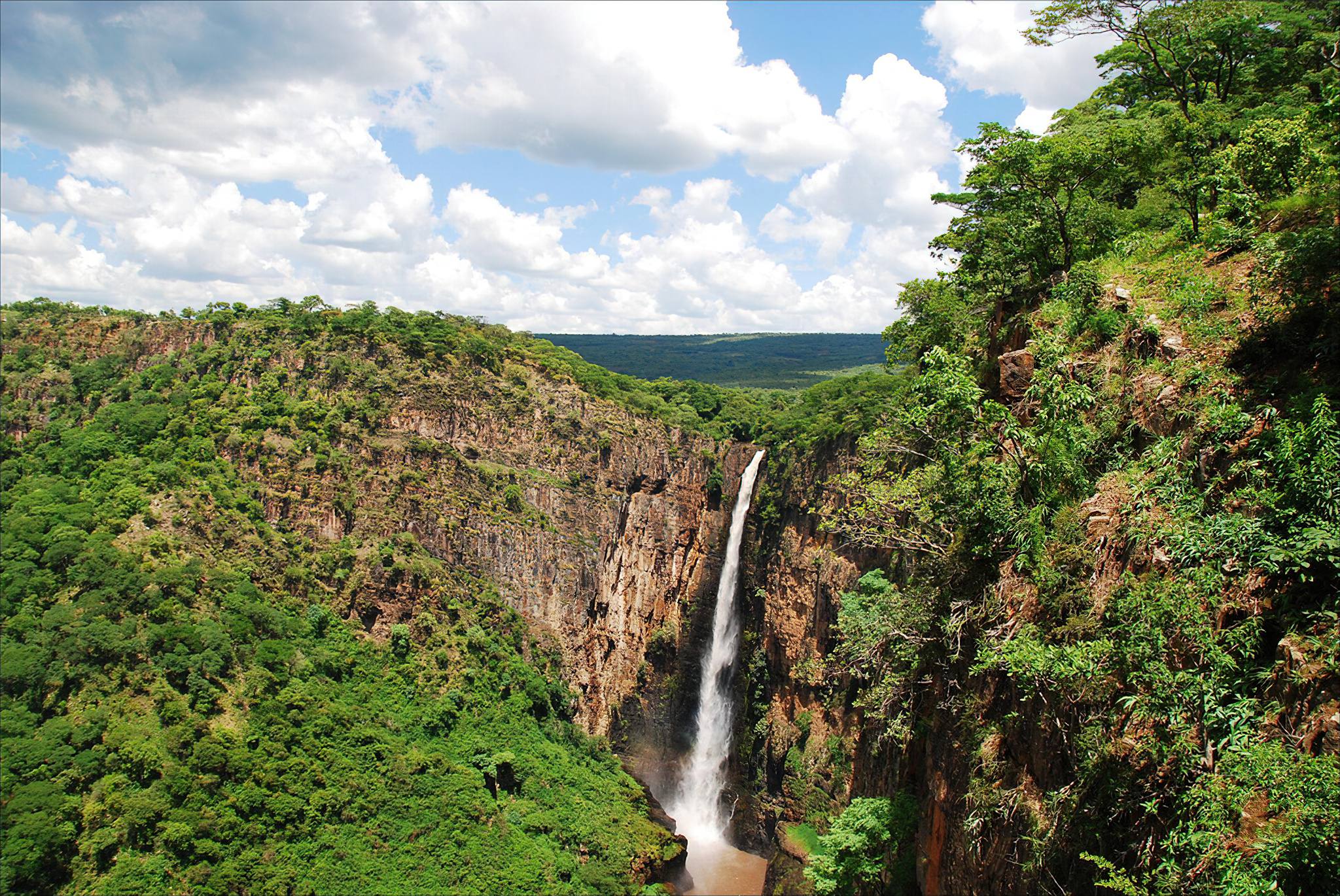
Kalambo Falls drops 235 metres in a single plunge on the Tanzania–Zambia border, making it one of Africa’s tallest waterfalls. Its gorge is also a major archaeological site, home to the world’s oldest known wooden structure, built nearly half a million years ago. Remote and wild, it offers dramatic views and a rare glimpse into humanity’s deep past.
Destination Overview
Kalambo Falls is a spectacular waterfall on the Kalambo River, which forms the border between Tanzania and Zambia in the remote southwest of the country. Plunging about 235 metres in a single, uninterrupted drop, it ranks among the tallest waterfalls in Africa, falling into a deep, rugged gorge framed by steep cliffs and miombo woodland. The cliffs are home to a breeding colony of marabou storks, and just a few kilometres downstream the river flows into Lake Tanganyika, making the area a stunning blend of dramatic scenery, rich birdlife and lakeside beauty.
Beyond its natural splendour, Kalambo Falls is one of the world’s most important archaeological sites. Excavations here have uncovered stone tools spanning hundreds of thousands of years and a wooden structure built about 476,000 years ago, the oldest known evidence of humans shaping and joining wood. Remote, peaceful and largely untouched by mass tourism, the destination offers hiking, photography, birdwatching and cultural encounters with nearby communities, rewarding adventurous travellers with a rare sense of standing where some of humanity’s earliest ancestors once lived.

The Falls
Kalambo Falls drops around 235 metres in a single, uninterrupted plunge, making it one of the tallest free-falling waterfalls in Africa and roughly twice the height of Victoria Falls. The Kalambo River flows calmly across a high plateau before tumbling over a sheer rock edge into the gorge below, creating a dramatic white ribbon of water framed by red cliffs and green woodland. The falls are at their most powerful during and just after the rainy season (December to April), when the roar can be heard well before you reach the edge, while the dry months reveal the rock face and make access easier.
The Kalambo Gorge
Over thousands of years, the river has carved a deep, steep-sided gorge stretching away from the base of the falls toward Lake Tanganyika. Its walls rise sharply on both sides, covered in clinging vegetation and dotted with rocky ledges where birds nest. A challenging trail leads down into the gorge, rewarding hikers with cool spray, a sense of the falls’ true scale and a completely different perspective from the top. The descent is steep and best tackled with a local guide, good footwear and plenty of water.
Ancient Archaeological Site
Kalambo Falls is among the most significant prehistoric sites in the world. Waterlogged sediments near the falls have preserved materials that rarely survive elsewhere, including ancient wood, plant remains and stone tools spanning hundreds of thousands of years. In 2023, researchers announced the discovery of two interlocking logs deliberately shaped and joined about 476,000 years ago, the oldest known wooden structure and evidence that early humans were building with wood long before our own species appeared. For history lovers, standing here offers a rare connection to the very roots of human ingenuity.
Marabou Stork Colony
The cliffs surrounding the falls are home to a well-known breeding colony of marabou storks, which build their nests on the rocky ledges of the gorge. Watching these large, prehistoric-looking birds soaring on thermals or gliding past the falling water is one of the area’s most memorable sights. The gorge and surrounding woodland also attract birds of prey, kingfishers, hornbills, turacos and many smaller species, making Kalambo a rewarding stop for birdwatchers.
Scenic Viewpoints
Several natural lookout points along the rim of the gorge offer sweeping views of the falls, the canyon and the rolling landscape beyond. Some vantage points face the waterfall head-on, while others look down the length of the gorge toward the distant hills. Early morning brings soft light and mist rising from the gorge, while late afternoon bathes the cliffs in warm golden tones, both perfect for photography and quiet reflection.
Miombo Woodland
The plateau around the falls is covered in miombo woodland, a type of open forest typical of southern Tanzania and Zambia. Gentle walks through the trees reveal seasonal colours, especially the striking reds and coppers of new leaves before the rains, along with butterflies, birds and small wildlife. The peaceful setting and lack of crowds give visitors a genuine sense of being off the beaten track.
Cross-Border Location
The Kalambo River forms the natural boundary between Tanzania and Zambia, so the falls are shared by both countries. On the Tanzanian side, the falls lie in Rukwa Region and are reached through remote, scenic countryside. This border setting adds a unique element to the visit, as travellers can view the same natural wonder that both nations treasure as part of their heritage.
Lake Tanganyika Nearby
Just a few kilometres downstream, the Kalambo River empties into Lake Tanganyika, the longest freshwater lake in the world and one of the deepest. A visit to the falls pairs perfectly with time on the lake, whether that means a boat trip along the shoreline, relaxing on quiet beaches, swimming in clear water or watching local fishermen bring in their catch. The lake’s crystal-clear waters are also famous for their colourful cichlid fish.
Local Culture
The villages around Kalambo offer a warm and authentic glimpse into rural life in southwestern Tanzania. Visitors can learn about farming and fishing traditions, local crafts and daily routines, often guided by community members who know the area’s history and stories. These encounters add a meaningful human dimension to the trip and help support the communities that live alongside this remarkable natural site.
Activities in Kalambo Falls
- Sightseeing
- Hiking
- Photography
- Birdwatching
- Archaeological tours
- Nature walks
- Picnicking
- Camping
- Cultural visits
- Lake Tanganyika boat trips
Year-Round Weather in Kalambo Falls
Want to see more? This video is worth watching
Related Trips
Discover Tanzania
Your questions answered
Where is Kalambo Falls located?
Kalambo Falls is in southwestern Tanzania, on the Kalambo River, which forms the border between Tanzania and Zambia. On the Tanzanian side, it lies in Rukwa Region, a few kilometres above the southern shores of Lake Tanganyika. The nearest major town is Sumbawanga, the regional capital, from which most visitors travel by road to reach the falls.
How tall is Kalambo Falls?
The falls drop about 235 metres in a single, uninterrupted plunge, making them one of the tallest single-drop waterfalls in Africa. That is roughly twice the height of Victoria Falls, although Kalambo is much narrower. The sheer height and the deep gorge below create a dramatic and unforgettable sight.
What is Kalambo Falls famous for?
Kalambo is famous for its height, its prehistoric heritage and its birdlife. It is one of the world’s most important archaeological sites, where researchers found stone tools spanning hundreds of thousands of years and a wooden structure built about 476,000 years ago, the oldest known evidence of humans shaping and joining wood. The cliffs of the gorge also host a breeding colony of marabou storks.
How do I get to Kalambo Falls?
Most travellers reach the falls by road from Sumbawanga, a journey through remote, scenic countryside on routes that include unpaved sections. A 4x4 vehicle is strongly recommended, especially in the rainy season when roads can become muddy. Sumbawanga itself can be reached by road from Mbeya, which has an airport with flights from Dar es Salaam. Some visitors also combine the trip with travel along Lake Tanganyika via the lakeside town of Kasanga. Travelling with an experienced tour operator makes the logistics far simpler.
When is the best time to visit?
It depends on what you want to experience. From late March to June, the falls are still full and powerful after the rains, while roads are starting to improve. From July to October, conditions are dry, roads and trails are at their easiest, and the weather is ideal for hiking and photography, though the water flow is lower. The heaviest rains, from December to March, make the falls spectacular but can make access difficult.
What activities can I do at Kalambo Falls?
Popular activities include sightseeing from the viewpoints along the rim, hiking down into the gorge, photography, birdwatching, nature walks through miombo woodland, learning about the archaeological site, picnicking and camping. Many visitors also add cultural visits to nearby villages and boat trips or beach time on Lake Tanganyika.
Is the hike down into the gorge difficult?
Yes, the trail to the base is steep and can be demanding, particularly on the climb back up. It is best suited to visitors with reasonable fitness. Wear sturdy shoes with good grip, carry plenty of water and allow several hours for the round trip. Hiking with a local guide is strongly recommended, as paths can be slippery, especially during or after rain.
Can I swim at Kalambo Falls?
Swimming near the top of the falls or in fast-moving water is dangerous and should be avoided, as currents can be strong and the drop is sheer. Always follow your guide’s advice and stay well back from the edge. For a safe and relaxing swim, Lake Tanganyika nearby is a much better option.
Do I need a guide?
A guide is highly recommended. Local guides know the safest trails and viewpoints, can share the history and archaeology of the site and help you spot birds and wildlife. Hiring a guide also supports the local community and adds depth to your visit.
Is there an entrance fee?
Yes, visitors normally pay a fee to access the site. Rates can change and may differ for residents and international visitors, so it is best to confirm current fees with your tour operator before you travel.
Where can I stay near Kalambo Falls?
Accommodation near the falls is limited, which is part of the area’s remote charm. Most visitors stay in Sumbawanga, which has a range of hotels and guesthouses, or in simple lodgings along Lake Tanganyika. Camping is also possible for those seeking a more adventurous experience. Booking ahead through a tour operator is advisable.
How much time should I spend at Kalambo Falls?
Allow at least a half day to enjoy the viewpoints and a short walk, or a full day if you plan to hike into the gorge. Because the falls are remote, many travellers plan two to three days in the region to include travel time, a visit to Lake Tanganyika and time with local communities.
Can I visit the Zambian side of the falls?
The falls can be viewed from both countries, but there is no casual crossing between them at the site. Visiting the Zambian side requires travelling through an official border post with the correct visa and documents, which involves a long journey. Most visitors enjoy the falls fully from the Tanzanian side.
What should I pack?
Bring light, breathable clothing for warm days and a jacket or fleece for cool mornings and evenings, especially from June to August. Sturdy walking shoes, a hat, sunscreen, insect repellent, a refillable water bottle and a rain jacket in the wet season are essential. A camera with a zoom lens and binoculars are ideal for photography and birdwatching.
Is Kalambo Falls suitable for families and children?
Yes, the viewpoints along the top are suitable for families, provided children are closely supervised, as some areas have steep, unfenced edges. The hike down into the gorge is better suited to older children and adults with good fitness.
Is Kalambo Falls safe to visit?
Kalambo Falls is generally a peaceful and welcoming destination. The main safety considerations are natural: steep cliffs, slippery trails and remote roads. Travelling with a reputable operator, using a local guide and following safety advice will help ensure a smooth and enjoyable visit.