
Destination
Arusha National Park
Home to Tanzania's fifth-highest peak, Mount Meru, Arusha National Park packs canoeing, walking safaris, and giraffe- and colobus-filled forests into one of the country's most compact and accessible parks.
Destination Overview
Arusha National Park is a compact, 137-square-kilometer park in northern Tanzania's Arusha Region, sitting just 25 km northeast of Arusha town and around 35 km from Kilimanjaro International Airport — making it one of the most accessible parks on the entire northern safari circuit. Established in 1960 and expanded to its current boundaries in 1967, the park is dominated by Mount Meru, Tanzania's second-highest mountain at 4,566 meters, whose dramatic horseshoe-shaped crater and Ash Cone can be explored on a multi-day climb. Beyond the mountain, the park holds two more distinct landscapes: the forest-rimmed Ngurdoto Crater, nicknamed "Little Serengeti" for its resident plains zebra, and the Momella Lakes, a chain of seven shallow, mineral-rich lakes each colored differently by their own algae and mineral content.
Arusha National Park isn't a Big Five destination — buffalo is the only member seen with any regularity, while lions, rhinos, and cheetahs are absent and leopards are rare — but it more than compensates with giraffe herds, black-and-white colobus and blue monkeys in the montane forest, and over 400 recorded bird species, from flamingos on the Momella Lakes to turacos and hornbills in the canopy. What sets it apart on the northern circuit is variety of experience: it's one of the few parks where guided walking safaris and canoeing are officially permitted alongside game drives. Most visitors combine it with a day trip from Arusha or as a pre- or post-Kilimanjaro outing, and thanks to its lower elevation it's a rewarding destination year-round, with June to October offering the clearest trails and November to April bringing the best birdwatching.

Mount Meru: Tanzania's Second-Highest Peak
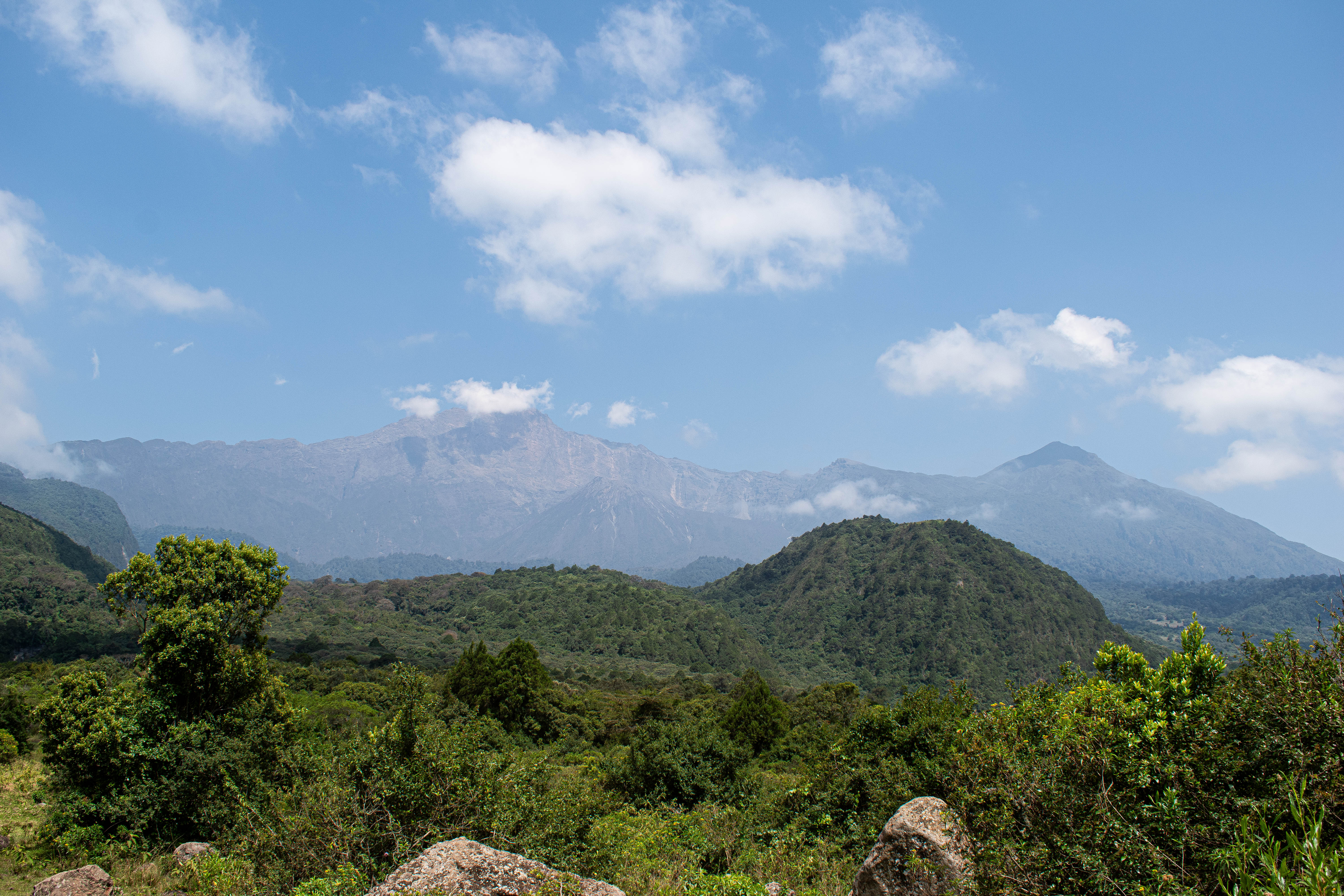
Rising to 4,566 meters, Mount Meru is Tanzania's second-highest mountain and Africa's fifth-highest, and it forms the dramatic backdrop to almost every corner of the park. Climbing it is a quieter, less crowded alternative to Kilimanjaro — typically done over three to four days — and one of the few major East African peaks where you're likely to spot giraffe, buffalo, and colobus monkeys on the lower slopes before the vegetation zones give way to alpine desert.
The Horseshoe Crater and Ash Cone
Mount Meru's summit sits on the rim of a dramatic horseshoe-shaped crater, formed roughly 8,000 years ago when a massive eruption caused the mountain's eastern flank to collapse. Inside the caldera rises the Ash Cone, a smaller volcanic cone built up by later eruptions, creating a stark, layered landscape of lava and fault scarps that climbers pass on the way to the summit — and from Socialist Peak at sunrise, Kilimanjaro itself appears glowing above the clouds to the east.
Ngurdoto Crater: The "Little Serengeti"
On the opposite side of the park, the roughly 3-kilometer-wide, forest-rimmed Ngurdoto Crater holds a swampy grassland that vehicles are barred from entering, largely to protect its resident buffalo and rhino habitat, so visitors view it from lookout points along the rim instead. The adjoining plains, nicknamed "Little Serengeti," are the only place in the park where plains zebra are regularly seen, alongside giraffe and buffalo grazing the open grassland below.
The Seven Momella Lakes
The Momella Lakes are a chain of seven shallow, alkaline lakes — Big Momela, Small Momela, El Kekhotoito, Kusare, Rishateni, Lekandiro, and Tulusia — fed by underground springs and formed from volcanic debris when Mount Meru erupted around 250,000 years ago. Each lake carries a distinct mineral composition and algae population, giving them a striking range of colors from deep green to turquoise, so a single game drive around the lakes can feel like passing through several different landscapes.
Flamingos and Waterbirds on Big Momela
Big Momela Lake is the park's flamingo showpiece, regularly hosting vast flocks of greater and lesser flamingos alongside pelicans, African fish eagles, and Egyptian geese along its shores. Zebra, giraffe, waterbuck, dik-dik, and duiker are commonly seen grazing near the lake edges too, even though most avoid actually drinking the mineral-rich water.
The Fig Tree Arch
Along the track toward Mount Meru's first campsite stands one of Tanzania's most photographed trees: a giant strangler fig whose roots grew around and eventually consumed a host tree, leaving behind a hollow, arch-shaped opening large enough for a safari vehicle to drive straight through. Visitors typically stop to get out and walk beneath or through the arch — a rare, hands-on encounter with one of the park's oldest living landmarks.
Walking Safaris: Wildlife on Foot
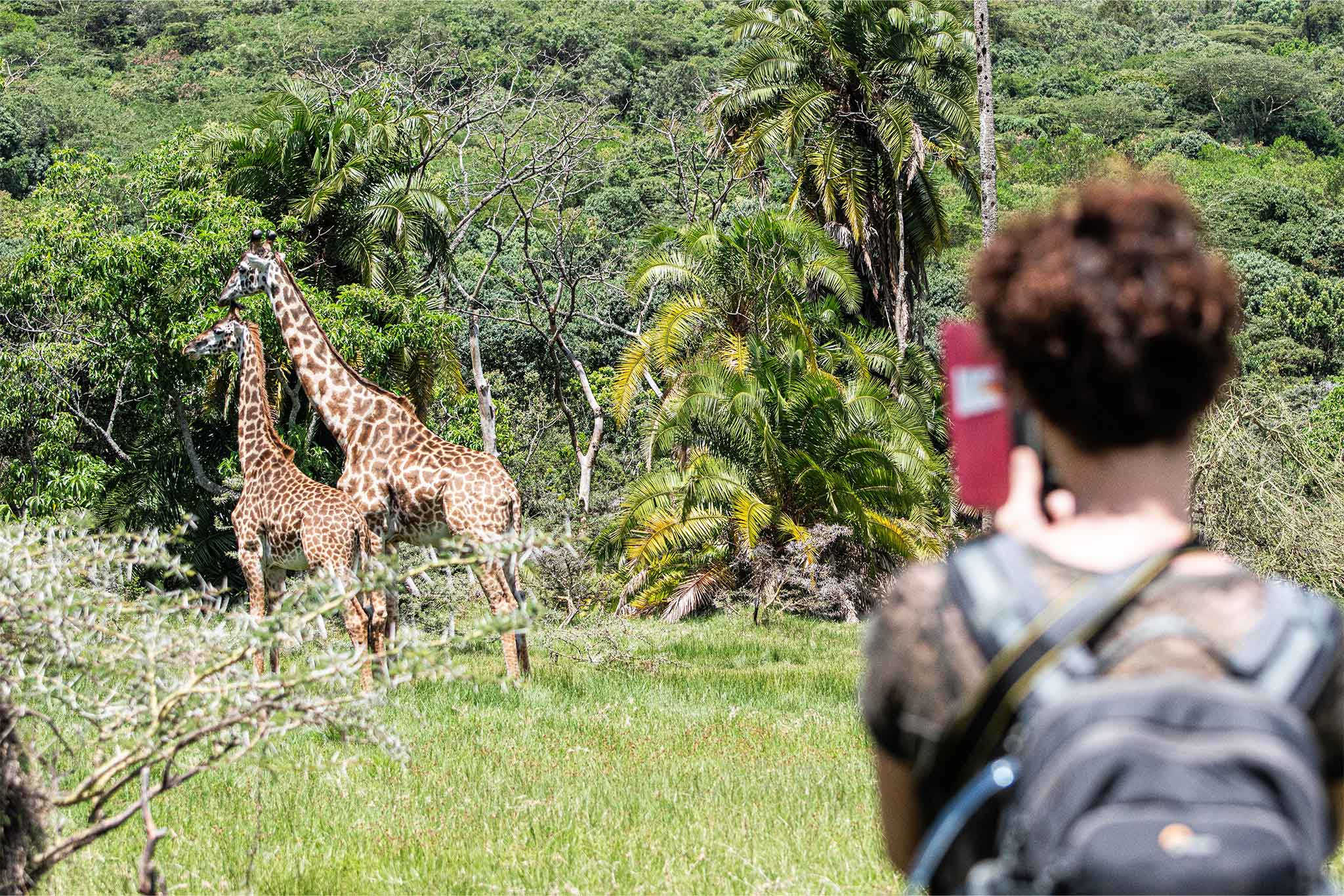
Arusha National Park is one of the few parks on the northern circuit where guided walking safaris are officially permitted, accompanied by an armed ranger for safety. Exploring the crater rim, forest trails, and lake shores on foot brings a level of detail — birdsong, fresh tracks, the smell of the forest — that's impossible to get from inside a vehicle, and it's often the highlight visitors remember most from a short trip here.
Canoeing on the Momella Lakes
Alongside walking safaris, canoeing on the Momella Lakes is another activity almost unique to this park on the circuit, putting you at water level among the flamingos, pelicans, and waterbirds without a vehicle or engine in sight. It's a calm, quiet way to end a morning game drive, and a favorite add-on for travelers who've already done several days of driving safaris elsewhere.
Black-and-White Colobus and Forest Primates
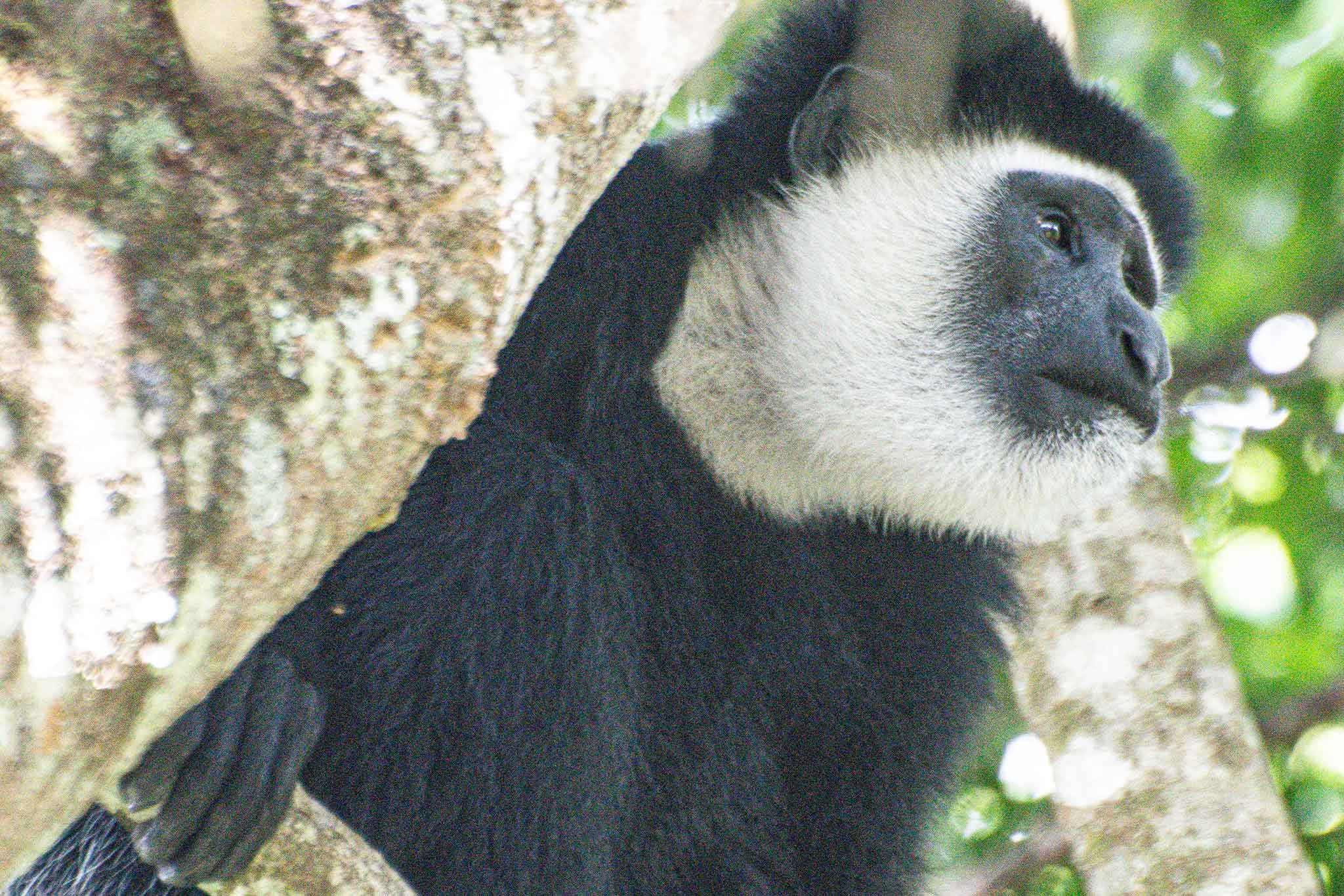
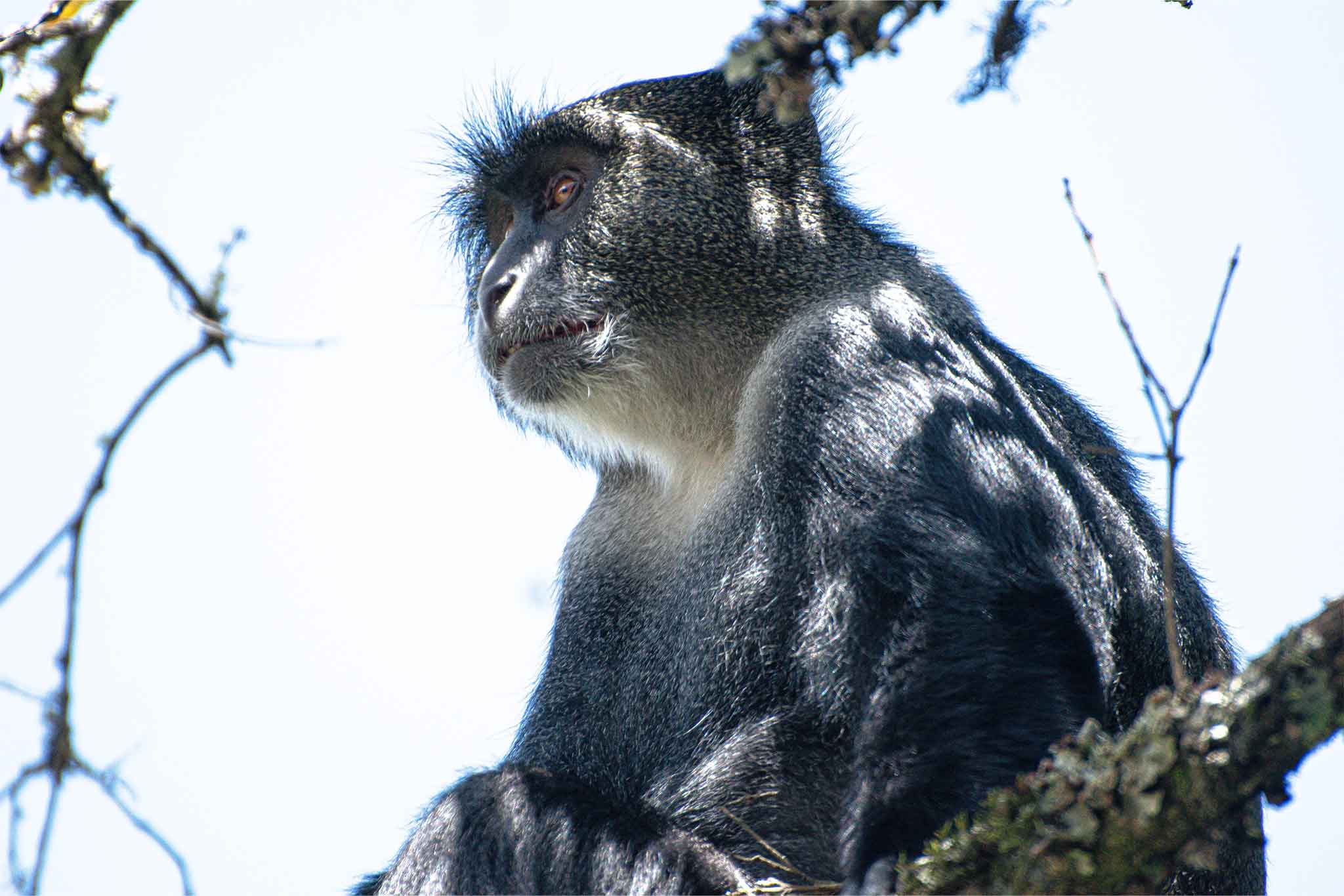
The montane forest cloaking Mount Meru's lower slopes and the Ngurdoto Crater rim is home to striking black-and-white colobus monkeys, along with blue monkeys and olive baboons that move through the canopy in noisy troops. Sightings are frequent enough that a short forest walk here can rival dedicated primate-watching destinations elsewhere in East Africa.
A Birder's Paradise: Over 400 Species
With more than 400 recorded bird species packed into just 137 square kilometers, Arusha National Park punches well above its weight for birding. Look for Hartlaub's turaco and silvery-cheeked hornbill in the forest, augur buzzards and Verreaux's eagles along the crater cliffs, and flamingos, herons, and grebes on the lakes — with migratory species boosting the numbers further between November and April.
Activities in Arusha National Park
- Game drives
- Guided walking safaris with an armed ranger
- Canoeing on the Momella Lakes
- Climbing Mount Meru
- Birdwatching
- Mountain biking on designated park trails
- Day hikes to viewpoints such as the Fig Tree Arch
- Picnicking at scenic spots overlooking the crater or lakes
Year-Round Weather in Arusha National Park
November and December bring the short rains, a period of intermittent afternoon showers that green up the landscape and bring some of the best birdwatching of the year, followed by a warmer, drier stretch in January and February with scattered showers and generally good visibility. The long rains run from March through May, the wettest period overall, with regular afternoon downpours and misty mornings that can make trails slippery, though rain rarely falls all day. Annual rainfall across the park ranges from roughly 1,200 to 1,600mm, concentrated on Mount Meru's forested eastern slopes, which stay noticeably lusher and wetter than the drier plains to the west.
Climbers heading up Mount Meru should expect an entirely different climate the higher they go: montane forest stays cool and often misty, the sub-alpine heather zone turns cold and windy, and the summit area can drop to near-freezing overnight regardless of the season on the lower slopes — so warm layers matter far more than the time of year you choose to climb.
Want to see more? This video is worth watching
Related Trips
Discover Tanzania
Your questions answered
Where is Arusha National Park and how far is it from Arusha town?
Arusha National Park sits just northeast of Arusha town, with its main gate around 25 km away — about a 45-minute to one-hour drive. It's also close to Kilimanjaro International Airport, roughly 35 km away, making it one of the most accessible parks on the northern circuit.
How big is Arusha National Park?
The park covers about 137 square kilometers, making it one of Tanzania's smaller national parks. Despite its compact size, it packs in three distinct landscapes — the Ngurdoto Crater, the Momella Lakes, and the slopes of Mount Meru — which is part of what makes it feel far bigger than its footprint suggests.
What is Arusha National Park known for?
Arusha National Park is best known as the base for climbing Mount Meru, Tanzania's second-highest mountain, and for offering activities you can't do in most other northern circuit parks — walking safaris and canoeing — alongside good giraffe, buffalo, and primate viewing around the Momella Lakes and forested crater rim.
Can I do a day trip to Arusha National Park?
Yes — thanks to its location so close to Arusha town, a day trip covering a game drive, a walking safari, and canoeing on the Momella Lakes is one of the most popular ways to visit, whether as a standalone outing or as a warm-up before heading out to the rest of the northern circuit.
Is Arusha National Park good for seeing the Big Five?
Not really — Arusha is the exception on the northern circuit when it comes to the Big Five. Buffalo are seen regularly, but lions, rhinos, and cheetahs are absent, and leopards are rare. The park's real strength is its giraffe herds, forest primates, and outstanding birdlife rather than classic big-game viewing.
Can I climb Mount Meru, and how long does it take?
Yes — Mount Meru is climbable and makes an excellent, less crowded alternative or warm-up to Kilimanjaro. Most climbs take three to four days round trip, following the Momella Route past Miriakamba and Saddle Huts to the summit, and require an armed ranger escort since the lower slopes pass through wildlife habitat.
When is the best time to visit Arusha National Park?
The dry season from June to October offers the clearest trails and best wildlife visibility, while November through April is prime time for birdwatching, when migratory species join the park's already impressive resident bird population. The park is enjoyable year-round given its lower elevation and reliable access.
What animals can I see at Arusha National Park?
Expect giraffe, buffalo, zebra, hippo, warthog, and forest specialists like the black-and-white colobus and blue monkey, along with bushbuck and duiker in the forest. Elephants and wildebeest turn up occasionally, while predators such as leopards and spotted hyenas are present but rarely seen.
Can I really walk and canoe inside the park?
Yes — Arusha National Park is one of the few places on the northern circuit where walking safaris and canoeing are officially permitted, both with a licensed guide. Canoeing on the Momella Lakes gets you close to waterbirds and sometimes hippos from the water, while guided walks let you explore the crater rim and forest on foot rather than only from a vehicle.
Is Arusha National Park worth visiting before or after climbing Kilimanjaro?
It's an excellent fit — its proximity to Kilimanjaro International Airport and Arusha town makes it an easy, low-effort day trip either to acclimatize before a Kilimanjaro climb or to unwind with some wildlife viewing afterward, without needing to travel far from where most climbs start and end.
What should I pack for Arusha National Park?
Pack as you would for a cool, forested safari — layers for changeable weather, sturdy closed shoes for walking safaris, binoculars for the excellent birdlife, and rain gear outside the driest months. If you're adding the Mount Meru climb, you'll need proper trekking boots and warm layers for the summit push.
Are there entrance fees for Arusha National Park?
Yes, like all Tanzania National Parks Authority parks, Arusha National Park charges entrance fees, with separate permits required for activities like the Mount Meru climb. We build the current fees directly into your itinerary quote, so there's nothing to work out or pay separately once you're on the ground.